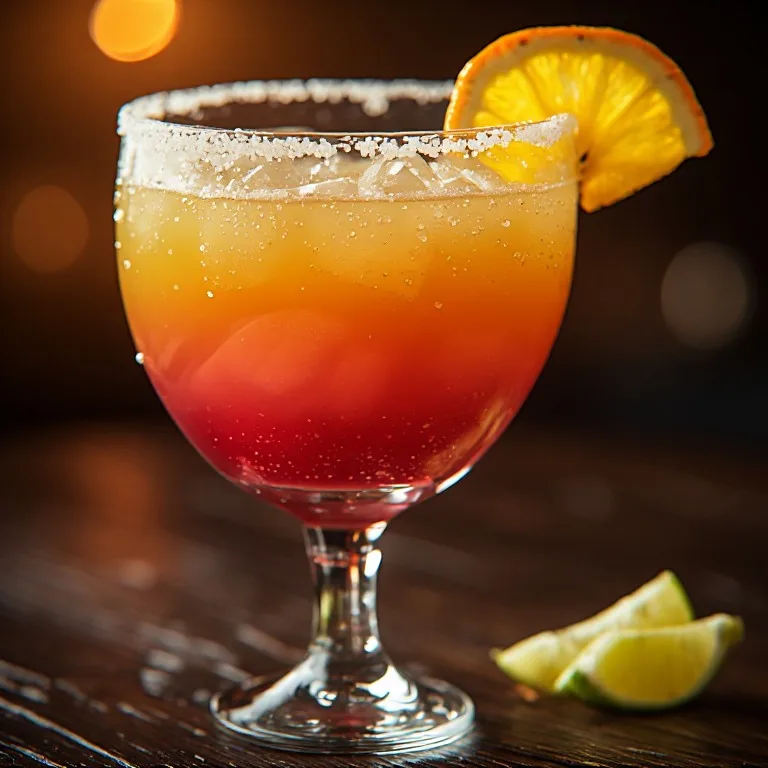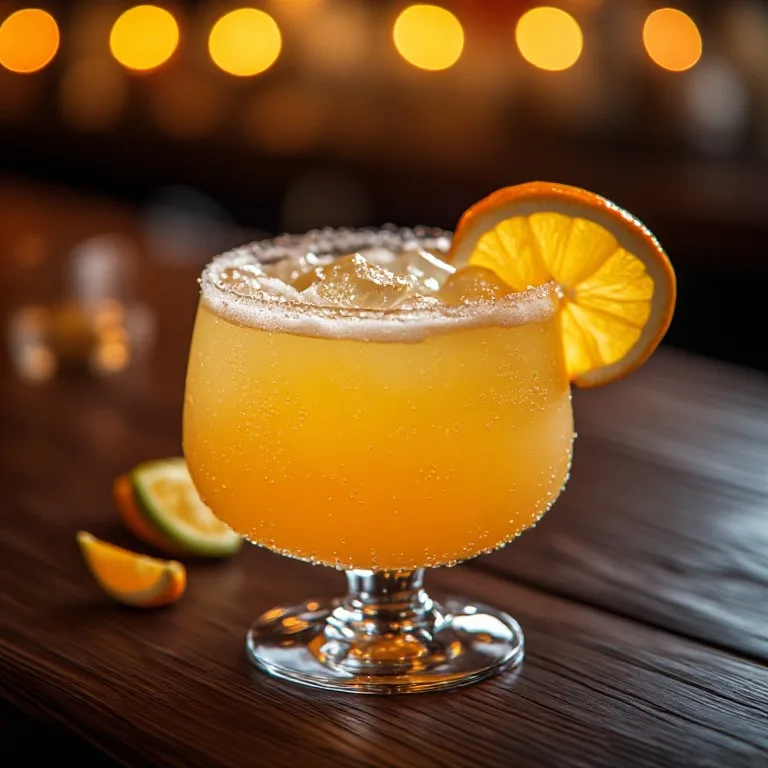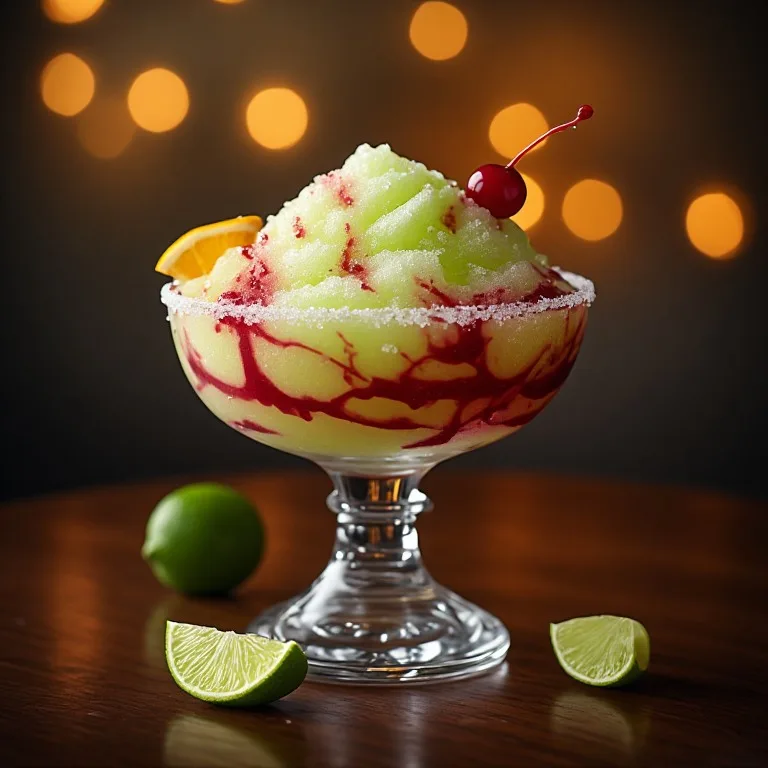
The Sangria Margarita is the Texas Roadhouse glass that looks like two drinks refused to pick a winner. A frozen pale margarita fills the bowl, and a darker red sangria runs through it in a ribbon. It shows up in the chain’s margarita lineup next to the fruit flavors and the Hurricane Margarita, and it is an easy pitcher order when a table is splitting steaks and rolls.
What Texas Roadhouse actually serves
Texas Roadhouse opened in 1993, and margaritas have been part of the bar story for years. The house margarita, frozen or on the rocks, is gold tequila and the chain’s sour mix. Writers who have covered the bar name Dorado Gold as that tequila. The top-shelf Legend is a separate drink: Patrón silver, reposado and añejo with Grand Marnier and a dark salt rim. Do not use that blend here. The sangria version sits on the house drink.
The sangria half is less public. Tasting notes describe red sangria swirled through the frozen house margarita, with the wine flavor up front and the tequila quieter than in a plain margarita. One 2024 account mentions an orange slice, a lime wedge and a maraschino cherry on the glass. No Texas Roadhouse page turned up that lists the sangria ingredients or the pour sizes.
Nutrition figures that track the chain’s menu data are more specific about size than about recipe. A 2025 interactive nutrition menu lists a frozen Sangria Margarita at about 230 calories in a 10-ounce pour and about 440 calories in an 18-ounce pour. Rocks versions on that same list are about 160 and 260 calories. Sugar on the 10-ounce frozen drink is posted around 31 grams, which is a sweet restaurant glass. Those numbers can change, and they are not a recipe.
The same listings include a separate cocktail called Sangria Red, around 280 calories. That is useful context: the building has a red sangria of its own, and the margarita appears to combine the two ideas. It does not prove what is in the sangria. Brandy, cranberry and fruit chunks show up in other copycat posts. None of those are confirmed.
A national November 2026 price is not confirmed. Third-party menus put this drink in the same band as the other house margaritas, often the high single digits to about ten dollars, and that range moves by state. The location menu is the only price that counts.
Why typical copycats fail
Most home versions dump red wine into the blender with the tequila. You get a single pink slush. The restaurant drink is a swirl. The color split is the whole point, and it only lasts if the wine goes in after the blend.
The second miss is the wine. A big, tannic cabernet turns bitter when it is ice-cold and sitting next to lime. Restaurant sangria, whatever the unpublished spec, tastes fruity and soft. A modest merlot or garnacha is the right family.
The third miss is the sour. The chain’s mix is lime-forward, but it is also sweet, and the posted sugar numbers say the frozen glass is not a tart craft margarita. Fresh lime with no sweetener tastes nothing like it. Fresh lime with a measured agave syrup gets you closer, and you can add more syrup if your glass is sharper than the one you remember.
The key technique: blend, then ribbon
Stir the sangria swirl before you touch the blender: wine, a short pour of orange juice, and a teaspoon of simple syrup. Orange juice is there to round the wine. It is not there to make a screwdriver. Keep this cup on the counter, away from the ice.
Blend the margarita liquids with one cup of ice only until the ice is gone and the texture is thick. Another ten seconds and the drink loosens into a watery shake. Pour it into a cold glass. Drizzle the sangria down the inside wall, then drag a straw through the glass once in a loose spiral. A second stir erases the stripe. Drink it while the stripe is still a stripe.
Salt is optional. The tastings that describe this drink spend their time on the fruit garnish, not on a salt rim. If you want salt, salt half the rim so you can choose each sip.
A batch for Thanksgiving or a game day
Keep two containers. Neither one gets ice until the minute you serve.
Margarita base for eight:
- 12 oz (360 ml) gold tequila
- 8 oz (240 ml) fresh lime juice
- 4 oz (120 ml) fresh lemon juice
- 6 oz (180 ml) 1:1 agave syrup
- 2 oz (60 ml) orange juice
Sangria swirl for eight:
- 12 oz (360 ml) fruity red wine
- 4 oz (120 ml) orange juice
- 8 tsp (40 ml) simple syrup
Refrigerate both. To serve, blend two drinks at a time: 7 oz (210 ml) of margarita base with 2 cups of ice. Split that between two glasses and ribbon 2 oz (60 ml) of swirl into each. Blending all eight at once makes a bowl of slush that melts before the second round of rolls hits the table.
For a rocks pitcher, shake or stir individual drinks over ice and float the swirl. A premixed pitcher of wine and tequila is a different cocktail.
The mocktail
Skip the tequila and the wine, and the glass still has a job to do: pale frozen citrus, dark fruit ribbon. Hibiscus tea is the stand-in for red wine because it is tart and deep red. Red grape juice adds the fruit the tea does not have. Blend the lime, lemon, orange and agave with ice, pour, and ribbon the tea and grape juice on top. One stir, then stop.
The mocktail is much less sweet than the chain’s posted frozen drink. That is deliberate. If you want it softer, add another teaspoon of agave to the blender, not more grape juice. Grape juice is what pushes a zero-proof sangria into punch-bowl territory.
See all Texas Roadhouse copycat drinks →