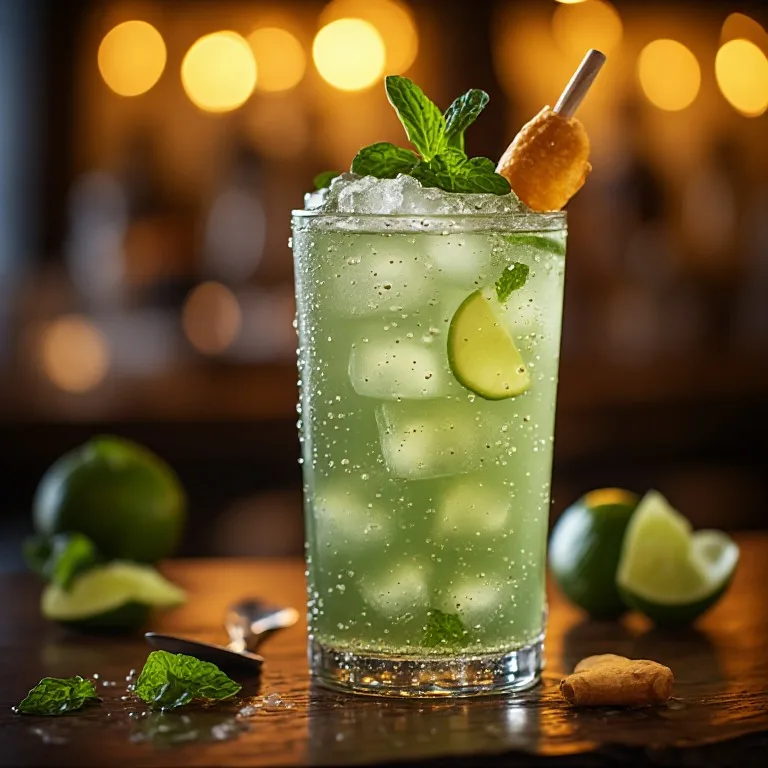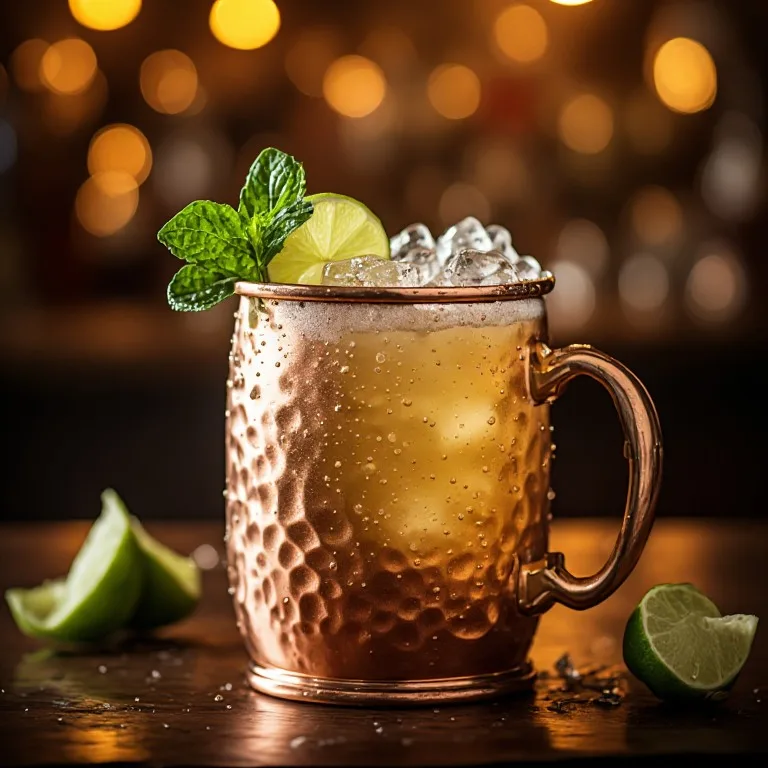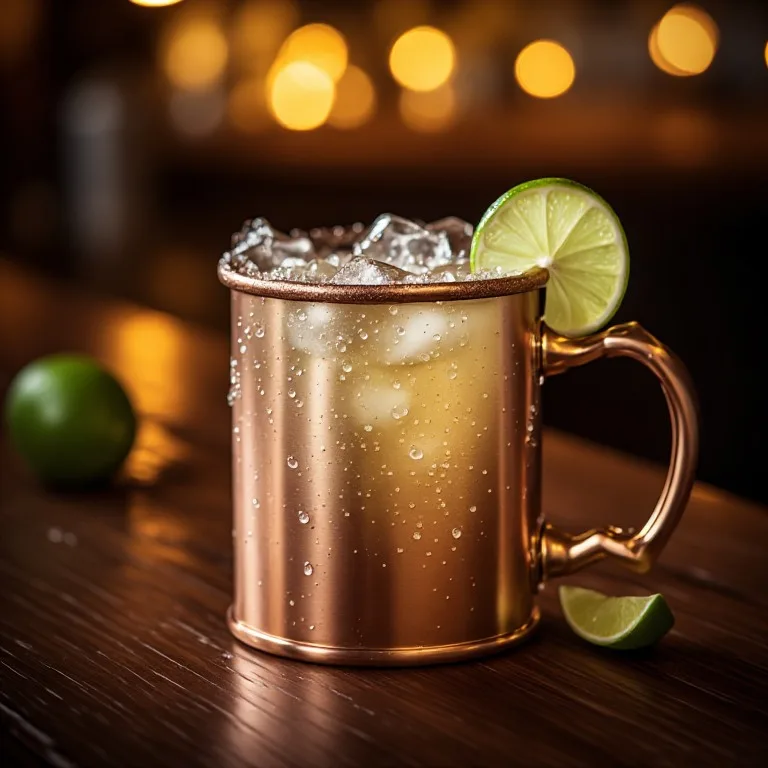
The Moscow Mule is one of the simplest famous cocktails: vodka, ginger beer and citrus over ice. Its personality comes from the contrast between nearly neutral vodka, sharp lime and a ginger beer with enough heat to bite back. The copper mug made it instantly recognizable, but cold ingredients and lively carbonation matter more than the vessel.
The drink’s story is less tidy than its recipe. Cock ‘n Bull owner Jack Morgan and Smirnoff promoter John Martin are central to nearly every account, yet the location, collaborators and exact moment shift depending on the source. That uncertainty belongs in the recipe rather than being polished into a neat legend.
What the Cock ‘n Bull Served
Cock ‘n Bull’s present-day soda company describes an “authentic” Mule as ginger beer, vodka and lime over ice in a copper mug. Its history connects the drink to Morgan’s house ginger beer and Martin’s effort to introduce Americans to Smirnoff vodka. Photographs also place bartender Wes Price behind the Cock ‘n Bull bar serving Mules.
The Hollywood restaurant itself is no longer available for a menu check. It opened in 1937 and closed in October 1987, so there is no current price or current venue pour to reproduce. Published early descriptions establish the three-part structure, but they do not give one uncontested house ratio. This recipe is therefore a historically informed home version, not a leaked original spec.
The 1941 Origin, With the Disagreement Left In
The familiar story puts Morgan and Martin at the Cock ‘n Bull on Sunset Boulevard in 1941, combining slow-selling ginger beer and vodka. Later retellings add copper-mug seller Sophie Berezinski. Price separately claimed that he made the drink to clear surplus stock and first served it to actors Broderick Crawford and Rod Cameron.
A 1948 New York Herald Tribune account told a different story. It placed Morgan, Martin and Smirnoff’s Rudolph Kunett at the Chatham Hotel in New York in 1941, mixing vodka, Morgan’s ginger beer and squeezed citrus. Even the earliest printed recipes varied, including an equal-parts version that would taste extremely lime-heavy today.
The defensible conclusion is narrow: the Mule emerged in the early 1940s from the commercial partnership around Smirnoff vodka and Cock ‘n Bull ginger beer. Hollywood’s Cock ‘n Bull was essential to its identity and promotion, but the exact inventor and birthplace remain disputed.
Why Typical Moscow Mules Miss
Flat ginger beer is the most common failure. It should go into the mug cold and last, with only one gentle lift of the spoon. Vigorous stirring knocks out the bubbles and turns a crisp highball into sweet ginger water.
Weak ginger ale creates a different problem. The Mule needs peppery ginger heat to balance vodka and lime. Use an assertive ginger beer, then adjust the lime to the brand. A very dry, fiery soda may need slightly less citrus; a sweet one may need the full half-ounce.
Do not add simple syrup automatically. The ginger beer already brings substantial sugar. Extra syrup hides the spicy finish that gives the drink its “mule” kick.
The Key Technique: Build Cold and Preserve the Fizz
Start with a cold mug, cold ginger beer and plenty of solid ice. Stir the vodka and lime briefly before adding the soda. This chills the alcoholic base first, so the finished drink needs almost no agitation.
Pour the ginger beer down the inside of the mug, then slide a spoon to the bottom and lift once. That integrates the denser base without scrubbing away carbonation. Serve immediately; a Mule waiting ten minutes will never be as lively as a fresh one.
A lined copper mug gives the traditional frosty feel. A highball glass is equally functional and lets you see the bubbles. Avoid using an unlined copper vessel with acidic lime.
Make a Pitcher for Eight
Combine 16 oz vodka, 4 oz fresh lime juice and 4 oz cold water in a pitcher. Chill the base for up to four hours. Set out eight ice-filled mugs and divide the base evenly, about 3 oz per serving.
Top each mug individually with 4 oz cold ginger beer and garnish with lime. Do not pour all the soda into the pitcher unless every serving will be handed out immediately. Individual topping protects the carbonation and keeps later glasses from tasting flat.
The Hollywood Ginger Mule Mocktail
Vodka contributes more structure than flavor, so simply omitting it can leave a thin lime soda. Double-strength green tea restores light tannin and dryness. Ginger syrup deepens the spice, while two drops of saline make the citrus and ginger taste more complete.
Use a clearly labeled alcohol-free ginger beer when zero proof matters. Build it with the same cold-first method and minimal stirring. The mocktail should be sharp, bubbly and ginger-led, not sugary lemonade.
See more historic bar cocktails →