Pin It

Hilton Hawaiian Village Blue Hawaii: Harry Yee's 1957 Original

More like this: Bonefish Grill Fresh Pineapple Martini: Coconut Rum, Elderflower, and Crushed Fruit, Boozy Brazilian Lemonade: Lime, Condensed Milk and Cachaça, Viral Corona Sunrise: The Tequila Sunrise Built in a Beer Bottle, Chili's Deep Eddy Strawberry Texas Lemonade: Sweet, Tart and Fizzy, and Texas Roadhouse Jamaican Cowboy: Tropical Margarita at Home.

Last updated November 8, 2026

Hilton Hawaiian Village Blue Hawaii: Harry Yee's 1957 Original
The specMedium
Spirit
Rum
Glass
Highball
Method
Blended
Garnish
Pineapple wedge and cocktail cherry
ABV (est.)
~14%
Standard drinks
1.2

1 US standard drink = 0.6 oz (14 g) pure alcohol. Estimates assume normal dilution.Make it a mocktail →

Jump to Recipe
Prep 6 min Serves 1 cocktail

Hilton Hawaiian Village Blue Hawaii: Harry Yee's 1957 Original

Make Harry Yee's original Hilton Hawaiian Village Blue Hawaii with rum, vodka, blue curaçao and sour mix, plus a tropical zero-proof version.

Easy Prep: 6 min1 cocktail servings ~$2.45/serving
Prep6 min
Servings
1

Is it cheaper to make at home?

At home~$2.45/serving
vs
Restaurant~$11.02/serving
You save ~78%

What's the story behind this drink?

Make Harry Yee's original Hilton Hawaiian Village Blue Hawaii with rum, vodka, blue curaçao and sour mix, plus a tropical zero-proof version.

Nutrition Facts

Per serving (1 cocktail servings)
Calories210
Total Fat0g
Total Carbs21g
Dietary Fiber0g
Sugars19g
Protein0g
Sodium15mg

* Estimated values based on standard recipe preparation. Actual values may vary.

Ingredients

Instructions

What makes this work?

💡
Pro tip: Chill your glass and use fresh citrus squeezed the same day. Taste before you pour; a few drops of lime or simple syrup fixes most balance issues.
❄️
Batching: Mix everything except ice and bubbles up to a day ahead and keep it in the fridge. Shake or stir each drink with ice to order. Fresh citrus is best within 24 hours.
Make it a mocktail · zero proof

Blue Hawaii Mocktail

A 0.0% cane-spirit alternative supplies a dry tropical base, while blue curaçao syrup replaces the orange liqueur's color and flavor. Fresh citrus keeps it from tasting like blue candy.

Ingredients

  • 1 1/2 oz (45 ml) 0.0% cane-spirit alternative
  • 1/2 oz (15 ml) blue curaçao syrup
  • 1/2 oz (15 ml) fresh lemon juice
  • 1/2 oz (15 ml) fresh lime juice
  • 1/2 oz (15 ml) simple syrup
  • 1 cup cracked ice
  • 1 small pineapple wedge, for garnish
  • 1 cocktail cherry, for garnish

Steps

  1. Blend. Add the cane-spirit alternative, blue curaçao syrup, lemon juice, lime juice, simple syrup and cracked ice to a blender. Blend for 10 to 15 seconds.
  2. Serve tall. Pour into a chilled highball glass and garnish with pineapple and a cherry.

About 105 calories per drink · 0% ABV

Free PDF: The Copycat Bar Book. 75 copycat cocktails, each with a zero-proof version.

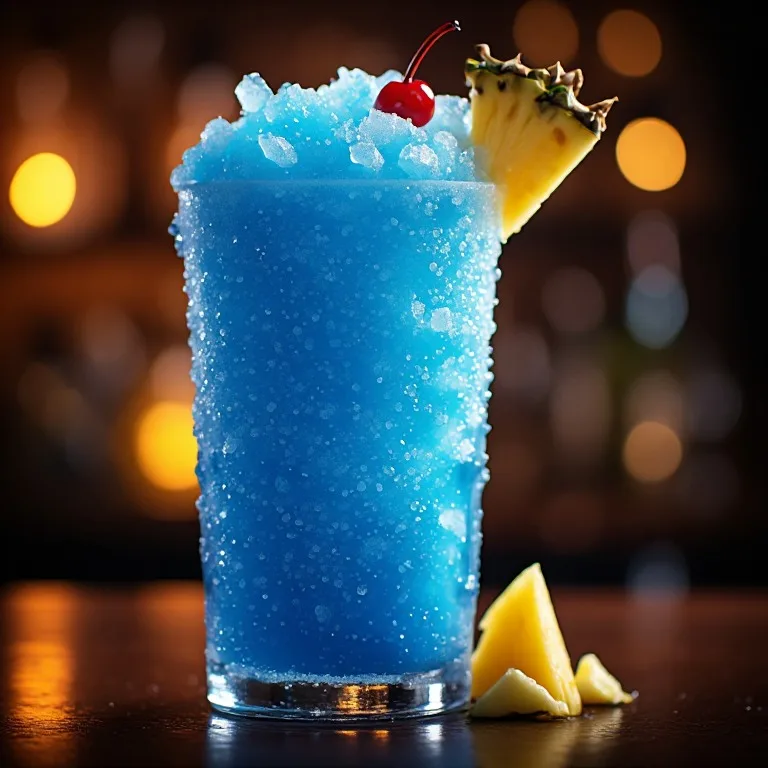
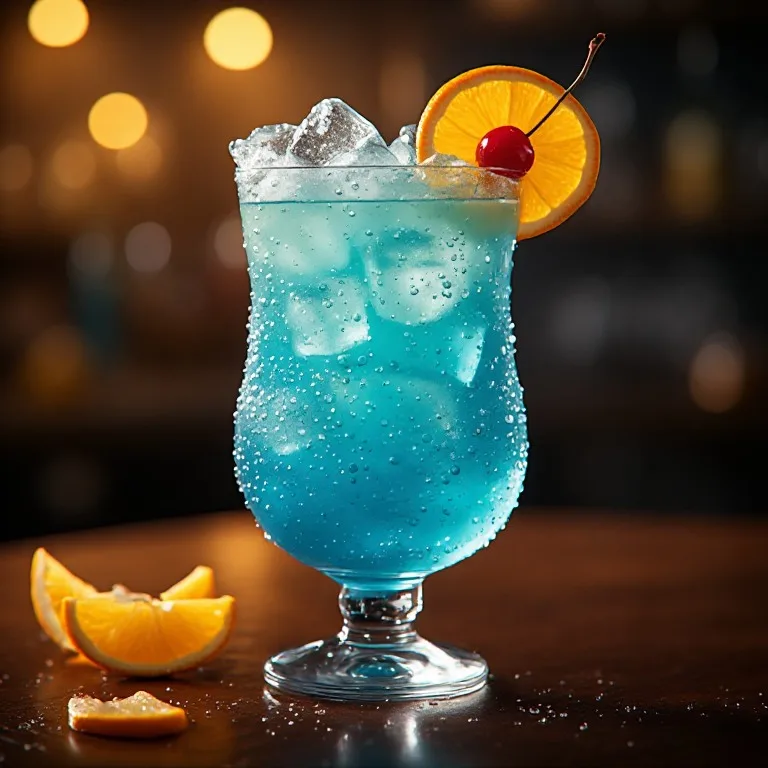
The original Blue Hawaii is smaller, sharper and less creamy than the blue resort drink many people picture. Harry Yee’s recipe uses two clear base spirits, blue curaçao and sweet-and-sour mix. There is no coconut cream and no pineapple juice in the glass. Pineapple appears only as the garnish.

Yee created the cocktail at the Hawaiian Village on January 3, 1957. Hilton says a representative for Bols asked him to make a drink featuring blue curaçao. The vivid color gave the drink instant visual recognition, but its structure is practical: rum gives it a tropical foundation, vodka keeps that foundation light, orange liqueur supplies color and flavor, and sour mix balances the sugar.

What Hilton Hawaiian Village Actually Serves

The resort still serves a Blue Hawaii, but it is important to separate today’s menu from Yee’s original. Tapa Bar’s current menu lists Skyy vodka, blue curaçao, lemon sour and soda for $18. Rum is absent, and soda makes the current version a lighter highball.

Hilton’s history page describes the original as blue curaçao, light rum, vodka and sweet-and-sour mix. A recipe published courtesy of Hilton Hawaiian Village supplies the exact proportions used here: three-quarter ounce each of rum and vodka, one-half ounce curaçao and one ounce sour.

This page preserves that documented 1957 formula. It does not claim that Tapa Bar currently pours the historic spec. Both versions are real Hilton drinks from the same property at different moments.

Blue Hawaii, Not Blue Hawaiian

The two names are often treated as synonyms, but they describe different builds. A Blue Hawaiian usually contains coconut cream and pineapple juice, making it a blue relative of the piña colada. Harry Yee named his drink Blue Hawaii, without the final “an,” and his published formula contains no coconut.

That distinction explains why many copycats taste wrong. Adding coconut makes a pleasant frozen drink, but it covers the crisp rum, vodka, orange and citrus balance that defines Yee’s cocktail. Adding several ounces of pineapple juice does the same thing.

The garnish may have helped cause the confusion. Yee’s recipe is finished with a pineapple slice and cherry even though pineapple is not part of the liquid.

The Key Technique: Blend Briefly

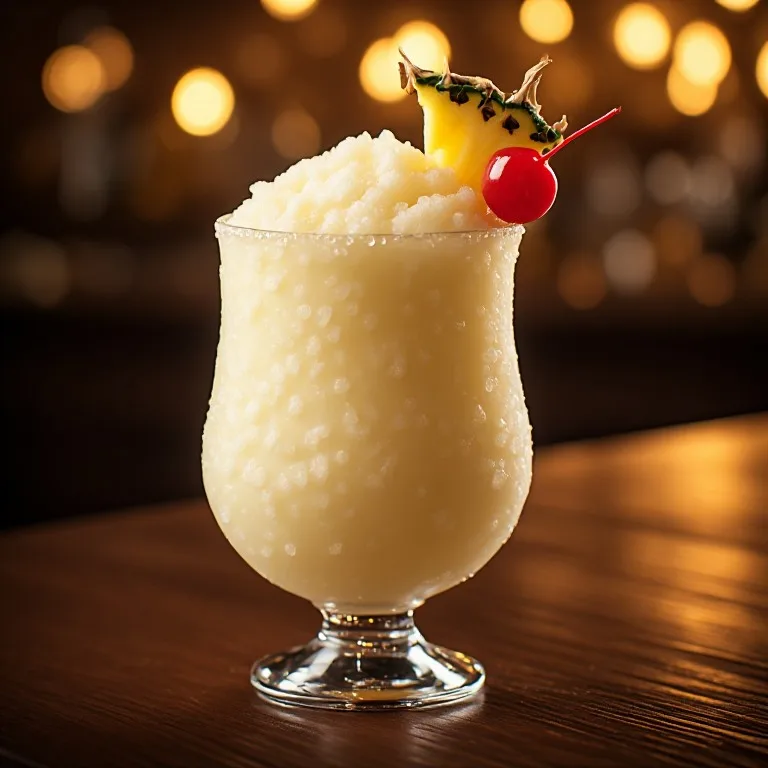
The Hilton-supplied directions allow the ingredients to be mixed well or blended when using ice. For a frozen presentation, use cracked ice and a short blend. Ten to fifteen seconds is enough to distribute the color and create a loose slush.

Overblending melts the ice and leaves a thin drink. Underblending leaves white chunks floating in a blue base. Chill the glass first so the small cocktail does not collapse as soon as it is poured.

Sweet-and-sour mixes vary widely. A fresh equal-parts lemon-lime sour works well. If yours comes from a very sweet bottle, reduce it to three-quarter ounce and taste before adding more. The drink should finish tart enough that the blue curaçao tastes like orange, not candy.

Batch the 1957 Blue Hawaii

For eight drinks, combine 6 oz (180 ml) light rum, 6 oz (180 ml) vodka, 4 oz (120 ml) blue curaçao and 8 oz (240 ml) sweet-and-sour mix. Refrigerate the batch for up to one day.

For the closest texture, measure 3 oz (90 ml) of batch per drink and blend with one cup of cracked ice. To serve without a blender, add 8 oz (240 ml) cold water to the full batch, stir and pour 4 oz (120 ml) over crushed ice in each glass. Garnish every serving with a small pineapple wedge and cherry.

The Blue Hawaii Mocktail

The zero-proof version needs a dry base or it becomes citrus syrup. A 0.0% cane-spirit alternative replaces the combined rum and vodka. Blue curaçao syrup brings orange flavor and color, but it is sweeter than liqueur, so fresh lemon and lime are essential.

Blend it for the same loose-slush texture and use the same garnish. Check that the spirit alternative says 0.0% if complete alcohol avoidance matters. Some nonalcoholic spirits can contain trace alcohol.
See all Hilton Hawaiian Village copycat drinks →

Enjoy responsibly. Must be 21+. One US standard drink is about 0.6 fl oz of pure alcohol (National Institute on Alcohol Abuse and Alcoholism: What Is a Standard Drink?).

Sources

Free · Personalized PDF · BetaAdd Hilton Hawaiian Village Blue Hawaii: Harry Yee's 1957 Original to your free custom bar bookLoved this one? Start a personalized PDF bar book of your favorite copycat cocktails (mocktail versions included) — we build it and email it to you, free while in beta.Add this recipe →

What equipment do you need?

Blender

Recreates Hilton's published option for serving the original with ice

Jigger

Keeps the equal rum and vodka pours and smaller curaçao measure in balance

Highball glass

Provides the tall presentation specified with the Hilton-supplied recipe

Common questions

What is in the original Blue Hawaii?

The recipe supplied by Hilton Hawaiian Village uses 3/4 oz light rum, 3/4 oz vodka, 1/2 oz blue curaçao and 1 oz sweet-and-sour mix. It can be mixed or blended with ice and is served tall with pineapple and a cherry.

Who invented the Blue Hawaii cocktail?

Hilton Hawaiian Village head bartender Harry Yee created it on January 3, 1957, after a Bols representative asked for a drink featuring blue curaçao. Hilton documents Yee and that date directly.

Is the Blue Hawaii still served at Hilton Hawaiian Village?

Yes, but the current Tapa Bar menu lists a changed recipe: Skyy vodka, blue curaçao, lemon sour and soda for $18. It omits the original rum. The recipe on this page preserves Yee's Hilton-published 1957 formula rather than claiming to match the current bar build.

Is a Blue Hawaii the same as a Blue Hawaiian?

No. A Blue Hawaiian commonly includes coconut cream and resembles a blue piña colada. Harry Yee's Blue Hawaii uses rum, vodka, blue curaçao and sour mix, with no coconut. The backlog's 'Blue Hawaiian' wording has been corrected to the documented Blue Hawaii name.

How strong is a Blue Hawaii?

With 80-proof rum and vodka and a 20% blue curaçao, this version contains about 1.2 US standard drinks. After normal blending dilution, it is approximately 14% ABV.

Can I make Blue Hawaiis for a party?

Yes. Multiply the four liquid ingredients by eight and refrigerate. Blend each serving with ice for the best texture, or add 8 oz (240 ml) cold water to the batch and serve it over crushed ice.

How do I make a Blue Hawaii mocktail?

Use a 0.0% cane-spirit alternative for the rum and vodka base, blue curaçao syrup for color and orange flavor, and fresh lemon-lime sour mix for the same bright finish.

Free PDF · 75 cocktails · Zero-proof versions

Love this one? Get all 75 in the free Copycat Bar Book.

The 75 copycat cocktails people order most, chapters by spirit, with a zero-proof version of every drink. Free download.

Get the Bar Book →

Love this recipe? Share it!

Free PDF: The Copycat Bar Book. 75 copycat cocktails, each with a zero-proof version.

What do readers say?

—
No ratings yet

Rate this recipe

Click a star to rate

Leave a Review

0/500

AB

Ankit Bhasin

Every drink on Copycat Cocktail is researched against what the restaurant or bar actually serves, specced in ounces, and paired with a zero-proof mocktail version. Where history or specs are uncertain, we say so.

Learn more about our mission →