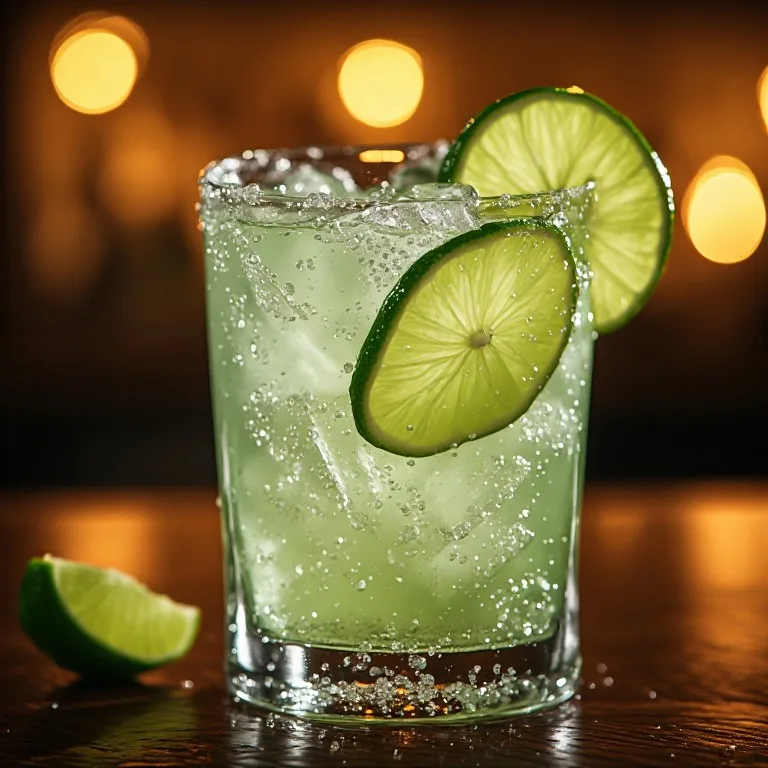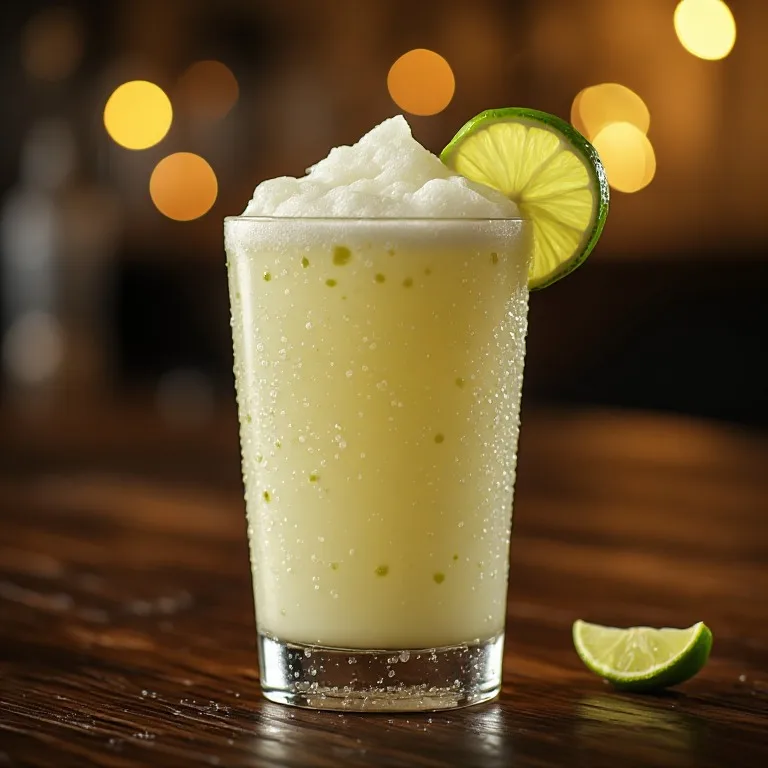
Brazilian lemonade is a lime cooler that went creamy. You blend the fruit with cold water, strain off the peel, and emulsify that sharp liquid with sweetened condensed milk. The boozy version is the same glass with cachaça in the second blend. It drinks like a milkshake that remembered it was citrus, and the spirit should sit in the background.
The nickname limonada suíça is Brazilian. The fruit is the lime that Brazilian Portuguese calls limão. No single bar owns the spiked edition that took over short videos. The recipe here is a measured home glass in that family.
This is a warm-weather drink. In November it still earns a pitcher when the rest of the table is brown liquor and pie and you want one cold, tart thing in the fridge.
Where the drink came from
Limonada suíça is everyday Brazilian drinking, the sort of thing made at home and in snack bars when limes are good and a can of condensed milk is already in the cupboard. No published house spec names a founding restaurant, a year, or a formula that everyone else copied. Written recipes split into two camps. One squeezes lime juice, blends it with condensed milk and water, and gets a smooth pale drink. The other, which is the one that traveled on social video, puts pieces of lime in the blender so the oils smell louder, then hopes the bitterness stays in line.
Cachaça is the spirit that belongs next to it. It is Brazil’s cane spirit, the same family of liquor that anchors a caipirinha, and test-kitchen notes on the nonalcoholic limeade have suggested a shot of it for years. US videos often reach for white rum or vodka because those bottles are already open. Both can taste fine. They are substitutions, and this recipe does not pretend otherwise. One ounce is the amount that keeps a single glass near 0.7 standard drinks. A casual “splash” in a video can be half of that or twice it.
Why typical copycats miss
The bitter glass is a timing problem. Lime peel and the white pith taste floral for a few seconds and soapy or medicinal after that. A blender left on high for a full minute pulverizes the pith into the liquid. Straining cannot fully undo that. Ten seconds, then a fine strainer, is the whole trick.
Dairy order is the second miss. Condensed milk blended with the peel turns gray-green and picks up every bitter note you were about to throw away. Strain first. Then add the milk. Regular milk and light cream curdle against this much lime and taste thin. Sweetened condensed milk is the one that stays silky. Evaporated milk is a weaker understudy.
The third miss is patience. The foam falls, the color dulls, and leftover peel oil gets louder if the pitcher sits through a party. Extra sugar on top of a full ounce of condensed milk pushes it into candy. A large blender is a practical miss too. One lime and four ounces of water can ride above the blades, so use a personal blender or make two.
The key technique: a short blend, a hard strain, then the dairy
Wash the lime. The skin is going in the jar. Trim both ends, where the oil is thick and the fruit is dry, and cut the rest into quarters. If the lime is heavily waxed and still feels slick after a wash, peel off the green zest with a knife and blend the flesh. You will lose some aroma and dodge a lot of bitterness. That is a fair trade.
Blend with cold water only, about ten seconds. The water should look juicy and the pieces should be broken, not pureed into a paste. Strain through a fine mesh and press once with a spoon. Throw the solids away. They have done their job.
Back into the blender go the lime water, one ounce of cachaça, one ounce of cold condensed milk, a pinch of salt, and a cup of ice. The salt is small and it keeps the sweetness from sitting flat. Blend until the ice is mostly broken and the drink looks like a pale frost. Pour it into a cold highball. A lime wheel on the rim smells cleaner than more peel inside the glass.
If the glass is still too bitter, use 1 oz (30 ml) fresh lime juice in place of the blended lime and skip the strainer. That is the cleaner, juice-only branch. In a November spread, pour this next to the rich dishes. It is a cold contrast, not a substitute for an after-dinner whiskey.
A six-glass pitcher
For six, wash and quarter 6 limes and pulse them with 24 oz (720 ml) cold water. Work in two blender loads if the jar is small, and keep each pulse near 10 seconds. Strain all of it into a bowl, pressing lightly.
Blend the strained liquid with 6 oz (180 ml) cachaça, 6 oz (180 ml) sweetened condensed milk and 1/4 teaspoon fine salt. At this point you have a smooth base. Hold it covered in the refrigerator for up to an hour. When you are ready to pour, blend it again with ice, in two loads if needed, and divide it among six highballs. Garnish each with a lime wheel.
Do not ice the pitcher in the morning or leave the base on the counter. Set the cachaça beside the blender if you want adults to add a measured ounce per glass and everyone else to drink the batch straight. White rum can replace the cachaça one for one and tastes a little rounder. Vodka tastes cleaner. Say which bottle you used.
The Brazilian limeade mocktail
Leave out the cachaça and add nothing in its place. The strained lime water, condensed milk, salt and ice are the original drink, and they do not taste unfinished. The spirit was a later idea for adults, not the thing that made the lime and the milk work.
The method does not change. Short blend, strain, then dairy and ice, then pour. The calories drop by roughly the 65 in an ounce of cachaça, and the sugar stays, because the sugar is in the condensed milk. For a less sweet glass, start with 3/4 oz (22 ml) condensed milk. A pitcher without spirit follows the six-lime batch above and still needs to be drunk within about an hour.
See more viral cocktail recipes →