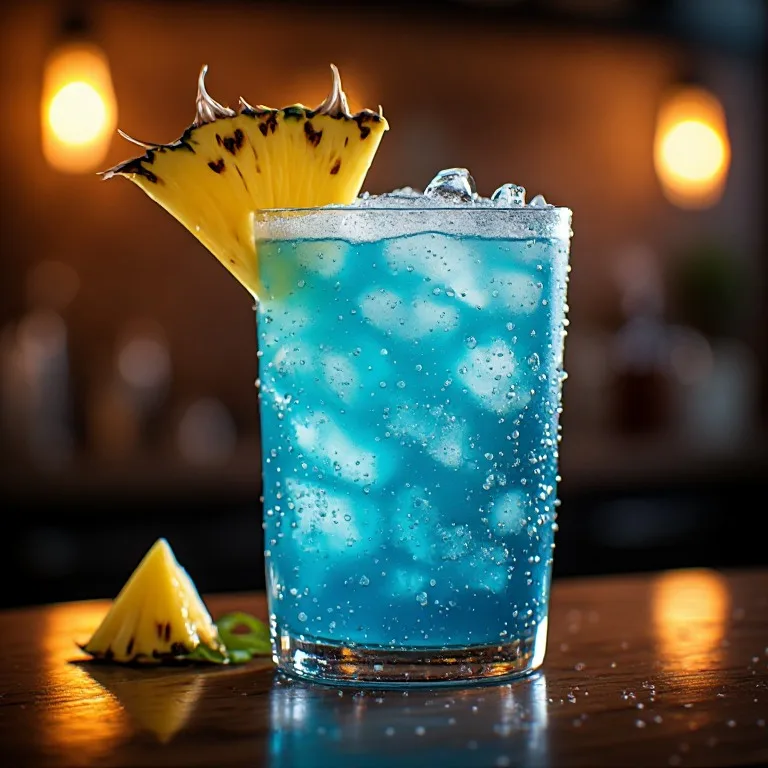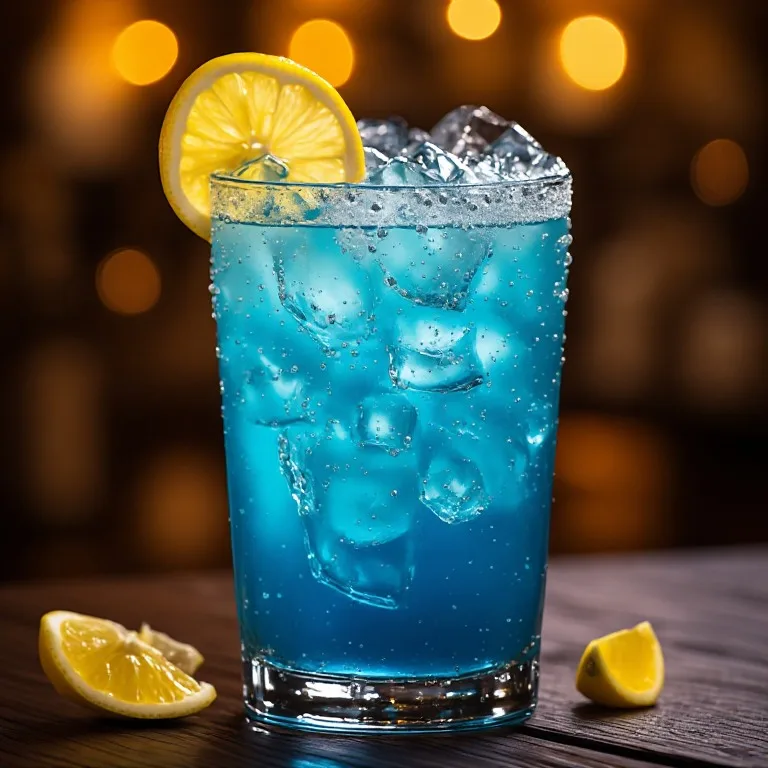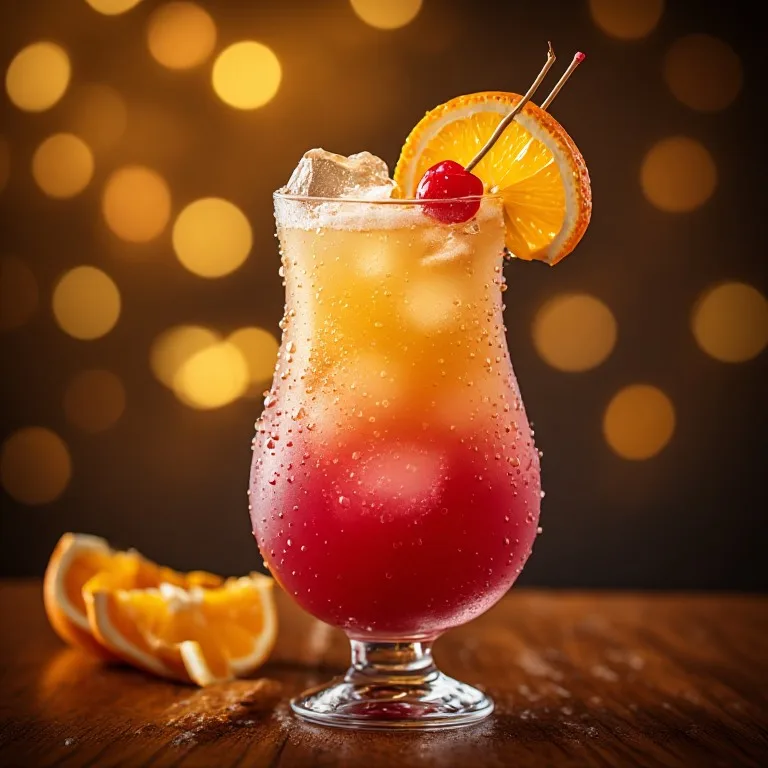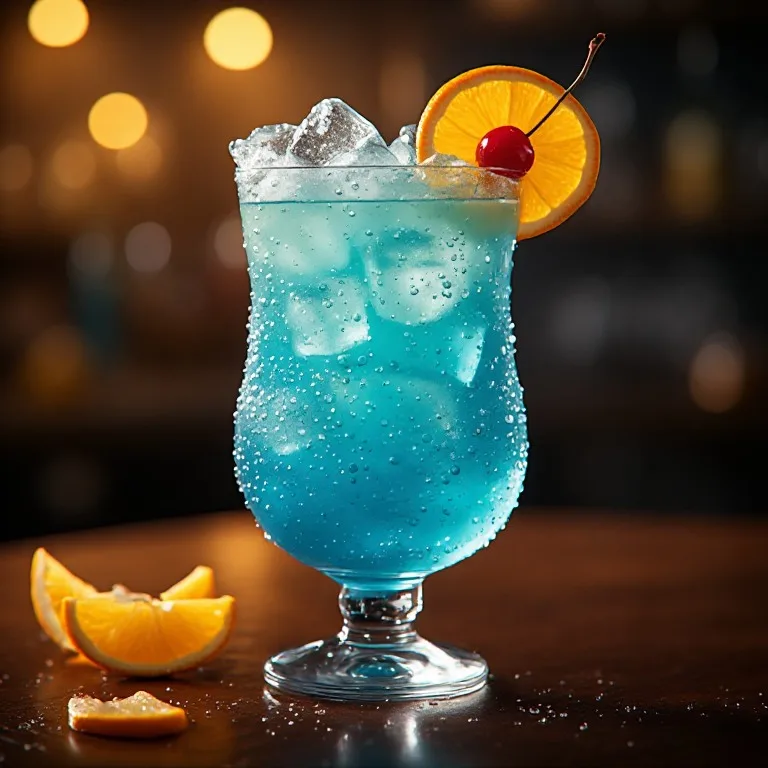
Benihana’s Blue Ocean Punch is designed for spectacle: a brilliant turquoise drink, plenty of fruit and a bowl large enough to share. Under the color is a more interesting combination than a standard blue rum punch. Coconut rum and pineapple vodka provide the tropical core, while sake gives the blend a light, dry edge.
The restaurant currently offers two formats. The Blue Ocean Punch Bowl is labeled for two or more, and the Baby Blue Ocean is the single-serving version. This recipe focuses on that smaller drink so the serving size and alcohol estimate are clear.
What Benihana Actually Serves
Benihana’s current US beverage page describes the punch with Malibu coconut rum, New Amsterdam Pineapple Vodka, sake, blue curaçao and tropical fruit juices. The chain does not disclose exact ounces, the type of sake or the complete juice blend. It also warns that selections and prices can differ by location.
The January 2025 Benihana beverage nutrition guide provides another useful clue: it lists the Baby Blue Ocean at 270 calories. That supports a generously sweet tropical drink, not a lean vodka highball. The guide gives the full bowl 1,220 calories, but its serving-size column appears inconsistent with the menu’s shareable presentation. This home version therefore does not claim to scale the restaurant bowl exactly.
Why Typical Copycats Miss the Balance
Many blue punch recipes rely on coconut rum, blue curaçao and pineapple juice alone. That combination is colorful but quickly becomes sticky. Benihana’s published list includes pineapple vodka and sake, two ingredients that change the shape of the drink. The vodka strengthens the pineapple aroma without adding more juice, and the sake softens the spirits while keeping the finish relatively dry.
Too much blue curaçao is another common problem. Its orange sweetness can overpower coconut and pineapple before the drink reaches the right shade. Half an ounce is enough for a vivid blue in a single serving, especially when the other liquids are pale.
Finally, bottled sour mix can make the punch taste blunt and sugary. Fresh lemon gives the juice blend a cleaner edge. Orange juice rounds the acidity, while pineapple provides body and foam.
The Key Technique: Shake, Then Use Fresh Ice
Shake the drink only until it is thoroughly cold, about 10 to 12 seconds. Pineapple juice aerates easily, and a short firm shake creates a light cap without turning the whole glass foamy.
Strain over new ice rather than dumping shaker ice into the glass. The broken pieces in a shaker melt quickly and can make this already long drink watery. Fresh cubes give the cocktail a cleaner appearance and more predictable dilution.
For the brightest color, use clear blue curaçao, pale pineapple juice and a dry, lightly colored sake. Dark or cloudy ingredients can push the drink toward green. The taste matters more than an exact shade, but the vivid blue presentation is part of the restaurant experience.
Make a Blue Ocean Bowl for Four
Combine 3 oz (90 ml) coconut rum, 3 oz (90 ml) pineapple vodka, 2 oz (60 ml) sake, 2 oz (60 ml) blue curaçao, 6 oz (180 ml) pineapple juice, 4 oz (120 ml) orange juice and 2 oz (60 ml) fresh lemon juice in a pitcher. Add 4 oz (120 ml) cold water to replace the dilution that shaking would provide.
Refrigerate for up to four hours. Pour the mixture into a punch bowl over a large block or several large cubes of ice, then add orange wheels and cherries. Serve it in four measured portions. Benihana labels its bowl for two or more, but that statement does not establish the number of standard drinks in the restaurant version.
The Baby Blue Ocean Mocktail
Leaving out all four alcoholic ingredients would produce ordinary tropical juice. A 0.0% coconut spirit restores aroma, and an alcohol-free blue orange syrup supplies the familiar color and citrus note. Strong green tea adds tannin and a dry finish in place of sake.
Look for a syrup specifically labeled alcohol-free. Blue curaçao liqueur contains alcohol, while products sold as blue curaçao syrup generally do not, but labels vary. A fully cooled tea keeps the ice from melting too quickly.
Serve the mocktail in the same tall glass with the same fruit garnish. It should taste bright, gently coconut-forward and less sweet than its electric color suggests.
See more famous restaurant cocktails →