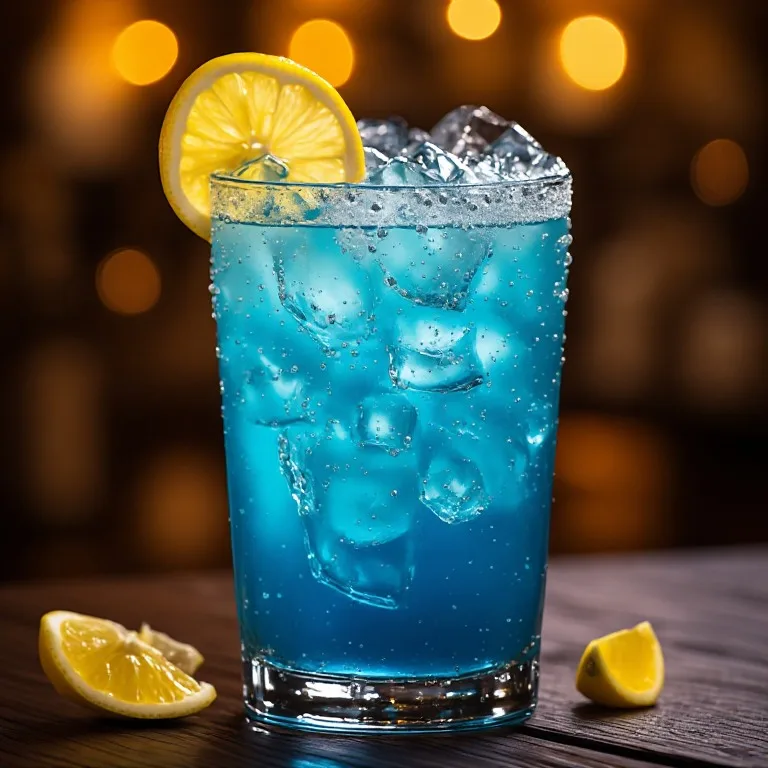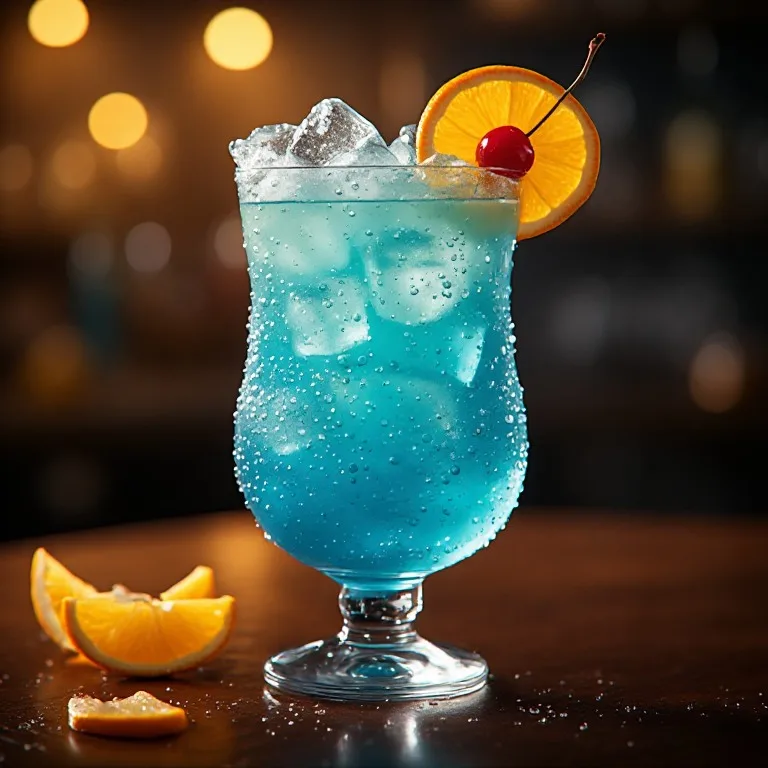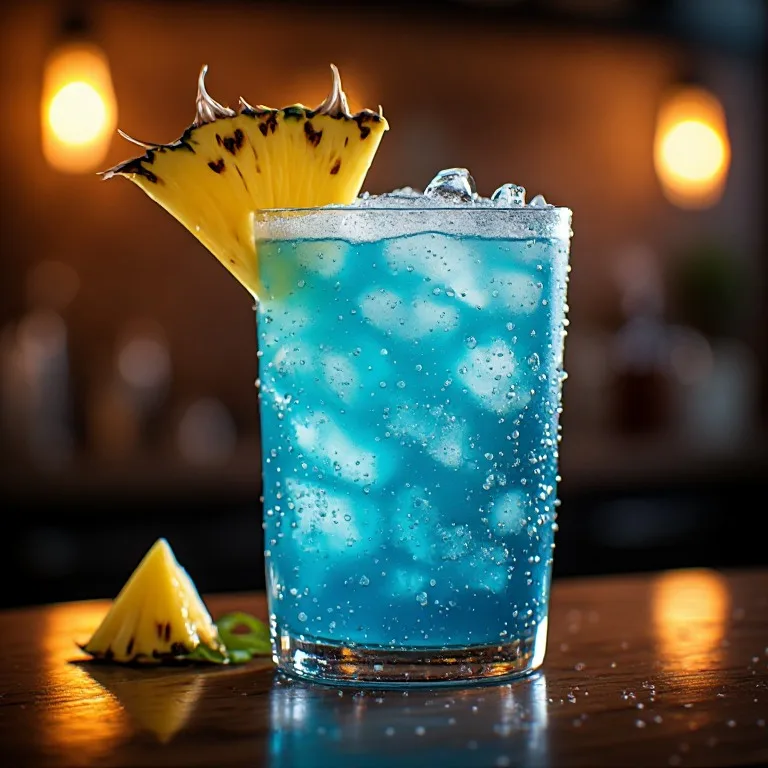
Dangerous Waters Island Punch is one of those restaurant drinks that tells you what it tastes like before the glass reaches the table. It is bright turquoise, pineapple-forward, coconut-scented and sweet-tart, with a tropical profile closer to a beach drink than a serious rum punch.
Dave & Buster’s has kept it recognizable through menu changes. The current formula still names Malibu, blue curaçao, pineapple and fresh citrus mix. That short list is enough to build a faithful home version, but not enough to claim the restaurant’s exact recipe.
What Dave & Buster’s Actually Serves
The current official US menu describes Dangerous Waters Island Punch as Malibu Coconut, blue curaçao, pineapple and fresh citrus mix. Current chain content still calls it a fan favorite, confirming that it is not merely an old menu memory.
Earlier official menus were slightly more specific. A 2019 menu named Malibu Coconut Rum, DeKuyper Blue Curaçao, Minute Maid pineapple juice and house-made sweet-and-sour, and listed the serving at 158 calories. Third-party nutrition trackers put it around 160, and one published cocktail review cites 190, so the exact modern figure is unsettled rather than officially fixed. Either way, the short ingredient list has stayed consistent, which is what matters for a faithful copy.
Dave & Buster’s does not show one national regular price. Some 2026 happy-hour coverage lists Dangerous Waters at about $7, but participating locations and hours differ. Check the local menu before treating that as a promise.
Why Typical Copycats Fail
The first mistake is using equal parts coconut rum and blue curaçao. Blue curaçao is both sweet and assertively orange-flavored. Too much turns the punch dark blue, syrupy and more like candy than pineapple. A half-ounce colors the whole glass without taking over.
Another problem is bottled sour mix used straight from a concentrate. Dave & Buster’s says fresh citrus mix on its current menu. Lemon, lime and simple syrup give a cleaner approximation at home and let the pineapple stay recognizable. The lemon supplies most of the acidity, while a smaller lime measure adds a tropical edge.
Finally, do not confuse coconut rum liqueur with full-proof white rum. Malibu is 21% ABV in the US and contributes sugar as well as coconut flavor. Substituting 80-proof rum at the same volume makes the drink much stronger and removes some of its soft sweetness.
The Key Technique: Shake the Pineapple
Pineapple juice responds well to a firm shake. Its proteins trap air, creating a thin foam that makes a simple four-flavor drink feel fuller. Shake until the tin becomes cold, then strain over fresh ice rather than dumping in the broken shaker ice.
Color is a useful check. Before dilution, the mixture may look intensely blue. Pineapple juice and the pale sour mix should shift it toward the turquoise shown in official menu photography. If it looks green, the pineapple brand may be especially yellow; that does not change the flavor.
Use a modest pineapple wedge. A large wet garnish can drip juice down the glass, and the cocktail already contains plenty of fruit flavor.
Batch Dangerous Waters for a Party
For eight drinks, combine 12 oz (360 ml) Malibu Coconut Rum, 4 oz (120 ml) blue curaçao, 16 oz (480 ml) pineapple juice, 6 oz (180 ml) lemon juice, 4 oz (120 ml) 1:1 simple syrup and 2 oz (60 ml) lime juice. Refrigerate the covered batch for no more than four hours.
Shake 5 1/2 oz (165 ml) of batch with ice for each drink and strain into a highball over fresh cubes. For faster service, add 5 oz (150 ml) cold water to the whole batch and pour it directly over ice, though the punch will have less pineapple foam.
The Safe Harbor Mocktail
Simply removing the liqueurs leaves tart pineapple juice without the coconut-orange identity. Coconut water restores length and a subtle savory quality, while a little coconut syrup replaces the rum liqueur’s sweetness. Alcohol-free blue curaçao syrup handles both color and orange flavor.
Blue curaçao syrup is usually sweeter than the alcoholic liqueur, which is why the mocktail does not use simple syrup. If your syrup is extremely concentrated, start with a quarter-ounce and adjust after tasting.
See more famous restaurant cocktails →