The Black Magic cocktail is less a fixed recipe than a Halloween costume for a drink. Search the name and you will find black vodka floated over orange juice, black vodka with grenadine and soda, and even an older combination of vodka, coffee liqueur and lemon. The blackberry version belongs to the newer wave of dark, camera-ready Halloween sours.
This copycat keeps the theatrical look but gives it a recognizable flavor structure: vodka for a clean base, blackberry liqueur for ripe fruit, lime for acidity and just enough syrup to round the edges. The finished drink is tart, berry-forward and genuinely black to deep violet, depending on the vodka and liqueur brands.
What the Viral Drink Actually Is
There is no venue menu, official price or accepted Black Magic specification to copy. Published Halloween recipes use the name for several unrelated builds. One widely circulated blackberry version combines vodka, blackberry liqueur and lime, then darkens it with activated charcoal. Other current versions call for commercial or food-colored black vodka, citrus, soda and edible shimmer.
That makes the origin uncertain. The modern blackberry-black vodka drink appears to have spread through party blogs and social posts rather than from one credited bartender. It is usually made at home for Halloween, though seasonal pop-ups sometimes sell their own cocktails under the same name. Those bar versions may bear little resemblance to this one.
Why Typical Versions Miss
The biggest problem is designing only for color. Too much dark berry liqueur makes the drink sticky, while too much lime makes plain vodka taste thin and sharp. Some recipes add several ounces of syrup, which hides the blackberry completely.
Activated charcoal is another avoidable shortcut. It produces a striking black drink, but it can reduce the absorption of orally taken medicines. Commercial black vodka or beverage-safe food coloring creates the look without putting charcoal in the glass. Black vodka may be hard to find, so a deep purple version made with clear vodka is a perfectly good fallback.
Finally, decorative dust must actually be edible. “Nontoxic” craft glitter is not the same thing. Buy luster dust sold for beverages or edible cake decoration and use only a pinch.
The Key Technique: Balance Before Color
Start with a compact sour ratio: 1½ ounces vodka, ½ ounce blackberry liqueur, ¾ ounce fresh lime and ¼ ounce simple syrup. Shake it hard enough to chill and dilute the citrus, then taste a small spoonful. Blackberry liqueurs range from jammy and sweet to relatively tart. If yours is very sweet, leave out the syrup; if it is dry, the quarter-ounce keeps the lime in check.
Add shimmer only after the drink is balanced. A large amount settles into a metallic-looking layer and can feel gritty. One small pinch catches the light when the glass moves. Fine-straining removes ice shards and gives the surface a clean, inky finish.
Make a Witches’ Brew Batch
For eight cocktails, mix 12 ounces black vodka, 4 ounces blackberry liqueur, 6 ounces fresh lime juice, 2 ounces simple syrup and 6 ounces cold water. The water replaces the dilution you would get from shaking. Chill the batch for at least two hours and stir before serving.
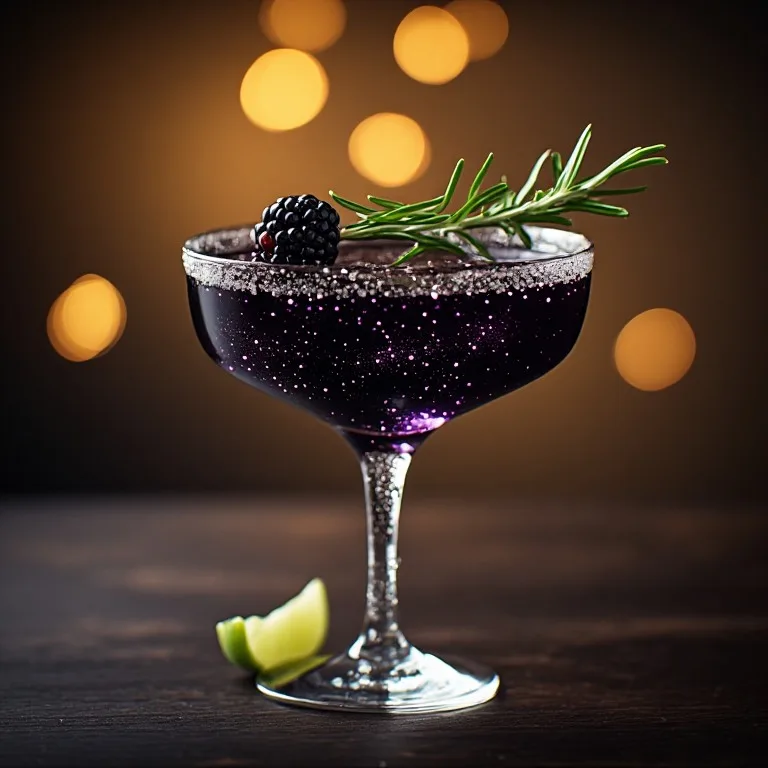
Pour 3¾ ounces into each cold coupe. Add edible shimmer glass by glass so it does not settle at the bottom of the pitcher, then garnish with a blackberry and rosemary. Fresh lime is best the day it is squeezed, so do not batch this more than one day ahead.
Never put dry ice directly into a drink that will be served. If you want a fog effect, place a small bowl of the cocktail pitcher inside a larger cauldron containing dry ice and water, keeping the dry ice completely separate from anything guests can swallow.
The Midnight Blackberry Mocktail
The zero-proof version needs more than juice and syrup. Strong black tea supplies tannin and the slightly dry finish that alcohol normally provides. Blackberry syrup delivers fruit and color, while the full measure of lime keeps it lively. Cold water opens the concentrated flavors without turning it into a tall soda.
It will naturally pour dark burgundy or purple. One drop of beverage-safe black coloring gives it the full midnight appearance, but it is optional. The rosemary garnish adds a piney aroma that makes the mocktail feel as deliberate as the cocktail.
Serving the Spell
A chilled coupe makes this feel like a party cocktail rather than a glass of dark juice. Keep the garnish restrained: one blackberry and a short rosemary sprig read as witchy without getting in the way. For a less formal party, serve it over one large cube in a rocks glass and increase the batch water slightly as the drink will dilute more slowly.
The recipe is built for Halloween, but blackberry and lime work beyond October. Skip the coloring and shimmer and it becomes a simple dark-fruit vodka sour.