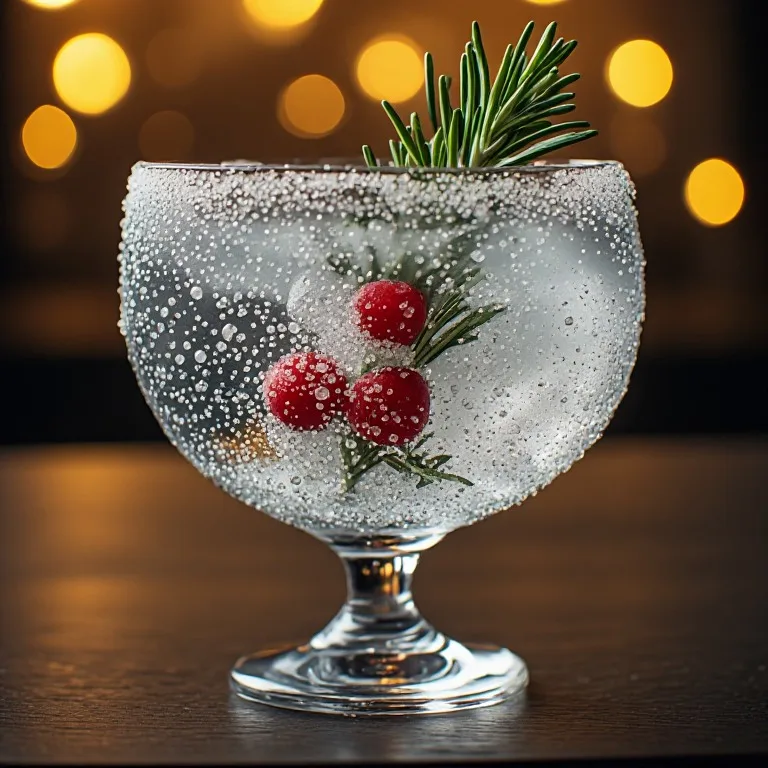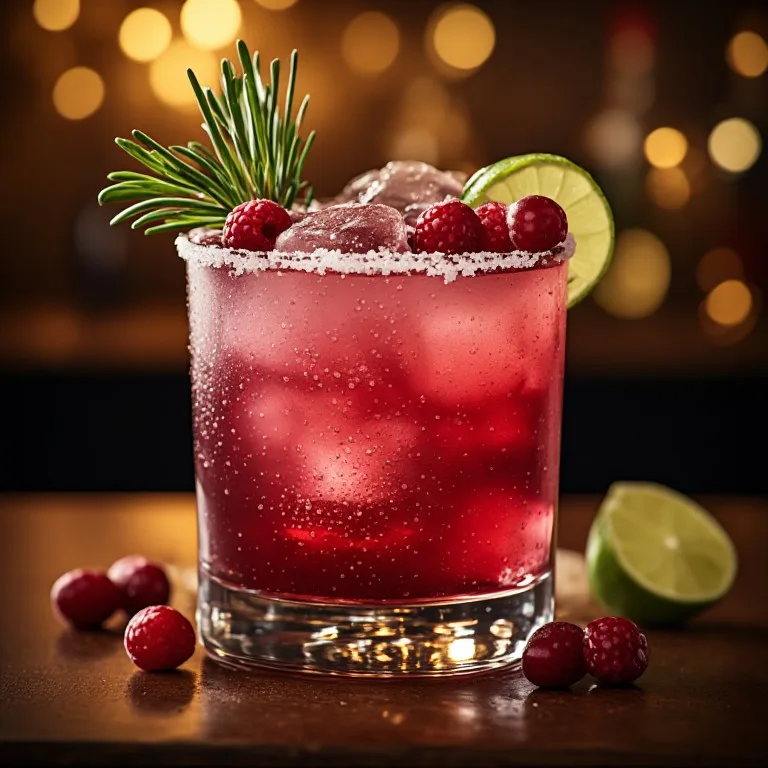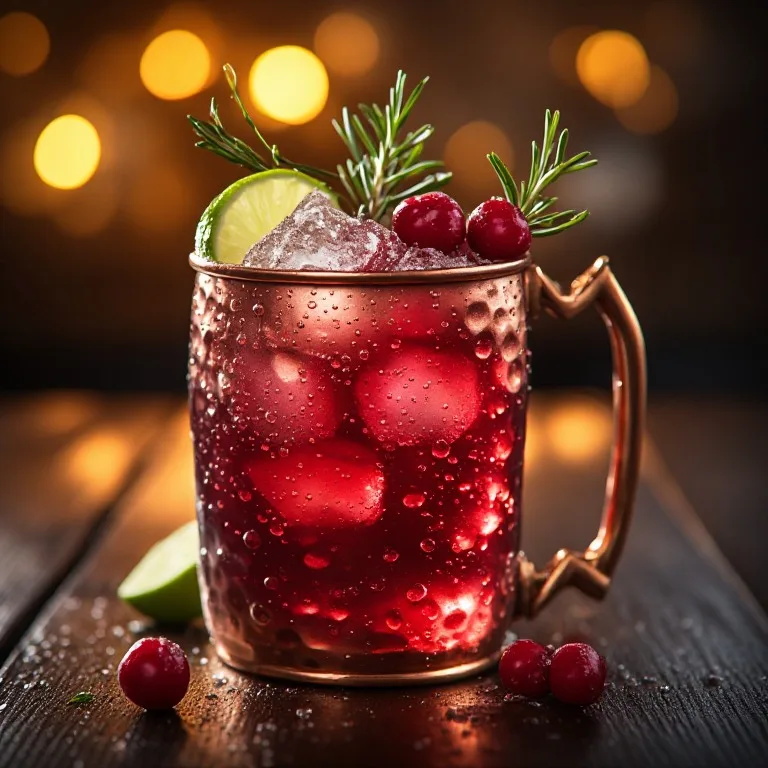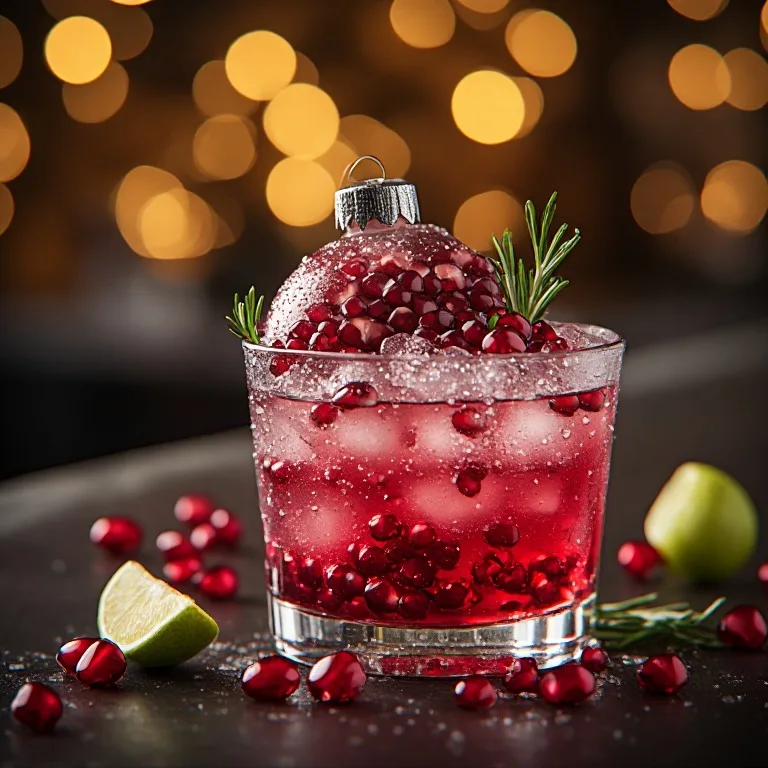
The Christmas Ornament Cocktail is a party trick with a drink inside it. A ruby pomegranate margarita arrives in a clear bauble, and the guest pours it over a glass dressed with jewel-like fruit and rosemary. It looks elaborate, but the cocktail itself takes only a few minutes to shake.
The name does not describe one classic formula. Social-media creators have filled ornaments with vodka-cranberry drinks, blue cocktails, margaritas and mocktails. This recipe uses a documented pomegranate margarita version because its tart fruit, orange and lime remain balanced after the reveal is over.
What the Viral Versions Actually Use
Creator Michelle Lei (@bymichellelei) shared an ornament pomegranate margarita pairing tequila with pomegranate, orange liqueur and lime, though the exact pours are reported differently across write-ups. Other documented versions filled clear ornaments with vodka, cranberry and sparkling drinks instead.
Those different drinks make the trend’s defining feature clear: the ornament is a serving device, not an official recipe. There is no verified bar origin, fixed price or single inventor. Its availability follows holiday social media and home entertaining rather than a restaurant menu.
This version uses a balanced pomegranate margarita build. A quarter ounce of simple syrup is optional because some bottled pomegranate juices are fiercely tart while others are sweetened. Taste the juice before deciding.
Why Typical Ornament Cocktails Fail
The biggest mistake is treating any clear ornament as a cup. Decorative glass is thin and brittle, and craft versions may contain paint, glitter, glue or metal pieces that were never intended to touch food. Use a purpose-made plastic drink ornament labeled food-safe. The cocktail should be poured into a real glass before anyone drinks it.
Oversized recipes create another problem. A small ornament has limited capacity, and overfilling makes the cap leak. Shake first, strain carefully and leave a little air at the top. Keep the ornament upright in a small glass until serving.
Finally, do not let presentation excuse a sugary drink. Pomegranate already brings concentrated fruit and orange liqueur adds sweetness. Fresh lime keeps the margarita sharp. Skip the syrup unless the first taste genuinely needs it.
The Key Technique: Shake, Fine-Strain, Then Fill
Mix the cocktail normally before it goes anywhere near the ornament. A hard 12-second shake supplies the chilling and dilution that the drink needs. Trying to shake or chill the ornament itself is messy and can damage the cap.
Fine-straining matters because pulp and ice chips can lodge in a narrow opening. Set the clean ornament in a small glass so it cannot roll, then use a food-safe funnel to fill it. Cap it only after the foam settles.
Prepare the rocks glass separately with fresh ice, pomegranate arils and a small rosemary sprig. The rosemary is aromatic and visually tree-like, but it should be rinsed and trimmed so it does not poke the guest. Rest the ornament in or beside the glass and remove any hanging hardware before service.
Make Eight for a Holiday Party
Combine 12 oz (360 ml) blanco tequila, 16 oz (480 ml) pomegranate juice, 4 oz (120 ml) orange liqueur and 6 oz (180 ml) fresh lime juice in a covered pitcher. Add up to 2 oz (60 ml) simple syrup only after tasting, then stir in 6 oz (180 ml) cold water to replace shaker dilution.
Chill the batch for at least two hours and use it within four hours for the freshest lime flavor. Portion about 5 oz (150 ml) into each clean food-safe ornament shortly before guests arrive. Refrigerate the filled ornaments upright. They are serving containers, not tree decorations.
The Pomegranate Ornament Mocktail
Pomegranate juice and lime alone make a vivid cooler, but they do not have the dry structure of a margarita. A 0.0% agave spirit adds vegetal pepperiness, while nonalcoholic orange cordial restores the citrus bridge normally supplied by triple sec.
Shake and serve the mocktail exactly like the cocktail so zero-proof guests get the same reveal. Check labels if strict alcohol avoidance matters, since products described as nonalcoholic may contain trace amounts. A clearly marked 0.0% bottle is the straightforward option.
The result should taste tart first, then orange and agave, with rosemary contributing aroma rather than flavor. That balance makes the ornament memorable even after the novelty pour.