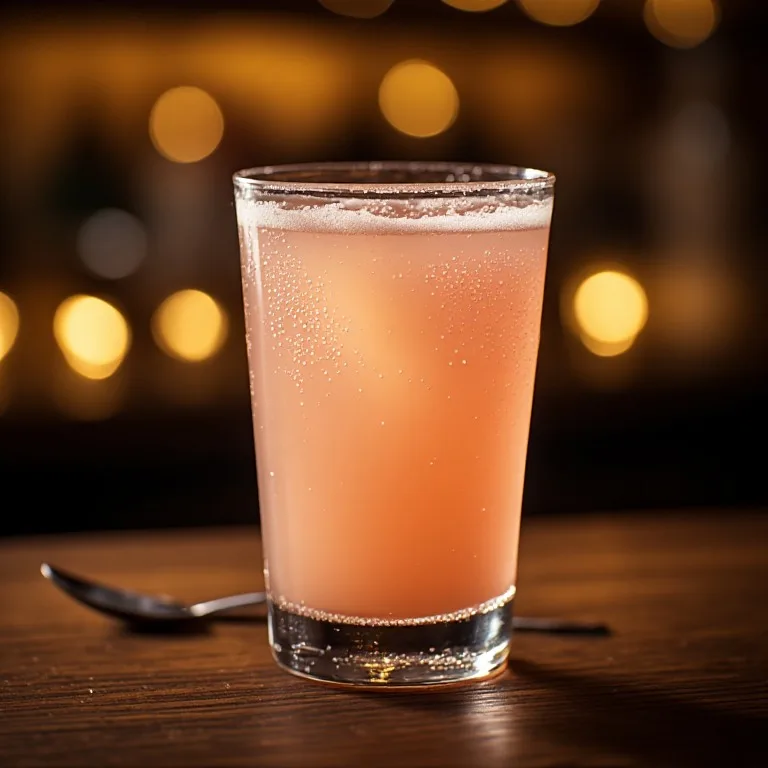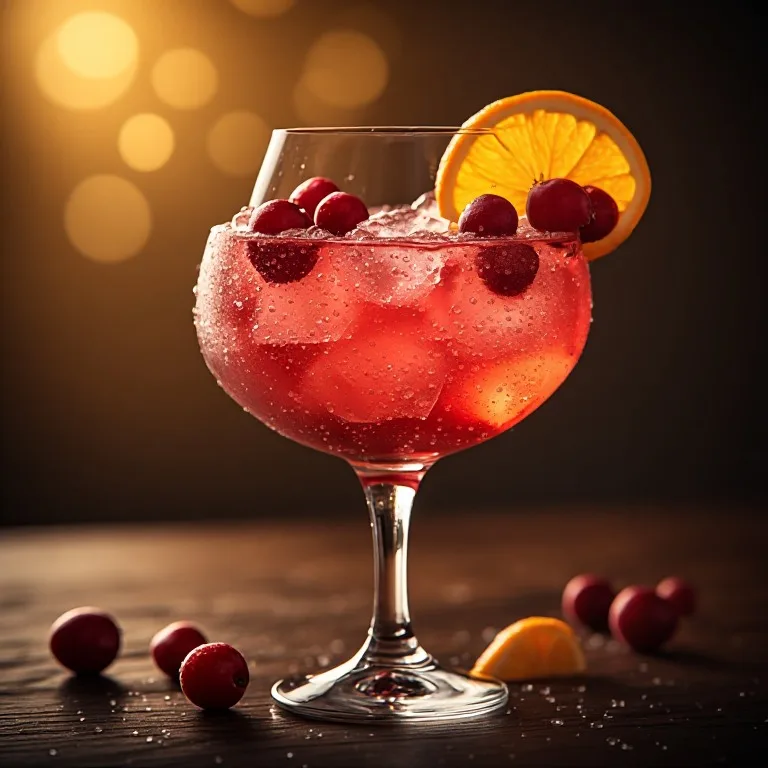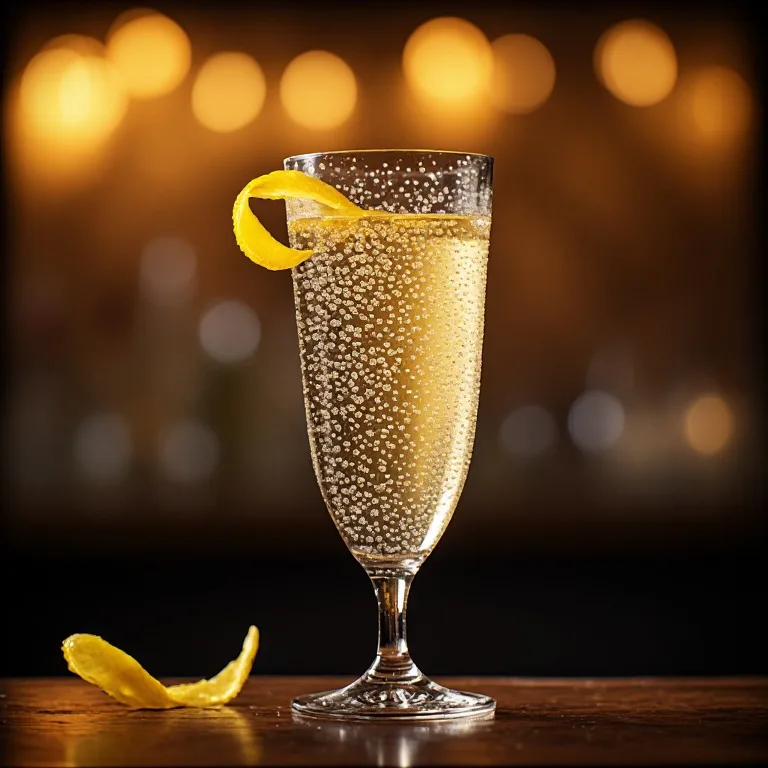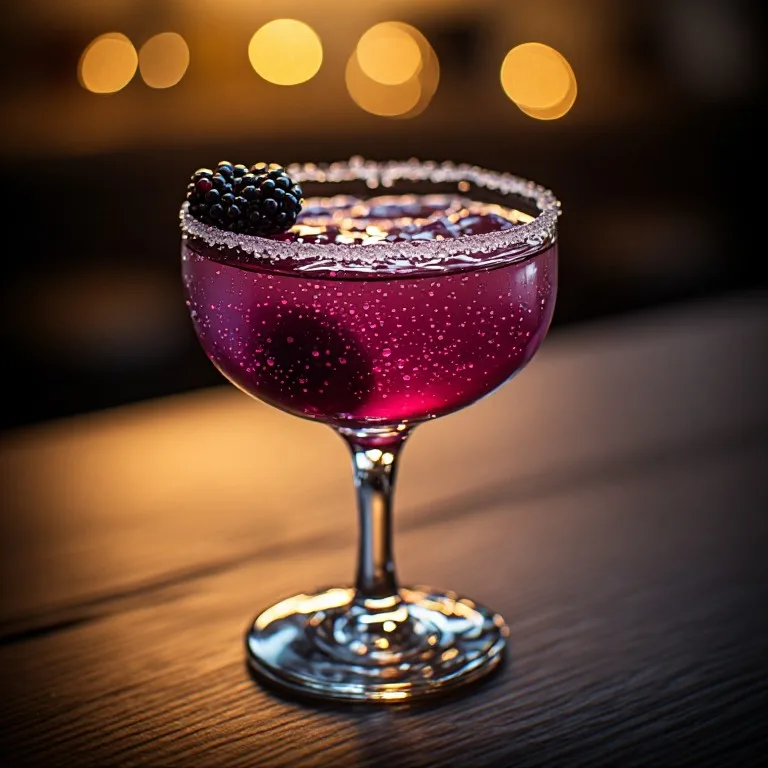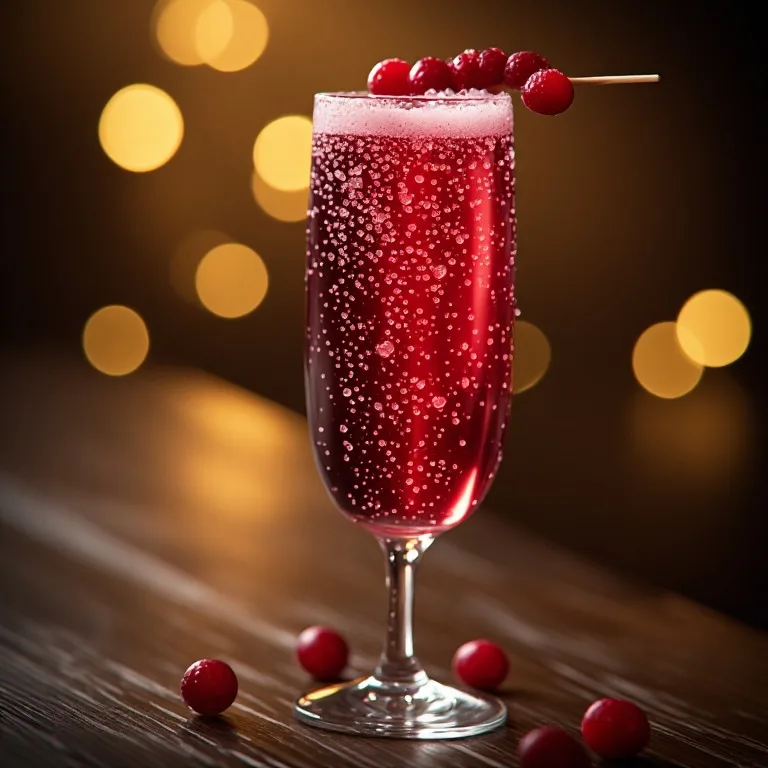
A Poinsettia is a short red sparkling drink: cranberry juice, a half ounce of orange liqueur, and brut bubbly in a flute. The name comes from the color. The holiday plant is red, the glass is red, and the drink shows up from Thanksgiving weekend through New Year brunch for that reason. Cranberry belongs on a November table. The flute belongs at Christmas morning and at a New Year toast. One recipe covers all three if the wine stays dry.
No published source names a credited inventor or a debut bar. Published measurements do not agree. Some flutes are mostly wine with a stain of cranberry. Some are orange liqueur and juice with a splash of bubbles. The build here keeps the wine in charge: 3 oz brut, 1 1/2 oz sweetened cranberry juice cocktail, and 1/2 oz of orange liqueur at 40% ABV.
Where the drink comes from
Sparkling wine with a splash of fruit liqueur is an old aperitif pattern. The Kir Royale, crème de cassis topped with sparkling wine, is the famous relative. The Poinsettia swaps in cranberry and a small orange pour. The name is visual. Poinsettias are the red holiday plants, and the drink is red in a flute. No year, city, or bartender is confirmed for that name. The ingredient list varies enough that the Poinsettia is a category.
Serve it as people arrive. There is no ice to slow the glass down, and each flute is still about 0.9 standard drinks. One at Thanksgiving, one at Christmas brunch, or one at a New Year lunch is the right count. After that, pour the wine you are serving with food.
Why typical copycats fail
The sparkling wine is sweet. Brut is the dry designation you want. Extra-dry, in the confusing language of Champagne, is actually sweeter than brut. A dessert sparkling wine or a sweet prosecco, poured over sweetened cranberry juice and orange liqueur, tastes like cranberry soda. Buy brut. Prosecco and cava are the right price for a party. Region matters less than dryness.
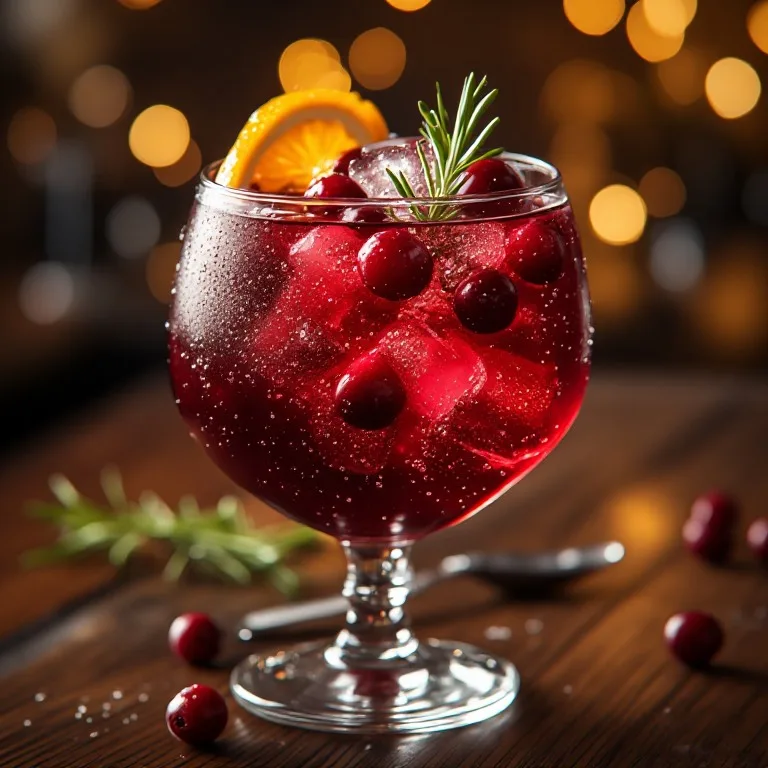
The juice and the liqueur outweigh the wine. A flute holds roughly 5 to 6 oz before it looks reckless. If 1 oz of orange liqueur and 2 oz of juice go in first, the wine is a topper, and the drink is hot and sugary. Half an ounce of a 40% orange liqueur is enough for the orange oil to show. One and a half ounces of cranberry juice cocktail colors the glass and keeps a tart edge. Three ounces of wine is the rest.
Shaking sparkling wine flattens it and makes a mess. Build the juice and liqueur in the flute, pour the wine in two short stages, and give it one slow lift with a bar spoon only if a dark layer is sitting under a pale one. Chill the wine, the juice, the liqueur, and the flute. Ice in the flute waters the drink. If the juice is warm, chill the juice and liqueur with one ice cube in a separate glass, strain that into the flute, and then add the wine.
The key technique
Measure the orange liqueur. In a 5 oz drink, an extra quarter ounce is a big swing. Use a jigger, not a free pour from a bottle with a sticky neck. Forty percent is the assumption behind the strength on this page. Cointreau sits at that proof and is the bottle most recipes mean. A brandy-based orange liqueur is a bit richer and works at the same volume. A bottom-shelf triple sec at 15% ABV will taste thinner and often sweeter, and the drink will be weaker than 0.9 standard drinks. That is fine if you know it. It is not the same recipe.
Pour cranberry juice cocktail, then liqueur, then wine. Let the mousse settle before you add the pick. Three cranberries are enough. A handful in the glass knocks the bubbles down.
Unsweetened 100% cranberry juice needs a different measure: 1 oz plus 1/4 oz of 1:1 simple syrup. The sugar figures on this card assume sweetened cranberry juice cocktail. Hold the flute by the stem and pour it when someone is ready to drink. A tray of flutes waiting on the counter goes flat.
A pitcher for Christmas morning
You can batch the still ingredients. You cannot batch the bubbles. For eight drinks, stir 12 oz (360 ml) cranberry juice cocktail with 4 oz (120 ml) orange liqueur and refrigerate up to 24 hours. Juice is the perishable part. A day is a safe window. Two days is pushing it for fresh flavor even if the mix is still fine to drink.
You need 24 oz (720 ml) of brut, so plan on two bottles and recork the second if it is not finished. Each flute gets 2 oz (60 ml) of the cranberry mix and 3 oz (90 ml) of wine, poured when the person is in the room. Put a water glass beside the station. One flute is the welcome drink. The still mix will wait in the fridge. An open bottle of sparkling wine will not.
The Poinsettia Fizz
Orange liqueur is doing two jobs: orange flavor and a little weight. Fresh orange juice covers the flavor. A strip of zest, twisted over the flute, covers the oil that juice alone does not have. The bubbles have to come from somewhere dry. A 0.0% brut-style sparkling wine is the swap that keeps the drink from turning into punch. Three ounces of that, 1 1/2 oz of cranberry juice cocktail, and 1/2 oz of orange juice is the mocktail.
Sweet cider and white grape juice with soda are a different, sweeter drink. The fizz above is about 55 calories when the sparkling bottle is nearly dry and the cranberry juice is the sweetened kind. Some zero-proof sparkling wines are closer to juice than to brut, so read the label.
Build it in the same cold flute, with the same cranberries. At a mixed table, the mocktail should look like the cocktail. The recipe is what changes, not the glass.
See more viral cocktail recipes →