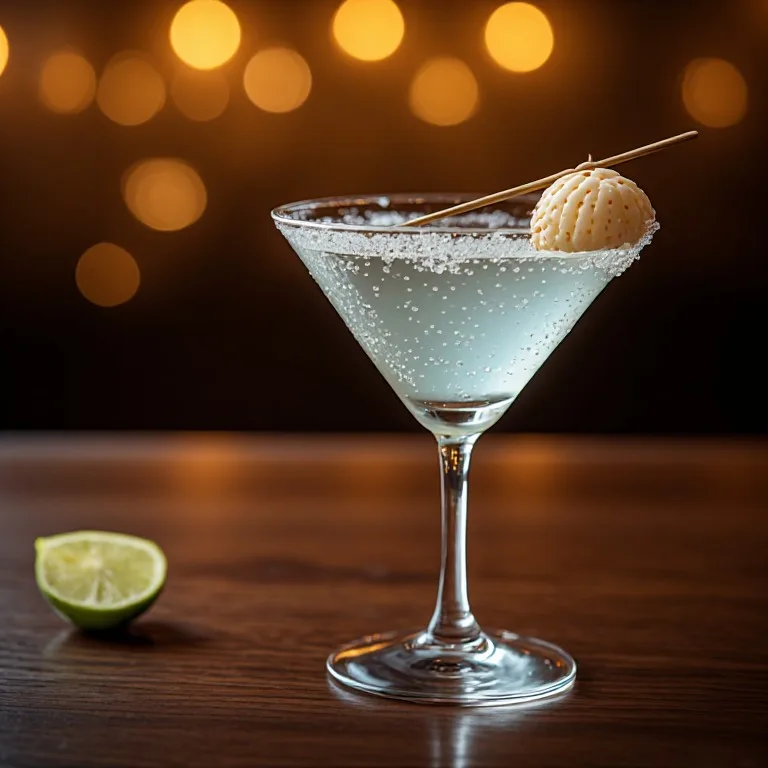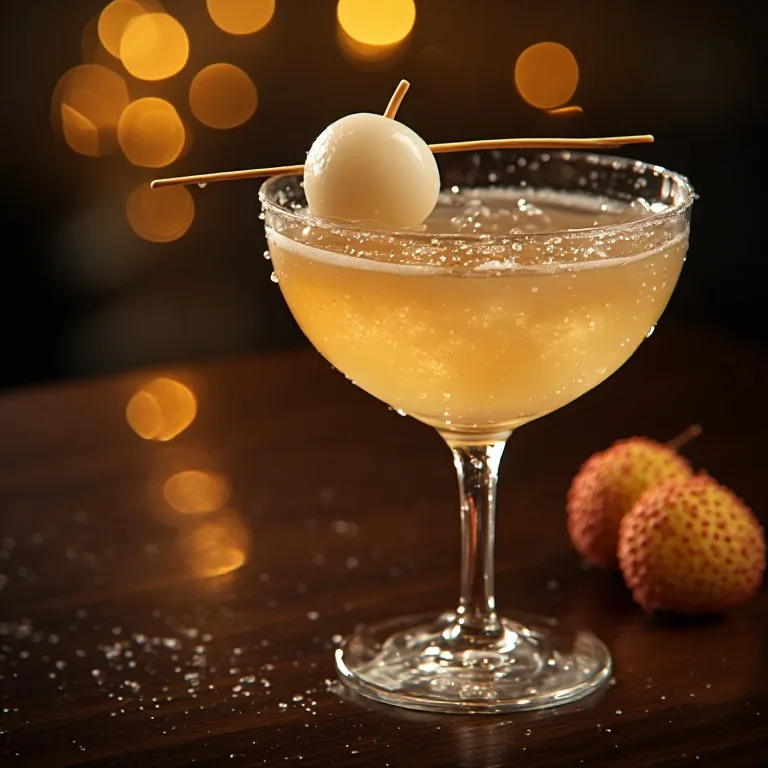
Nobu’s Lychee Martini looks almost austere: a clear, frosty drink with one pale lychee. Its flavor is anything but plain. Lychee carries rose, pear and grape notes, and cold vodka gives those aromas a clean frame.
The appealing part is also the challenge. Nobu locations do not all publish the same ingredient list. Some list only vodka and lychee, while others add elderflower liqueur. The restaurant group does not publish current exact measurements. This recipe therefore follows the simple New York Downtown description and uses a documented fruit-and-juice technique, while labeling the ounces as a home interpretation.
What Nobu Actually Serves
Nobu New York Downtown currently places its Lychee Martini in the light, crisp and refreshing section. The menu names Spring 44 Vodka and lychee, and recent listings put the regular drink around $22, with a roughly $17 Tanoshi Hour version. Nobu Hotels separately describes the signature as a frosty blend of vodka and vibrant lychee juice.
There is no single worldwide Nobu ingredient list. London Portman Square names Haku vodka, St-Germain and lychee. Atlantic City also includes elderflower liqueur, and Mexico City lists Stolichnaya Vodka with lychee juice. That variation matters: adding elderflower may resemble one Nobu bar, but it is not necessary to copy the current New York listing.
The Origin Story Is Not Settled
Nobu Hotels calls the drink synonymous with its name and says it influenced bar menus globally. Reporting on the renewed lychee-martini trend says the original Nobu in New York opened in 1994 with one on the menu. That gives Nobu a meaningful place in the cocktail’s modern popularity.
It does not prove Nobu poured the first lychee martini ever made. Cocktail origin stories often become more certain as they are repeated, while early menus and recipes remain incomplete. The responsible conclusion is that Nobu made the style famous and enduring, not that it unquestionably invented it.
Why Typical Copycats Miss
The common mistake is stacking lychee liqueur, canned syrup, simple syrup and elderflower liqueur in one glass. Lychee is delicate. Too many sweet, perfumed ingredients turn it from floral to soapy.
Another mistake is adding a full ounce of lemon or lime. Citrus can make a lively lychee sour, but the current New York menu describes a cleaner vodka-and-lychee drink. This version leaves citrus out of the cocktail and controls sweetness by combining canned syrup with unsweetened lychee juice.
Finally, dropping fruit pulp directly into the glass gives the drink a cloudy, uneven texture. Use the whole fruit for aroma, then double-strain it away.
The Key Technique: Fruit Plus Juice
A Nobu beverage director has described blending lychee fruit with lychee juice to highlight its floral character. At home, one gently muddled canned lychee accomplishes that without requiring a blender. Press it just enough to break the flesh; aggressive grinding can force too much fibrous pulp through the strainer.
Add cold vodka, canned syrup and unsweetened lychee juice. Shake hard with firm ice, then pass the drink through both the shaker strainer and a fine-mesh strainer. A frozen glass is important because this martini has no ice once served.
Taste the canned syrup before mixing. Brands vary. If it is extremely heavy, use 3/4 oz syrup and 3/4 oz unsweetened juice instead. The goal is fragrant fruit with a clean vodka finish, not dessert syrup.
Batch Six for Dinner
Blend 6 canned lychees, 6 oz (180 ml) canned lychee syrup and 3 oz (90 ml) unsweetened lychee juice until just broken down. Fine-strain, then combine with 12 oz (360 ml) vodka. Refrigerate the sealed batch for up to 24 hours.
For each drink, shake 3 1/2 oz (105 ml) of batch with ice for 12 seconds and fine-strain into a frozen coupe. Garnish each glass with a fresh lychee from the can. Do not simply pour the batch from the refrigerator; shaking supplies the dilution that brings the estimated finished strength down to about 19% ABV.
The Lychee White Tea Mocktail
Vodka contributes more than alcohol. It gives the drink weight and a dry finish that prevents lychee from tasting like canned fruit dessert. Strong chilled white tea is a useful replacement because its floral aroma supports lychee while its tannin trims sweetness. Unsweetened coconut water supplies body without a conspicuous coconut flavor.
The mocktail includes a quarter ounce of lemon because it lacks alcohol’s drying effect. That small amount sharpens the finish but does not turn the drink into lemonade. Shake and double-strain it exactly like the cocktail, then serve it in a deeply chilled glass.
Nobu’s lasting lesson is restraint: cold spirit, focused fruit and a polished texture. Keeping that structure matters more than adding another floral bottle.
See more famous restaurant cocktails →