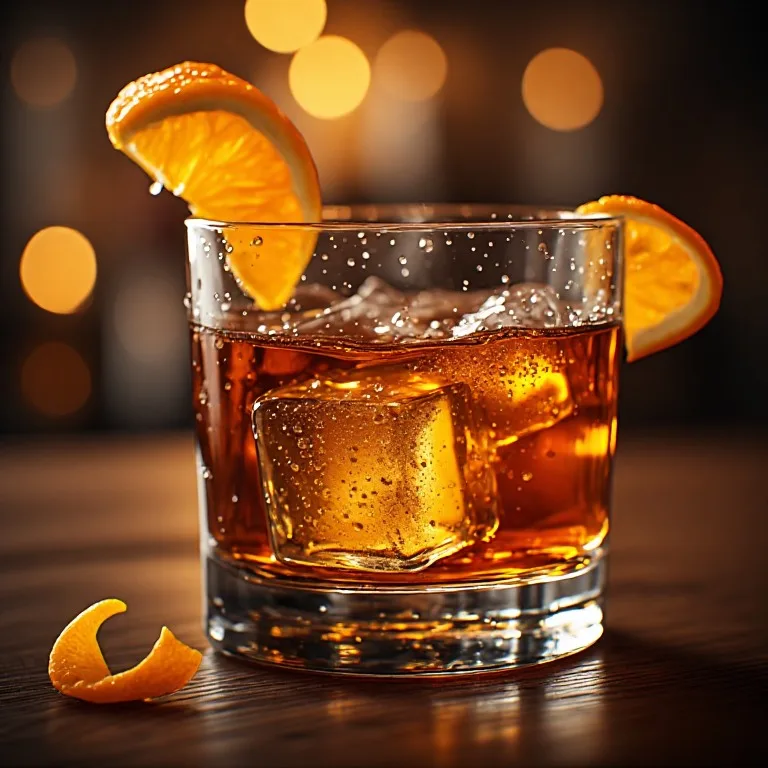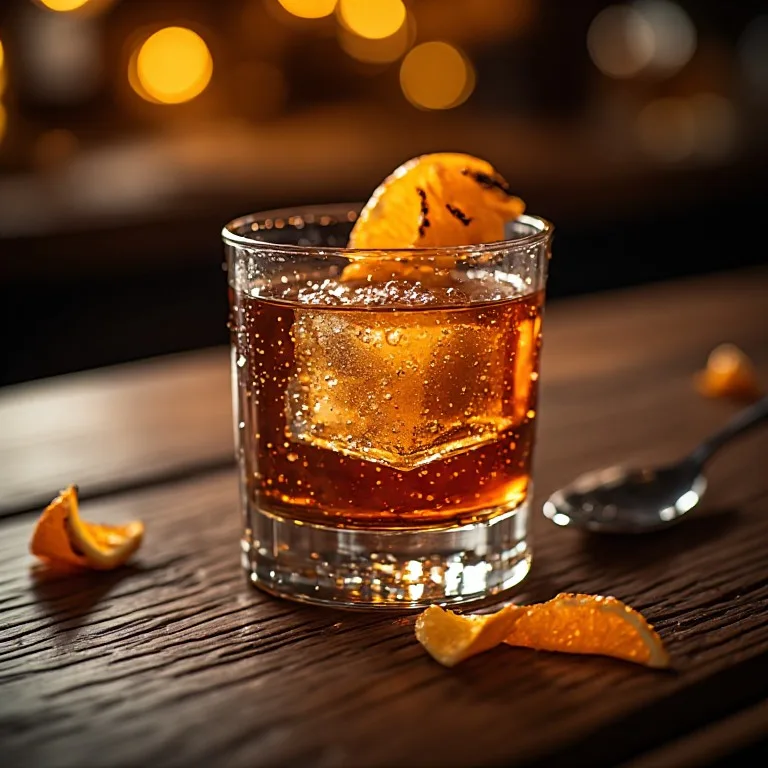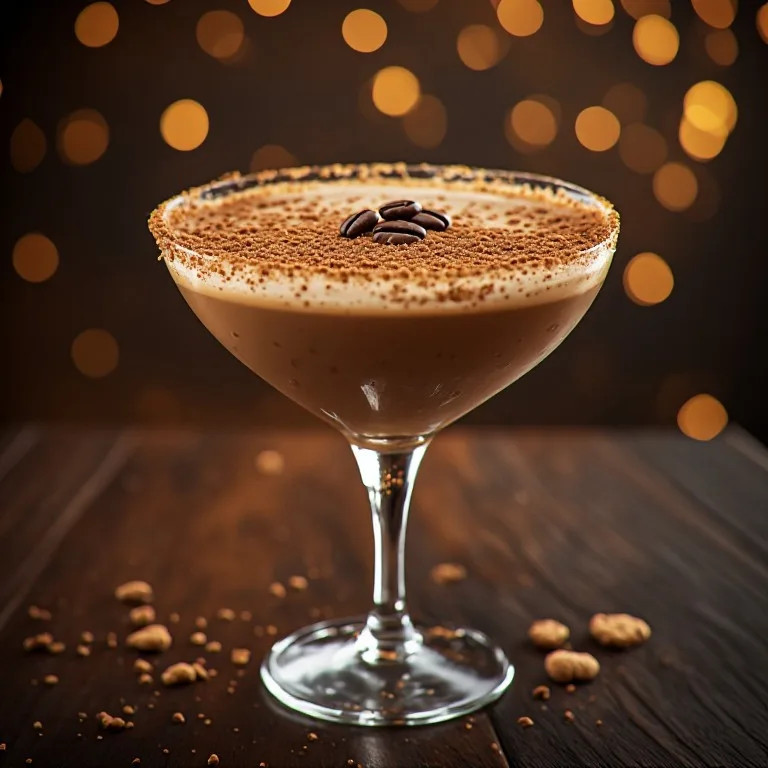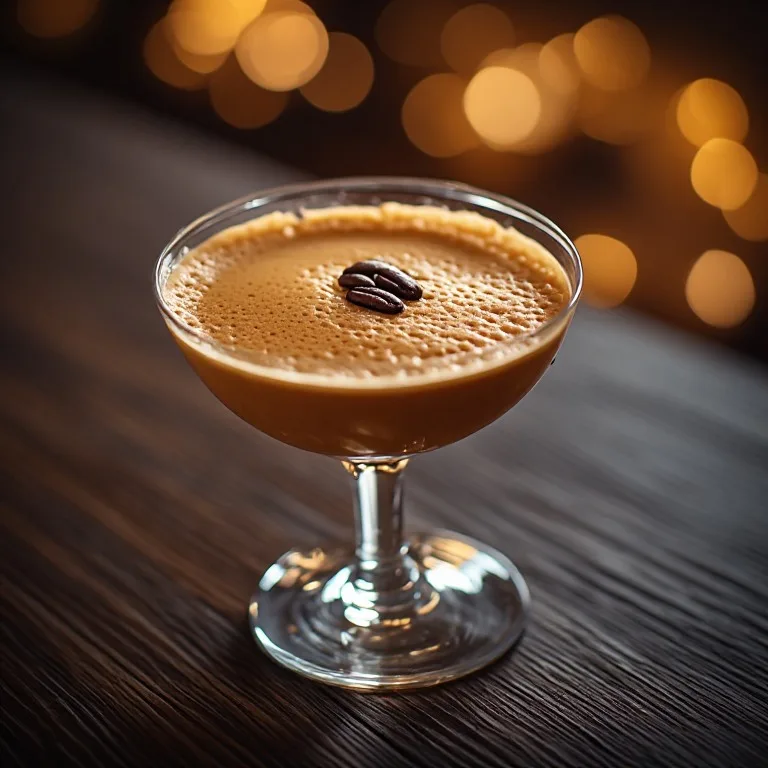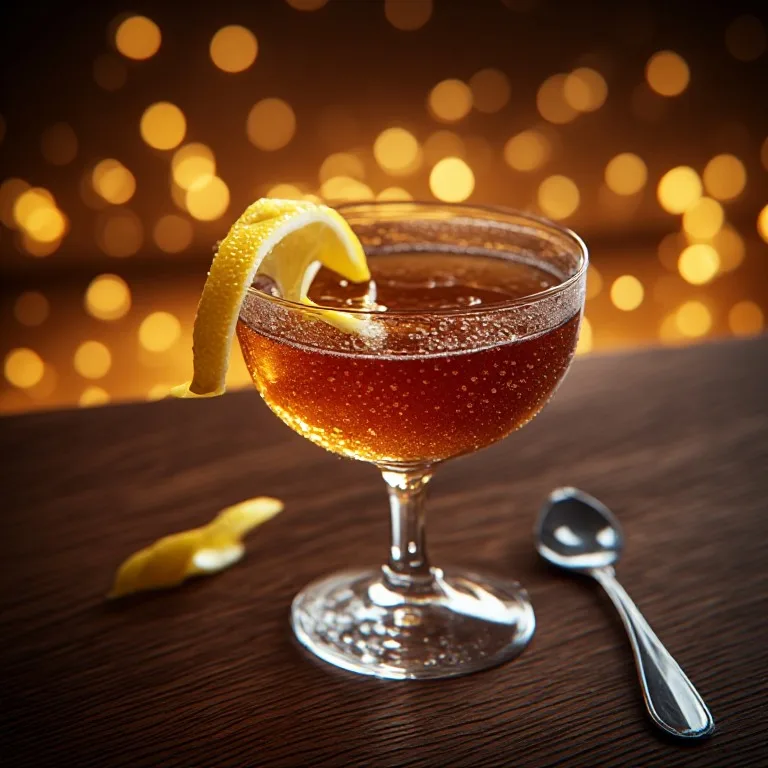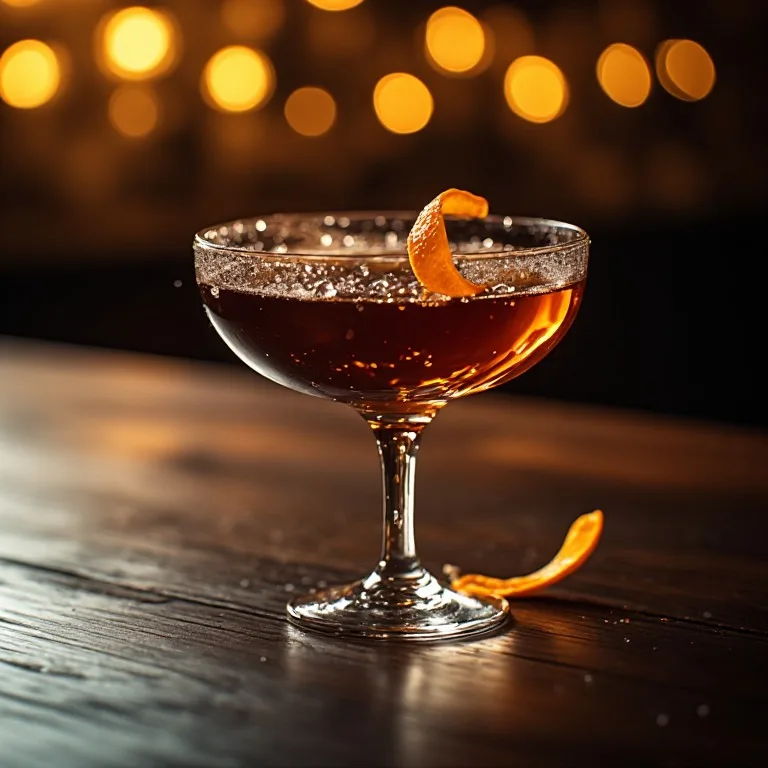
The Revolver is a Manhattan that swapped sweet vermouth for coffee liqueur and put a burnt-orange aroma on top. Two ounces of bourbon keep it serious. A half ounce of coffee liqueur is enough to taste like espresso and not enough to taste like a dessert sauce. It is the right nightcap after Thanksgiving pie, on a cold December night, or when New Year’s Eve has moved from the sparkling wine to the last small glass.
Jon Santer created it in 2004 while he was running the bar at Bruno’s, the Mission District room at 2389 Mission Street. He has said he built it on Bulleit, a case of which happened to be what the bar had, and that he liked a rum-based coffee liqueur in the style of Tia Maria. Punch still prints his recipe in that form.
What Bruno’s Was, and What It Is Now
Bruno’s has occupied 2389 Mission Street for decades, first as an Italian restaurant and later as a jazz room and nightclub. The Revolver belongs to Santer’s 2004 bar. He later took the drink to Bourbon & Branch, where the flamed orange made guests reorder it. That is why the drink spread. Bourbon & Branch is not the birthplace.
Bruno’s closed in March 2020 and stayed dark while permits dragged on. In September 2026, local news reported a soft reopening under new ownership. A grand opening around October 24, 2026 was also reported, with specialty cocktails, bottle service and DJs. That reporting does not name the Revolver, a bourbon, or a price, and it is not confirmed here.
So the honest status on November 7, 2026 is this: a 2026 reopening was reported, and the 2004 cocktail is not confirmed on any new menu. Order it there only if a current list actually offers it. The recipe here is Santer’s published spec, not a claim about what a new room pours.
Why Typical Copycats Fail
The usual miss is a heavy coffee liqueur pour. An ounce of a sweet coffee liqueur buries the bourbon and leaves a drink that tastes like spiked iced coffee. The published recipe is a half ounce. If you cannot taste whiskey on the finish, you have overshot.
The second miss is the wrong coffee liqueur for the job, used without noticing. A very sweet, low-proof bottle needs no help turning the drink into dessert. A modern high-proof coffee spirit, the kind that tastes like straight espresso and alcohol, can be excellent and is also a different recipe. It raises the ABV and dries the finish. If you use one, start at 1/3 oz (10 ml) and taste.
Skipping the stir is the third miss. Shaking a Revolver makes it cloudy and foamy and blows off the orange oil you are about to add. This is a stirred drink. Twenty-five seconds with solid ice is the dilution. Ten seconds leaves it hot. Forty seconds, with wet ice, leaves it thin.
A peel held in the fire until it blackens tastes bitter and sooty. You want a brief burn of the oils as they leave the peel. If you would rather skip the match on a weeknight, express the peel without fire. The drink still works.
The Key Technique: Stir, Then Burn Only the Oil
Cut the peel first, a coin about an inch across, with as little white pith as you can manage. Set it down before you light anything. Stir the bourbon, coffee liqueur and orange bitters until the mixing glass is painful to hold. Strain into a cold coupe.
Light the match and hold it above the drink, not in it. Pinch the peel so the spray crosses the flame on the way to the surface. You should see a small flare and smell orange, then coffee. Drop the twist in if it still smells clean. If the edge is black, throw it out and express a fresh peel without fire.
Orange bitters are doing quiet work under the coffee. Two dashes keep the finish from being only roast and vanilla. One dash disappears. Four dashes start to taste like a different cocktail. Regans’ and other orange bitters both work. Santer’s published recipe says orange bitters and does not lock a single brand in the ingredient line used here.
Bulleit is the historical bottle because it is the one he had. A rye-leaning bourbon around 90 proof is the useful instruction. A very sweet, corn-heavy bourbon plus a sweet coffee liqueur is a lot of dessert in one coupe.
Batch the Bottle, Flame to Order
For eight drinks, combine 16 oz (480 ml) bourbon, 4 oz (120 ml) coffee liqueur and 16 dashes of orange bitters in a bottle. Cap it and keep it at room temperature or in the refrigerator for up to a month. There is no juice to spoil. There is sugar in the liqueur, so refrigerate it if your kitchen runs warm.
For each drink, stir 2 1/2 oz (75 ml) of the batch with ice and strain into a cold coupe. Flame each orange individually. You cannot pre-flame a pitcher. The aroma lasts about a minute, which is the point of doing it at the table.
If you want the batch pre-diluted for a freezer, add 6 oz (180 ml) of water to the eight-drink bottle, freeze until it is thick and cold, and pour 3 1/4 oz (95 ml) per coupe. Taste one before the party. Freezer temperature changes how sweet the coffee liqueur feels. Still flame, or at least express, to order.
The Coffee Peel Nightcap Mocktail
A zero-proof whiskey gives you the grain-and-oak base without pretending cold brew is bourbon. A half ounce of cold brew concentrate, plus a teaspoon of demerara syrup, stands in for the coffee liqueur. Use concentrate, not a full cup of diner coffee, or the drink turns into a small iced latte and the orange disappears.
Alcohol-free orange bitters matter here. Standard orange bitters are an alcoholic product. Two dashes will not make a drink boozy, but they also mean it is no longer zero-proof. Read the label.
Stir, strain, and express the orange. The flame is optional theater on this version. The oil is the part the drink actually needs. If the cold brew is already bitter, skip the extra syrup before you add more. Coffee concentrates vary more than bourbon does.
See more Bruno’s copycat cocktails →