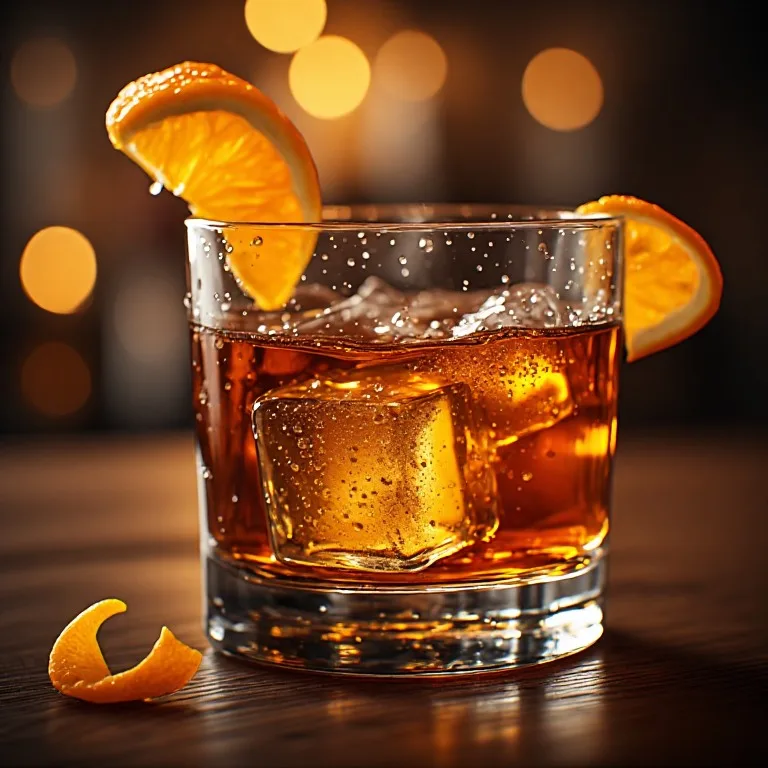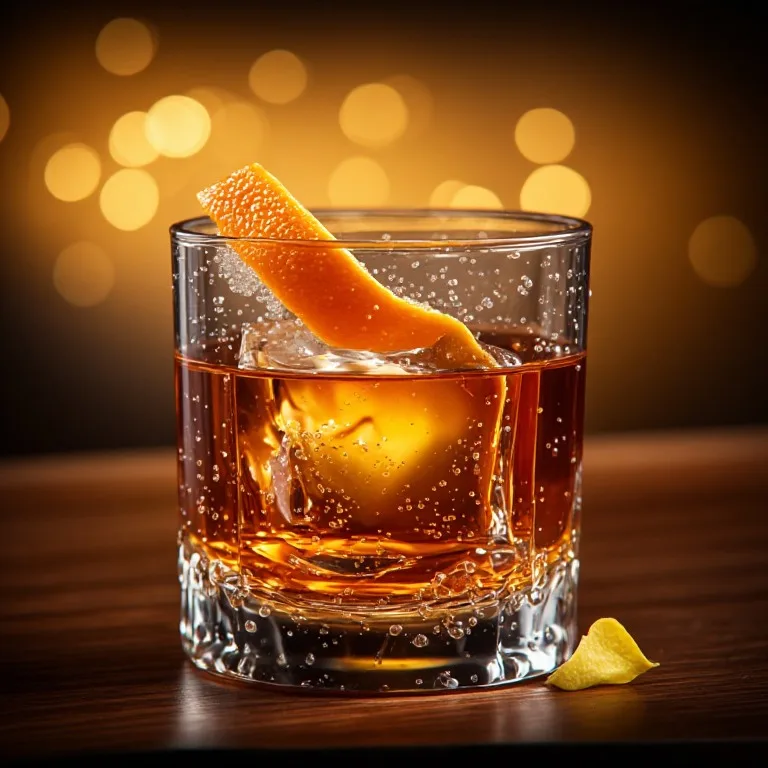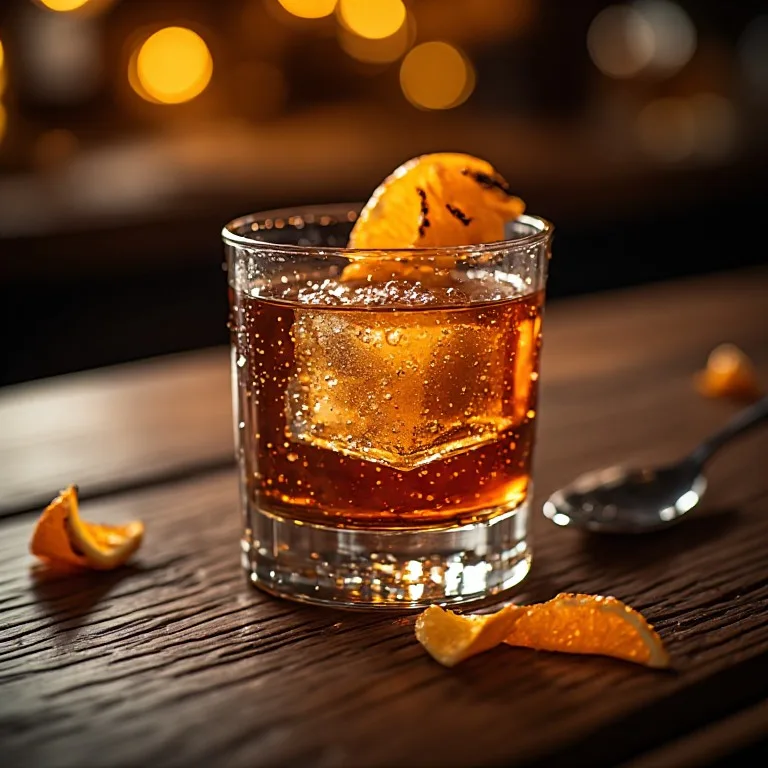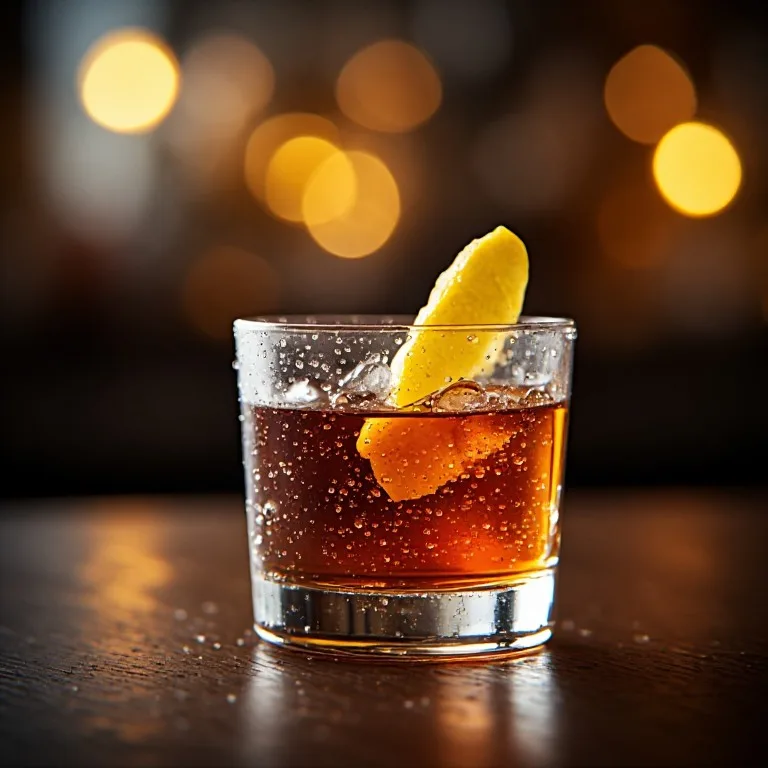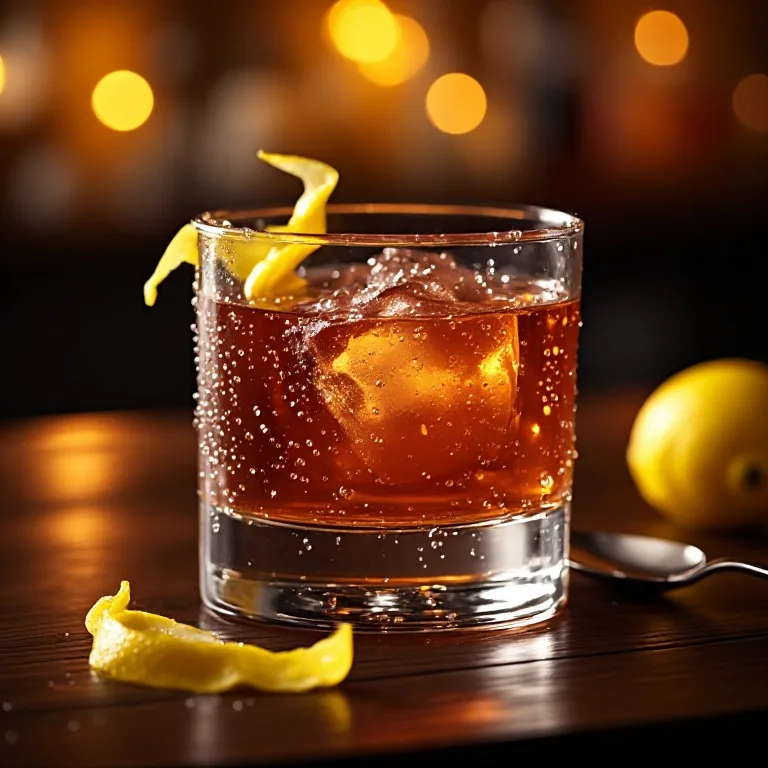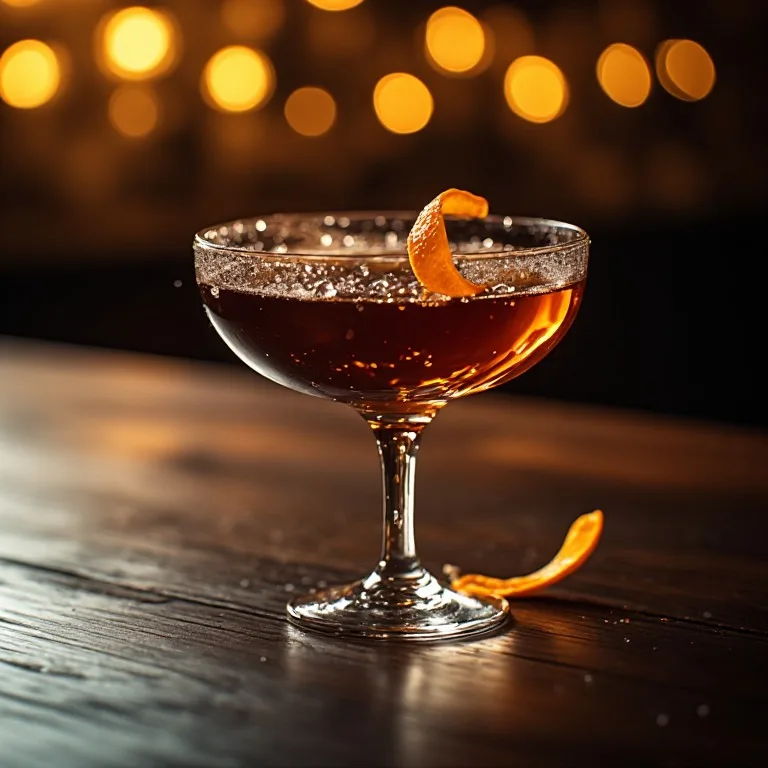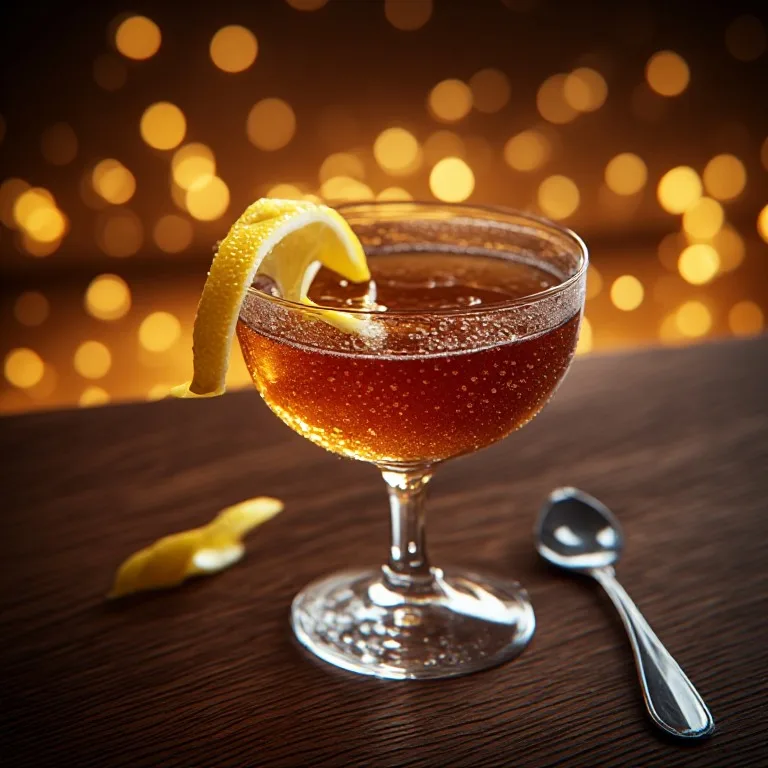
The Manhattan Club’s Manhattan, as the club itself described it in 1916, is equal parts vermouth and whiskey with a dash of orange bitters. That is wetter and softer than the whiskey-heavy Manhattan most bars pour now, and it is the version worth making if the club is the subject. The club has been gone since about 1979. Nobody can check the glass against a living bar.
A stirred whiskey drink is the right November pour. It fits a Thanksgiving sideboard or a Christmas evening better than a tall sour does, and it asks for a lemon peel rather than a holiday garnish.
What the Club Actually Recorded
The Manhattan Club was a New York social club, organized in 1865 at Delmonico’s and dissolved around 1979. It was not a restaurant with a public cocktail list. In 1874 it stood in the Benkard house at 96 Fifth Avenue. The club occupied the former Jerome mansion for decades. After that it was a luncheon club in hotel rooms, and then it closed. There is no current price, and there is no door to knock on.
The useful document is the club’s own history. Henry Watterson’s 1916 volume says the celebrated Manhattan cocktail was inaugurated at the club and consists of equal portions of vermouth and whiskey with a dash of orange bitters. “Equal portions” is the whole spec. No brand of whiskey, no sweet-versus-dry instruction, no cherry, no ounce mark.
Rye is the whiskey used here because rye was the everyday American whiskey of that bar world. Bourbon makes a rounder drink. Scotch appears in at least one 1884 printed Manhattan. If you change the whiskey, say so when you serve it. The ratio is the part the club actually fixed in print.
Sweet vermouth is the reading that matches how the cocktail settled. The 1916 line only says vermouth. Dry vermouth makes the later Dry Manhattan, so say which bottle you used.
Why the Famous Story and the Modern Pour Both Drift
The story everyone knows is a December 29, 1874 banquet for Samuel J. Tilden, with a bartender inventing the drink for Jennie Jerome, Winston Churchill’s mother. A Tilden reception did happen at the club that night. The rest fails. Jerome had given birth to Winston at Blenheim on November 30 and was not in New York. The club was not in her family’s mansion yet. News of the dinner does not announce a new cocktail. The tale shows up much later, in a 1945 column, and grows a Churchill flourish by 1950. David Wondrich has walked through these dates carefully. Repeat the legend only as a legend.
The modern bar Manhattan is a different glass: 2 oz rye, 1 oz sweet vermouth, aromatic bitters and a cherry. It is drier, and the cherry adds a sweet note the club text never mentions. Orange bitters are brighter. A lemon twist perfumes the surface. If you want the later drink, make the later drink, and do not call the 2:1 pour the club recipe.
Printed recipes were already moving by 1884: Byron gives French and Italian vermouth versions, another guide uses Scotch, and by 1891 a two-to-one whiskey pour exists. The club’s equal-parts note is one snapshot, published late, and it is the snapshot this page follows. A competing story names a bartender called Black at a Manhattan Inn in the 1860s. The club said the drink was born there. This recipe follows that sentence.
The Key Technique: Stir Equal Parts Until the Glass Sweats
Build the drink in a mixing glass: 1 1/2 oz rye, 1 1/2 oz sweet vermouth, two dashes of orange bitters. Fill with firm ice. Stir smoothly for 25 to 30 seconds. You are adding cold and about 3/4 oz of water. That water is an ingredient. A short stir tastes hot and thick. A sloppy, endless stir tastes thin.
Shaking is the usual way this drink goes wrong. Air and broken ice cloud the vermouth and over-dilute a drink that has no juice to hide behind. Strain into a frozen coupe. Express a lemon peel. Skip the cherry syrup. If the only vermouth you own has been open since last winter, buy a new bottle. Tired vermouth tastes like flat wine and ruins an equal-parts drink faster than a cheap rye does. Keep the open bottle in the refrigerator.
Two dashes is the club’s “dash,” translated to a modern bottle. Add a third only if the first drink tastes mute.
A Bottled Batch for Eight
Combine 12 oz (360 ml) rye, 12 oz (360 ml) sweet vermouth, 16 dashes orange bitters and 6 oz (180 ml) cold water. The water replaces the dilution you would have stirred in. Bottle it, cap it and refrigerate for up to a month. The vermouth, not the whiskey, is what ages out of the batch. Four weeks is a sensible limit if the refrigerator is cold and the bottle is full.
Pour about 3 3/4 oz (110 ml) into a chilled coupe and add a fresh lemon twist. Do not pour the batch over ice or you will dilute it twice. Make the bottle the day before Thanksgiving or New Year’s. At 1.4 standard drinks per coupe, a second round is plenty.
The Equal-Parts Manhattan Mocktail
Use the same 1 1/2 and 1 1/2 split. A 0.0% whiskey alternative and a 0.0% rosso-style aperitif are the closest path. Alcohol-free aromatic bitters are easy to overdo. Two dashes, then lemon. Stir with ice and strain. The result is bitter and winey, which is the point of a vermouth-heavy Manhattan.
If you cannot find those bottles, stir 2 oz (60 ml) strong cold black tea, 1 oz (30 ml) tart red grape juice or verjus, and a strip of orange peel. It will be thinner and less spicy. Say that when you hand it over. Calories on the bottled version vary with the brand. The 60-calorie figure is a cautious middle for lightly sweet zero-proof aperitifs, not a lab result.
The alcoholic coupe is strong for its size, about 22% ABV after dilution. The lemon oil and the vermouth make the first sip seem gentler than the second. One is a drink. Three is a problem.