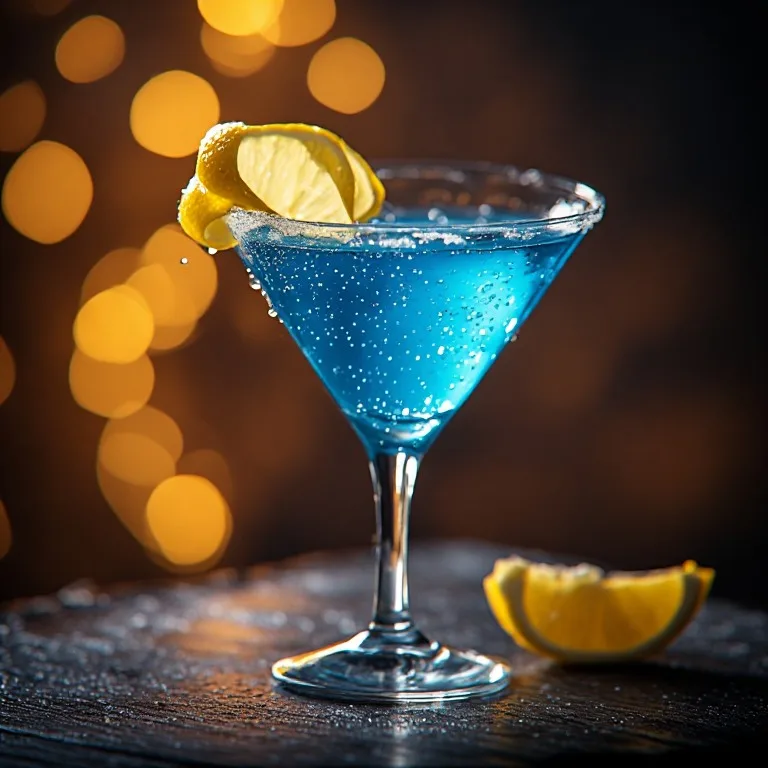
At Commander’s Palace, the most famous number on the drinks menu is not the proof or the vintage. It is the price: 25 cents. The Garden District restaurant still offers its celebrated Martini Lunch, and the electric-blue Commander’s Palace Martini is the signature choice.
The restaurant has never presented this drink as a strict classic martini. Its own 2026 history calls it a bright citrus cocktail inspired by the building’s unmistakable blue exterior. Vodka and blue curaçao are the constants. The exact supporting ingredients are less settled, so this recipe draws a clear line between what is verified and what is reconstructed.
What Commander’s Palace Serves Now
The current lunch menu lists four quarter-dollar choices: Classic, Commander’s, Cosmopolitan and Ray’s Melon. The offer requires the purchase of an entrée and carries the restaurant’s famous limit of three per person. Commander’s Palace advertises lunch on Wednesday, Thursday and Friday, which makes this a specific dining promotion rather than an all-day happy hour.
The signature blue drink is citrus-forward. A recent Imbibe description identifies vodka, sour mix and blue curaçao. An older restaurant-menu description reproduced online named vodka, white vermouth, blue curaçao and a lemon garnish. NPR reported that a half-ounce of blue curaçao creates the color. Commander’s current article confirms the identity and inspiration but not a bar spec.
This copycat uses fresh lemon and simple syrup in place of bottled sour mix. It is plausible and balanced, not a claim that the restaurant currently pours these exact measurements.
How the 25-Cent Tradition Began
The Brennan family had served inexpensive lunch martinis at an earlier family restaurant in the 1950s and 1960s. According to Commander’s Palace proprietors Ti Martin and Lally Brennan, their Aunt Dottie kept insisting that they revive the tradition. They eventually agreed, expecting a nostalgic experiment. Guests embraced it, and the promotion became part of the restaurant’s identity.
In July 2026, Commander’s published a fresh account of the tradition and added a new purple drink called The Vapors to the larger story of its colorful martinis. The current online lunch menu still shows the established four options. That small mismatch is a good reminder that restaurant offerings can change faster than menu pages.
Why Typical Blue Martinis Miss
Blue drinks often go wrong because color becomes the only goal. Pouring an ounce or more of blue curaçao creates an intensely sweet orange drink that buries the vodka. Bottled neon sour mix can add another layer of artificial sweetness.
- Hold blue curaçao to half an ounce. That is enough for saturated color and orange flavor.
- Use fresh lemon. It makes the drink bright instead of candy-like.
- Keep the serving compact. This is a short cocktail, not a blue lemonade in a giant V-shaped glass.
- Shake citrus. A drink containing lemon needs the aeration and integration that stirring cannot provide.
The Key Technique: Cold, Fast and Clean
Chill the glass before mixing. Shake the drink hard for about 12 seconds with plenty of solid ice, then double-strain. Fine-straining removes lemon pulp and ice flecks so the color stays clear and jewel-like.
The lemon twist is not merely decoration. Expressing it across the top adds fresh oil that meets your nose before the sweet orange liqueur. That aroma makes the drink seem drier and more polished without changing the sugar level.
Make a Lunch Batch for Eight
Combine 2 cups vodka, ½ cup blue curaçao, ½ cup fresh lemon juice and ¼ cup simple syrup. Refrigerate for up to four hours. Shake 3¼ oz of the batch with ice for each serving and strain into a cold glass.
For a no-shake party service, add 1 cup cold water to the whole batch before refrigerating. Pour about 4¼ oz per glass. The added water replaces normal shaker dilution, though the result will have less aeration. Cut fresh lemon twists ahead of time and keep them covered so they do not dry out.
The Mocktail: Garden District Blue
The mocktail needs more than blue syrup and lemonade. A zero-proof vodka alternative creates the clean base, while white verjus contributes acidity and a dry grape quality that nods to the older descriptions naming white vermouth. Lemon keeps the current citrus character intact.
Check the label on blue curaçao syrup carefully; products sold as blue curaçao liqueur contain alcohol. The mocktail needs a product explicitly labeled alcohol-free. Because syrup brands vary in sweetness, taste before shaking and reduce the blue syrup slightly if needed.
At home, the point is not to imitate the 25-cent price. It is to capture the cold, bright-blue ritual that turned a weekday lunch promotion into a New Orleans landmark.
See more famous bar and hotel cocktails →