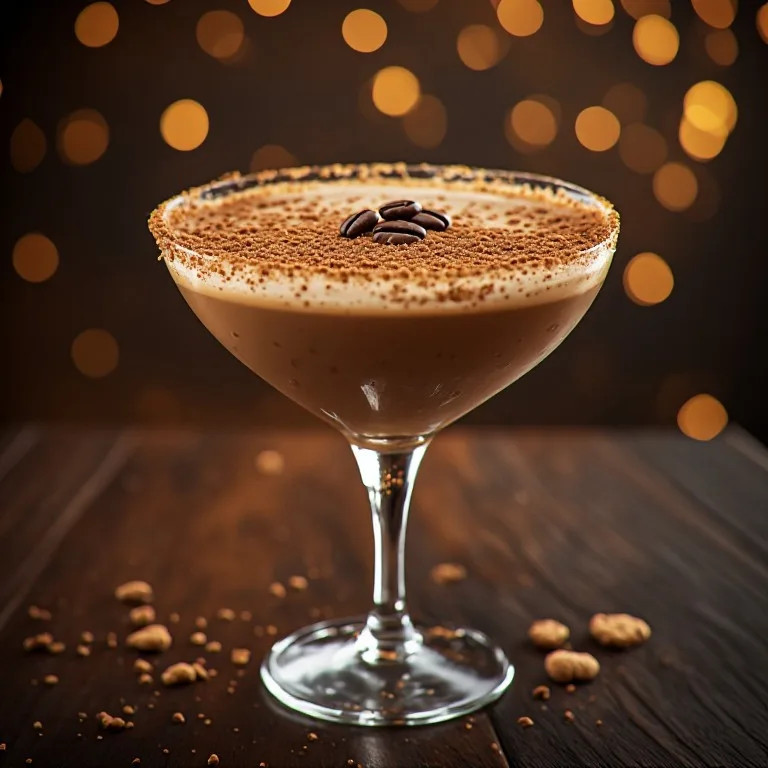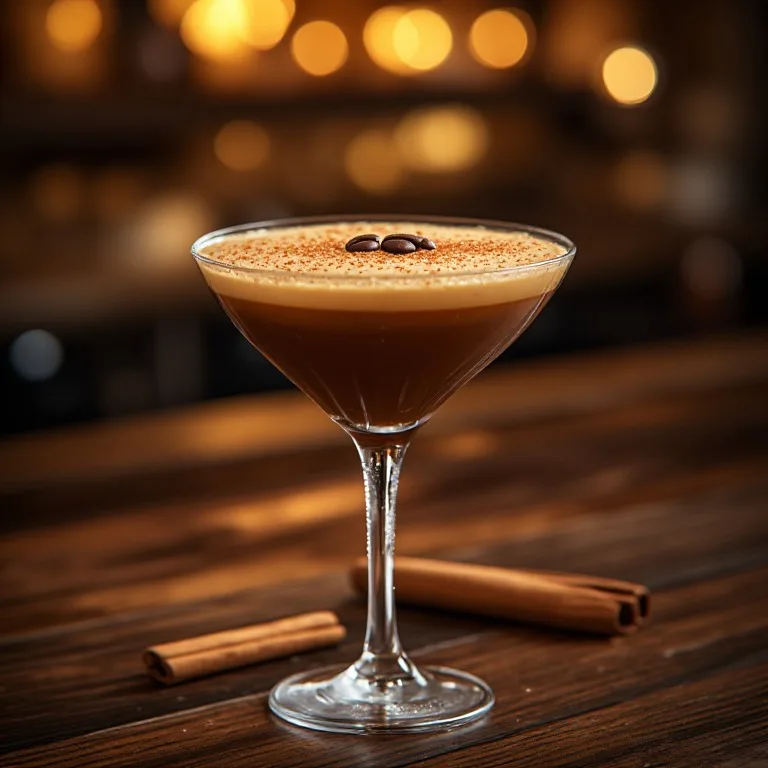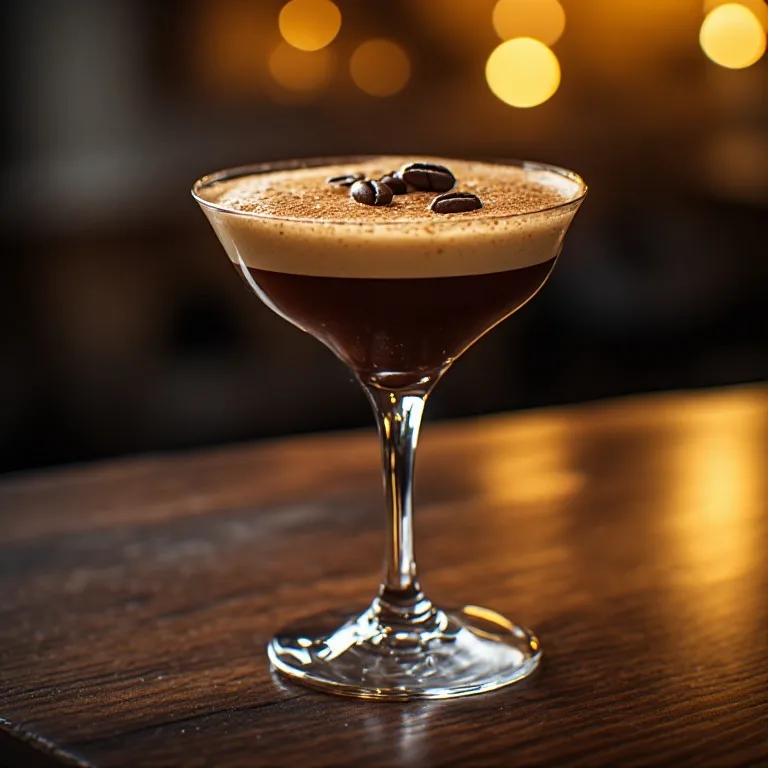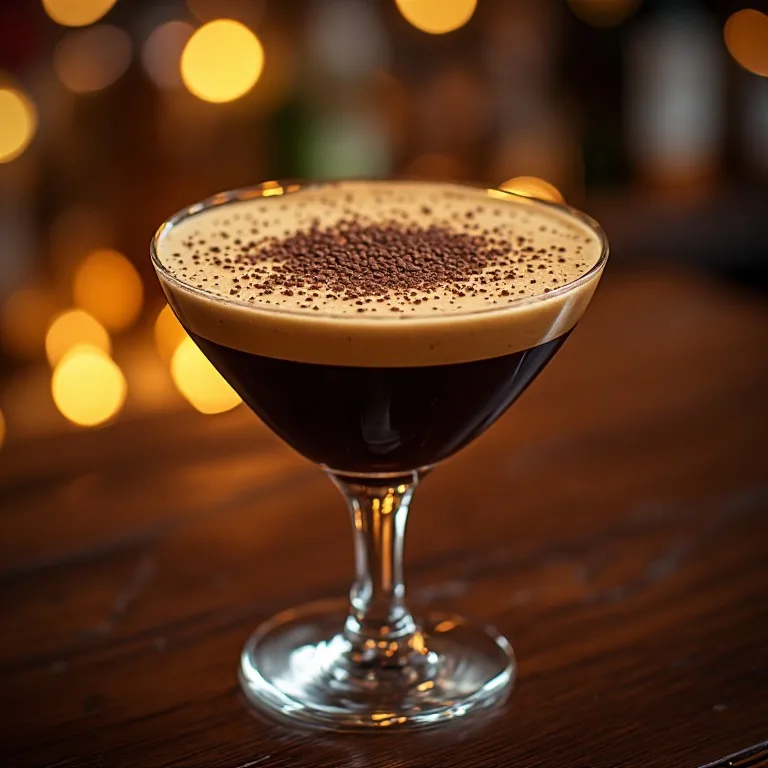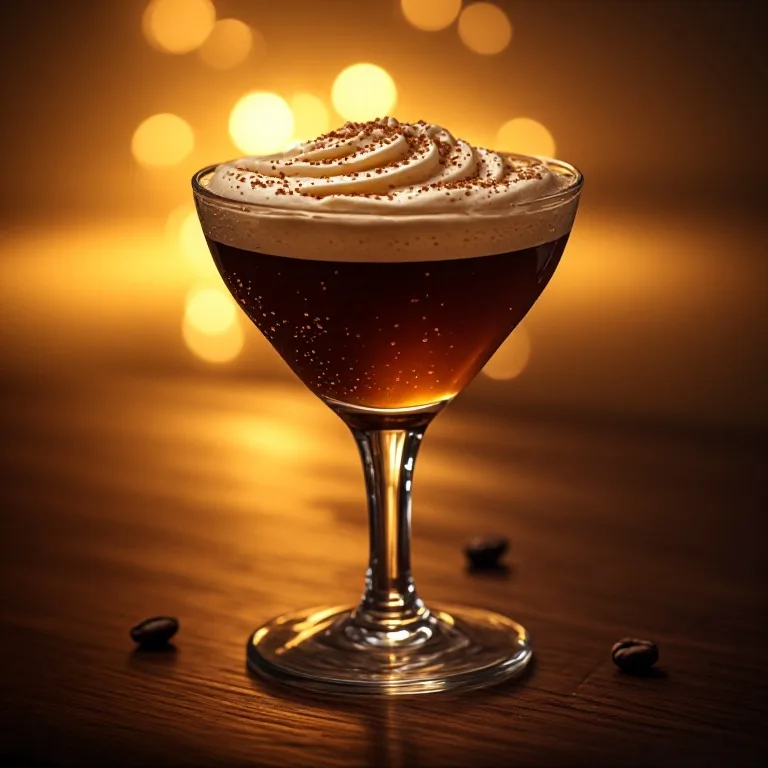
A dalgona martini looks like an espresso martini that grew a marshmallow. The base is a short, cold mix of vodka and coffee liqueur. The cap is the 2020 whipped-coffee trend: instant coffee, sugar and a spoon of hot water, beaten until it stands up. You drink through the foam into the spirit. Both layers taste like coffee. They are not the same coffee.
There is no bar that owns this. The measurements below are a home spec chosen so the foam stays sweet and the liquid under it stays spirited. Published versions from the first months of the trend wander into cognac, rum, cream and flavored syrups. If a recipe calls itself the original dalgona martini, it is overclaiming.
Where the drink came from
The foam is older than the cocktail, and the foam’s own history is layered. Beating instant coffee with sugar and a little water until it turns creamy is a café trick with cousins in India, Pakistan and Greece, where a shaken iced coffee has been a frappé for decades. In Macau, Hon Kee café in Coloane became the place English-language stories point to, and founder Leong Kam Hon has told reporters he started making the drink after travelers showed him the method.
The name most people use arrived later. In January 2020, Korean actor Jung Il-woo was filmed trying that Macau coffee. On the show, the pale whip was compared to dalgona, the Korean honeycomb candy. The clip traveled, home cooks filmed themselves whipping coffee through the spring lockdown, and “dalgona coffee” became the global name even though the candy and the café drink are different things.
Cocktails showed up in the same season, once people had a jar of instant coffee open. A May 2020 People magazine piece tested staff versions with liquor under the foam. Nobody settled the recipe. Some drinks are espresso martinis with a dalgona hat. Some are milk, rum and cream with a spoon of whip. This page is the first kind, and it says so.
It fits the holiday dessert slot: one small glass after Thanksgiving dinner, on Christmas night, or beside a New Year’s toast.
Why typical copycats miss
The foam fails more often than the shake. Brewed espresso will not whip, no matter how long you beat it. Cold water will not dissolve the granules into a paste. A fork in a wide cereal bowl splashes and never builds a peak. The mixture also stalls when the coffee, sugar and water are not equal. Too much water stays glossy and runny. Too little water stays a sandy paste.
The liquid fails in the other direction. Coffee liqueur is already sweet, and the cap is a tablespoon of sugar. Adding more syrup, or a flavored vodka, makes a dessert sauce. Milk inside the shaker can be pleasant and it is a different drink: paler, heavier, and closer to a milkshake. This spec leaves the dairy out so the base stays dark under a tan cap.
A warm coupe melts the contrast. Chill the glass. Shake the spirits hard. Spoon the foam on at the table, not twenty minutes earlier. The cap weeps sugar syrup as it sits, and a weeping cap sinks.
The key technique: whip a paste, then shake the spirits apart from it
Use instant coffee, the dry granules. Put one tablespoon of coffee, one tablespoon of sugar and one tablespoon of very hot water in a bowl small enough that the beaters actually touch the mixture. Stir until you see no sugar crystals. Then whip.
A hand mixer finishes the job in about a minute. A whisk does it too, with a few minutes of steady work and a bowl that will not skate across the counter. Stop when the color has lightened and a peak holds. If you keep going forever you only warm the foam. Do not put this tablespoon of liquid in a full-size blender. The blades miss it.
Shake the vodka and coffee liqueur with ice on their own. Twelve seconds is enough to chill and to add the water that makes the drink taste finished. Double strain into a coupe so shards of ice do not puncture the cap. Spoon the foam on in one or two passes. A little dry instant coffee on top smells stronger than it looks. It is optional.
A short batch for a holiday dessert round
Plan on four drinks, not a punch bowl. Whisk 4 tablespoons instant coffee, 4 tablespoons (48 g) sugar and 4 tablespoons (60 ml) hot water into one bowl and whip it stiff. Cover and refrigerate for no more than an hour. Stirring a wept foam back into peaks rarely works. Make a new cap if the party runs long.
The base can wait: 6 oz (180 ml) vodka and 4 oz (120 ml) coffee liqueur in a bottle in the fridge. When someone wants a drink, shake one quarter of that mix, 1 1/2 oz vodka and 1 oz liqueur, with fresh ice, strain into a cold coupe, and crown it. Shaking the whole batch with ice and letting it sit produces a watery coffee liqueur.
Four coupes is the right count after a Thanksgiving meal or beside a Christmas dessert plate. It is a medium-strength drink, about 1.3 standard drinks in each glass, so one per person is the honest pour. New Year’s Eve can take the same four-glass setup next to a sparkling wine for everyone else. Do not try to freeze these for a crowd. The foam dies in the freezer and the texture does not come back.
The dalgona coffee mocktail
The cap needs no substitute. Instant coffee, sugar and water are the whole trick, and none of them contains alcohol. What you replace is the dark liquid underneath. Cold whole milk gives the body that vodka had, and an ounce of strong chilled coffee keeps the glass from tasting like sugar foam on plain milk. Shake those two with ice, strain, and spoon the same cap on top.
Unsweetened oat milk works if you want the glass dairy-free. Sweetened creamers stack more sugar on the tablespoon already in the foam. Use decaf instant coffee and decaf brewed coffee if you are avoiding caffeine. The drink is still a sweet coffee, alcoholic or not.
See more viral cocktail recipes →