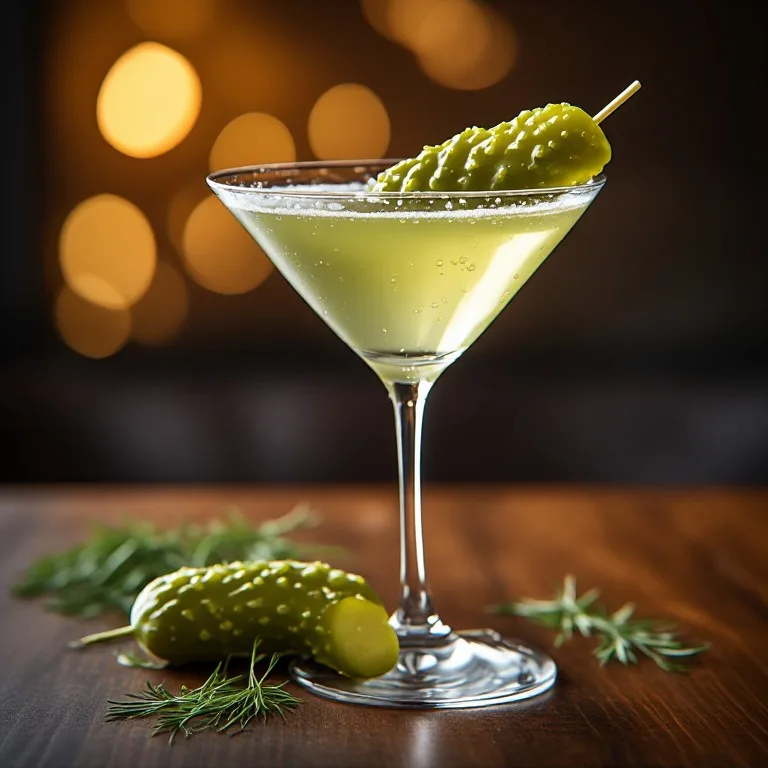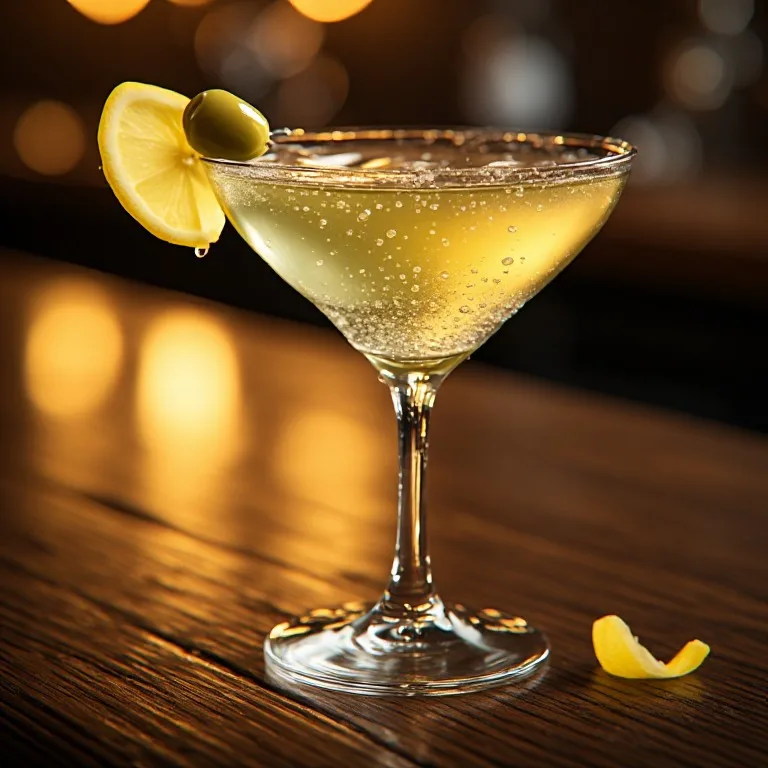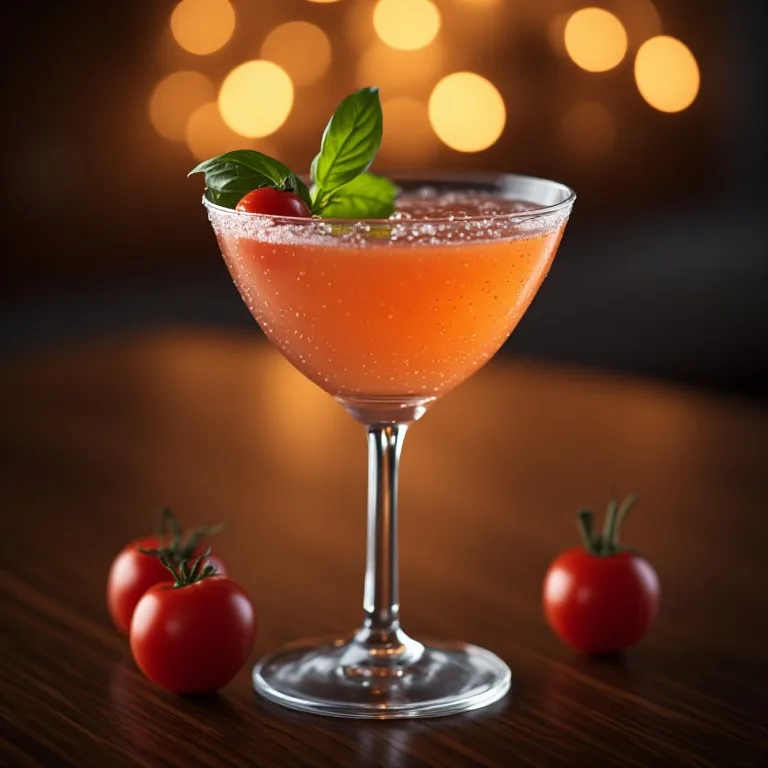

A Tomato Martini is a short, savory gin drink, not a Bloody Mary in a fancy glass. Ripe cherry tomatoes are muddled, then stirred with London dry gin, blanc vermouth, a splash of olive brine, and lemon. Fine-strained, the pour is translucent pink to pale coral, and it should taste like tomato and gin before it tastes like brine. Shake it and you get a cloudy cup with foam and bits of seed. Stir it and you get a martini.
The drink that filled summer feeds in 2024 and 2025 did not invent the idea of drinking tomatoes. It did make the muddled, up-style version ordinary. The measures below are one home balance of that style. They are not an official spec.
Where the Tomato Martini Came From
Savory tomato cocktails go back further than the recent photos. Gary Regan wrote a Bloody Martini built on tomato water, the clear liquid that drips from salted, pureed tomatoes. Saveur has published that recipe as adapted from his book The Joy of Mixology, and Regan tied the idea to a Pepper Tomato served at Wallsé, an Austrian restaurant in New York. His version used plain vodka and pepper vodka, plus celery seed. That is an ancestor, not this drink. The version people were posting in 2024 and 2025 muddles cherry or Sungold tomatoes and strains them with gin or vodka and some kind of vermouth. Food outlets published several of those, and they do not match. Some add basil in the tin. Some use blanc vermouth. Some use pepperoncini brine instead of olive brine. Some are almost a dirty martini that happens to include a tomato. It was never one bar’s drink.
In November, treat it as a before-dinner pour when you can still find fragrant cherry tomatoes, including decent greenhouse fruit. It can open a Thanksgiving meal for people who do not want a sweet holiday drink. It is not a cranberry cocktail, and it should not be tagged like one. If the tomatoes in the container smell like nothing, make something else. A martini cannot invent August.
Why Typical Copycats Fail
Mealy tomatoes are the whole failure. Five pale, refrigerated cherry tomatoes muddle into watery pulp and leave you with cold gin and a vague vegetable note. Smell the fruit first. If it smells green and sweet, proceed. If it smells like the plastic box, stop.
The second failure is a shaker used out of habit. Shaking breaks the pulp into a suspension, adds more air, and leaves a pink head that looks like a failed smoothie. The point of the fine strain is a polished drink. Stirring extracts enough color and flavor once the tomatoes are already crushed.
The third failure is treating it like a Bloody Mary. Worcestershire, hot sauce, celery salt, and a full pour of tomato juice make a different classic. A teaspoon of those seasonings in this glass shouts over the gin. Olive brine is the salty, savory note, and a quarter-ounce is the amount. More brine and you have an olive drink with a tomato cameo.
The Key Technique: Muddle, Stir, Strain
Halve the tomatoes so the muddler does not fire them out of the glass. Add a pinch of salt. Salt pulls juice and makes the tomato taste more like itself. Crush for about 20 seconds, until the fruit is pulpy and the skins have given up their juice. You are not trying to dissolve the skins.
Add the gin, blanc vermouth, olive brine, and lemon, then a full glass of ice. Stir 20 to 25 seconds. The outside of the mixing glass should feel properly cold. Fine-strain into a frozen nick and nora glass or a coupe, and press the solids only lightly. A hard press puts sediment in the drink you just spent the stir avoiding.
Garnish with one whole cherry tomato on a pick and a small basil leaf. Basil in the muddle is a different recipe: it perfumes every sip. On top, it stays optional. Skip celery. Skip a salted rim unless you want the glass to drink saltier than the brine already made it.
Tomato water dripped through cheesecloth can replace the muddle at 1 1/2 oz (45 ml). That makes a clearer glass and sits closer to the older style. It is a variation, not a requirement.
A Pitcher for Eight, Used the Same Day
Pulse 40 halved cherry tomatoes with 1/2 tsp kosher salt until they are juicy, not smooth. Strain through a fine mesh and press gently. You want about 6 to 8 oz of tomato liquid. Stir in 16 oz (480 ml) gin, 6 oz (180 ml) blanc vermouth, 2 oz (60 ml) olive brine, and 2 oz (60 ml) lemon juice. Taste the salt before you add any more.
Refrigerate the pitcher for up to a day. Stir it before you pour, because the pulp line settles. For each drink, stir about 4 oz (120 ml) of the batch with ice for 15 seconds and strain into a chilled glass. The tomato liquid is already in that pour, so the stir is mostly for temperature. Do not leave this mix out for a weekend. Cut tomato juice loses its fragrance fast, and vermouth does not improve the situation.
Do not add ice to the pitcher itself or the last drinks will be watery gin.
The Savory Tomato Cup
The mocktail keeps the tomatoes, the salt, the lemon, and the olive brine. White grape juice replaces the roundness you would have gotten from blanc vermouth. There is less of it than there was gin, because grape juice is sweeter than spirit and will take over if you pour it like a base. Stir and fine-strain the same way. The result is a small savory cup, still tomato first, tart from the lemon, salty at the finish.
Verjus, the tart juice of unripe grapes, is a closer structural swap if you keep it in the house. Use 1 1/2 oz verjus in place of the grape juice and lemon. The grocery version above is the one that does not require a special bottle.
Serve the gin version only when the tomatoes deserve it. A good one tastes like the fruit, then juniper, then brine. A bad one tastes like diluted gin with a garnish, and the fix is better produce, not more salt.