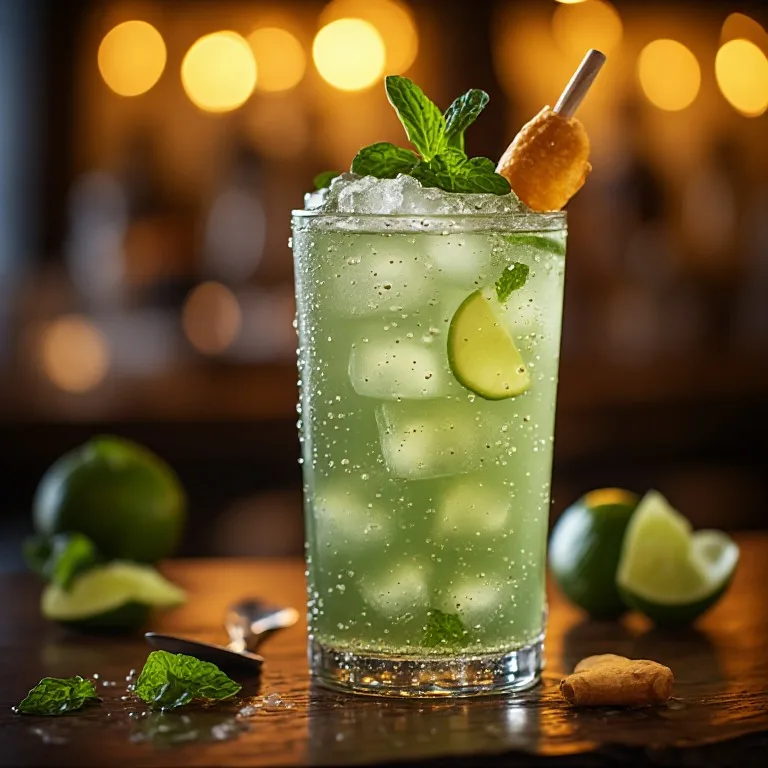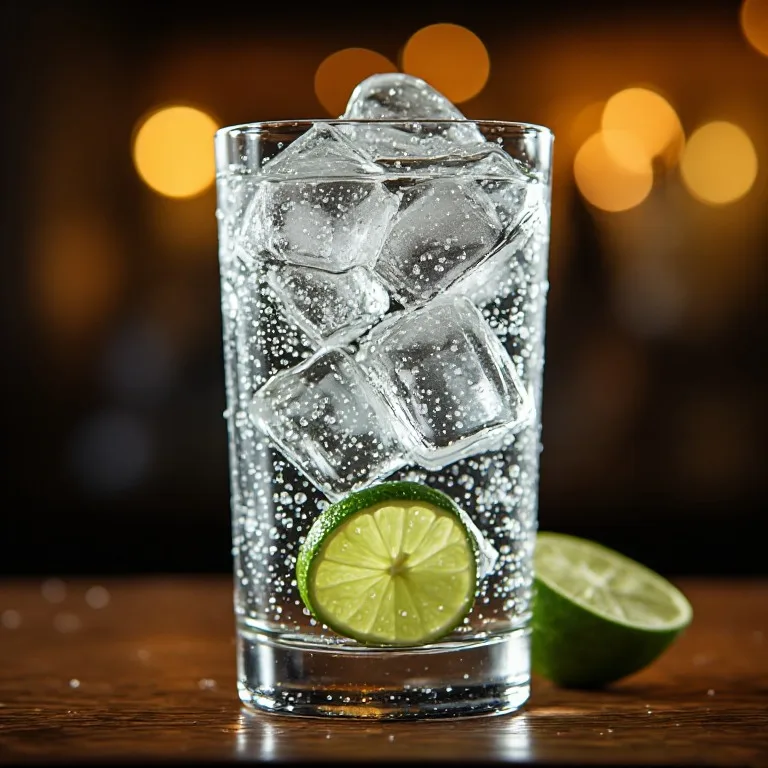
The Gin Rickey is a highball with nowhere to hide: gin, half a lime, the lime’s spent shell, ice and cold sparkling water. No syrup, no liqueur, no sweetened soda. Shoomaker’s, a Washington saloon that closed in 1917, is where the Rickey became famous. The first one was a whiskey drink. Gin took over the name within about a decade, and gin is the version this recipe makes.
It is not a Christmas cocktail, and it does not need to be. In November, when the rest of the tray is brown spirits and cream, a cold unsweetened gin highball is the glass that resets a palate between plates. Make it because the lime is good, not because the calendar says so.
What Shoomaker’s Was, and What It Poured
Shoomaker’s sat at 1331 E Street NW, on the run of bars known as Rum Row. Colonel Joe Rickey, a Missouri lobbyist, bought it in 1883 and sold the operating business a few years later. George Williamson tended bar. August Noack ran the place for a long stretch. On October 31, 1917, local Prohibition shut it. There is no bar to visit and no price to report.
The drink started as whiskey, ice and carbonated water, then gained lime and refused sugar. Bourbon shows up in some tellings, the bar’s rye in others. The lime’s inventor is just as unstable: Williamson, Rickey, a friend, or a stranger with limes in his pocket. Those stories cannot all be the first afternoon. What holds is the place, the era, the lack of sugar, and the lime.
Gin is not a modern shortcut. By the mid-1890s the Gin Rickey was the national version. Rickey’s 1895 note allows whiskey or gin, plus lime juice and carbonated water, in a large glass of ice, and tells the reader not to drink too many. In 2011 the D.C. Council named the Rickey the city’s cocktail. That honors the history. It does not reopen the bar.
Why a Sweet Rickey Is a Different Drink
Sugar is the whole argument. A Tom Collins is gin, lemon, sugar and soda. A gimlet is gin, lime and sugar, kept short. A lime rickey made with sweetened lime cordial and lemon-lime soda is a soda-fountain drink from a later decade. All three can be delicious. None of them is the glass Shoomaker’s made its name on.
The second failure is bottled sour mix or a long pour of lime juice. Half a lime is about 1/2 oz (15 ml), sometimes a touch more if the fruit is large. An ounce of lime juice in a sugarless highball tastes like a dare, not a nineteenth-century cooler. Taste the lime. If it is harsh, use a ripe one, not a spoon of syrup.
The third failure is shaking. A Rickey is built in the glass so the water stays lively. A shaker knocks the gas out and leaves you with cold gin and lime. Stir once after the bubbles go in. Then stop.
Use sparkling water you would drink on its own. The original references point to mineral water from a siphon, including Apollinaris in some accounts. Modern seltzer is a fair substitute. Tonic is not. Tonic brings sugar and quinine the recipe never had. Ginger ale is a Buck, which is a cousin, not a Rickey.
The Key Technique: Shell In, Syrup Out
Cut a lime in half. Squeeze one half into a highball. Drop that shell in. The oils in the peel season the drink as it sits, which is why a naked squeeze of juice tastes thinner five minutes later. If the shell is ragged, trim the torn edge so you are not chewing pith with the last sip.
Add 2 oz (60 ml) London dry gin and firm ice. Pour 4 oz (120 ml) of cold sparkling water and stir once from the bottom. A clear juniper gin works better than a sweet or very floral one, because nothing else is there to round it.
The Oxford Companion’s working measure is closer to 1 1/2 oz (45 ml) of spirit. Use that for a shorter historical glass. The 2 oz pour here is a modern highball, and it is the one behind the strength numbers. Do not add syrup to “balance” it. Balance is cold water and a small amount of lime. The earlier whiskey Rickey is the same method with bourbon or rye. Call it by that name so nobody expects gin.
A Pitcher That Stays Lively
For eight drinks, stir 16 oz (480 ml) gin with 4 oz (120 ml) fresh lime juice. Refrigerate up to one day. Juice squeezed yesterday is duller, so morning-of is better.
In each highball, put a spent lime shell and ice, add 2 1/2 oz (75 ml) of the cold mix, and top with 4 oz (120 ml) sparkling water. Stir once. Eight drinks need eight shell halves, so start with four limes and save the shells when you juice them. A bowl of pre-squeezed juice and a pile of shells on a tray is the whole prep.
Do not add the sparkling water to the pitcher. It will greet your guests as lime-flavored gin punch. For a long Thanksgiving afternoon, the gin-lime mix can wait in the fridge and the water can wait on ice. Build the drinks when people are ready, not at noon for a five o’clock toast.
The Juniper Lime Rickey
A 0.0% gin is the clean swap, in the same 2 oz measure, with the same lime, shell, ice and sparkling water. The drink should still be dry. Do not “fix” it with elderflower syrup or ginger ale. If a 0.0% gin is unavailable, crush a few juniper berries, steep them in 2 oz of cold water for 20 minutes, strain, and use that in place of the gin. It will be quieter and more resinous. Tell people that.
Check the gin alternative’s label. Some are 0.0% and some are not. The mocktail’s calories are mostly the lime, around 15, unless the zero-proof gin is sweetened. If the bottle lists sugar, the drink has left the Rickey idea.
The cocktail is 1.3 standard drinks in a tall, refreshing glass. That shape is how people lose count at a holiday party. The colonel’s 1895 advice still covers it.