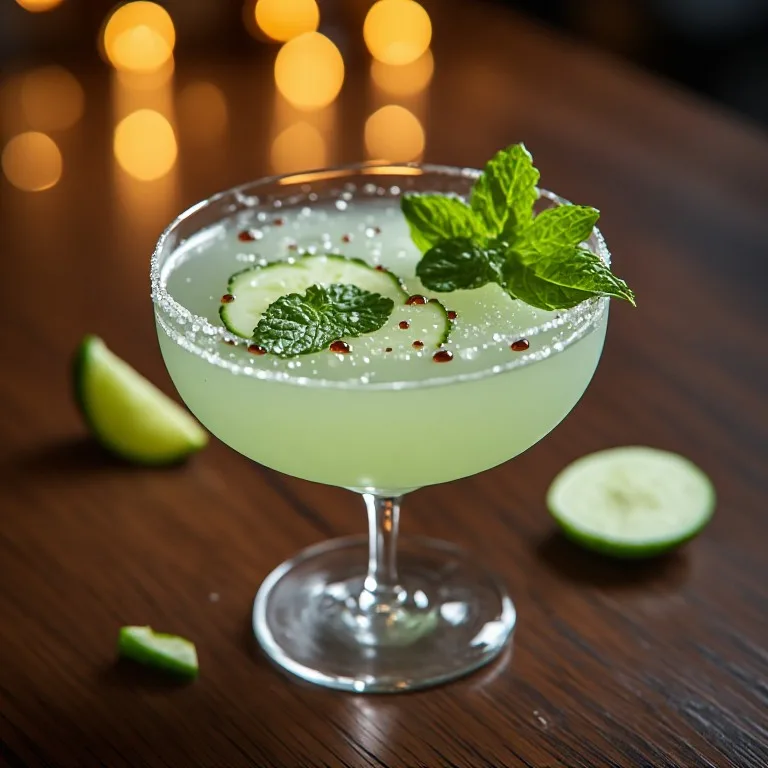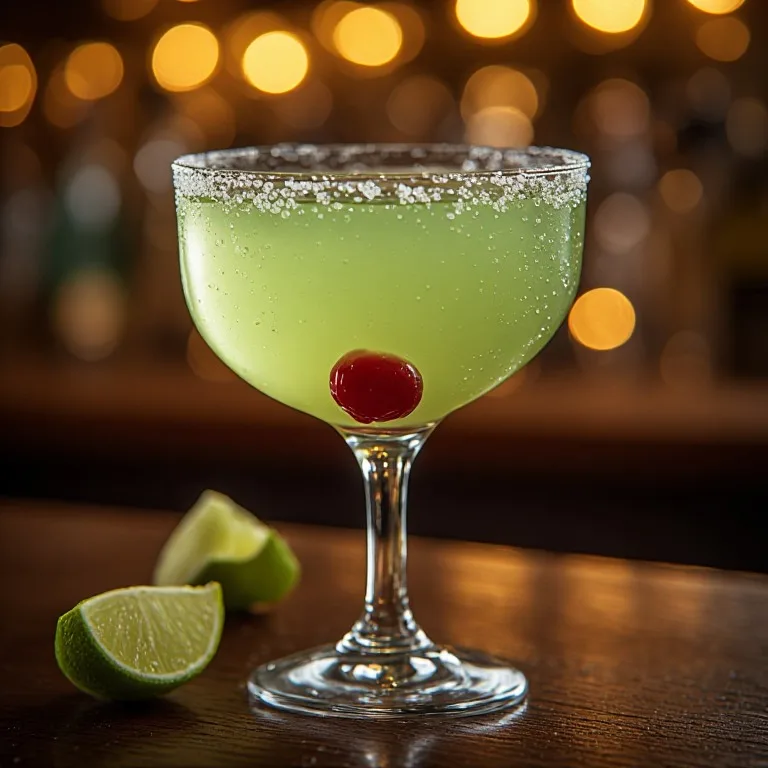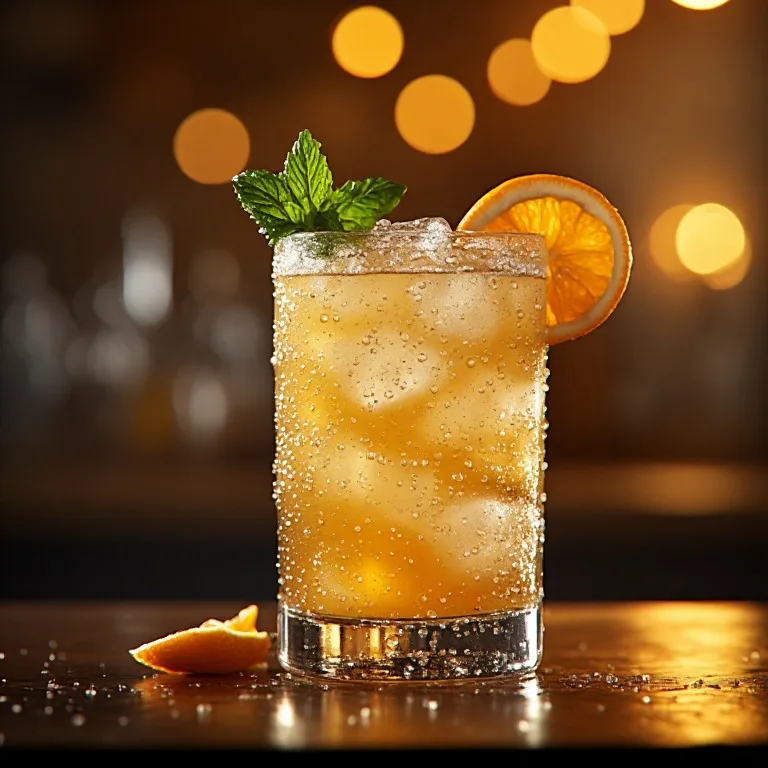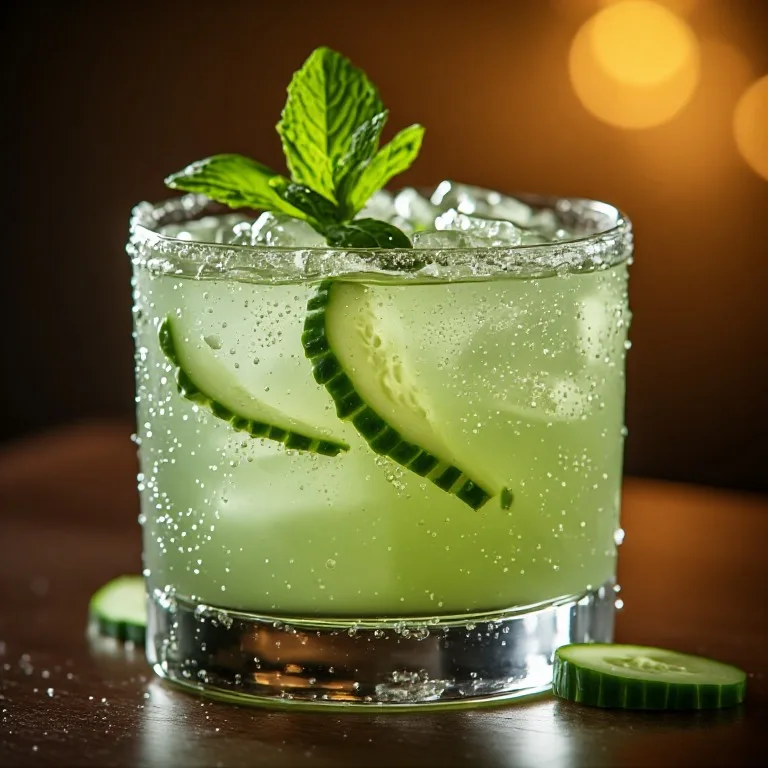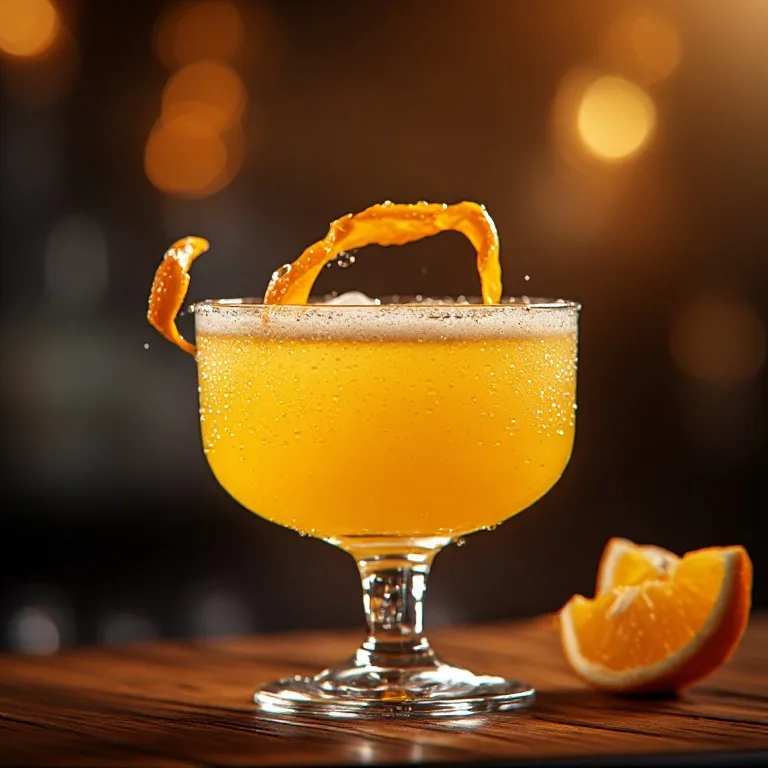
The Stork Club Cocktail is a gin sour that tastes like fresh orange, not like orange liqueur. A short shake, a small lime, and a dash of bitters keep it bright enough for a New Year table that has already seen too many brown, stirred drinks. The nightclub that served it has been closed since 1965, so what follows is a historical recipe with the fuzzy parts labeled.
What the Stork Club Actually Served
Sherman Billingsley opened the club in 1929, first as a speakeasy at 132 West 58th Street. Prohibition agents shut that room. The club spent a few years at 51 1/2 East 51st Street, then settled in 1934 at 3 East 53rd Street, just east of Fifth Avenue. That last address is the one in the photographs. The club closed on October 4, 1965, while Billingsley was in the hospital. The building later came down. There is nowhere to order the drink, and there is no modern price.
Lucius Beebe’s 1946 Stork Club Bar Book is the earliest widely cited printed recipe. As that formula is quoted, it reads: a dash of lime juice, the juice of half an orange, a dash of triple sec, 1 1/2 oz of gin, and a dash of Angostura bitters. Shake it and strain it into a chilled 4 oz glass. The book, at least in the passage people quote, does not name a garnish and does not name a gin brand.
Head bartender Nathaniel Cook, known as Cookie, is credited in club histories with creating the drink, along with a long list of other house cocktails. Johnny Brooks is also named among the club’s head bartenders. The quoted 1946 entry itself does not attach a bartender’s name. Cook is the usual attribution. It is not a signature this article can verify from the recipe lines alone.
A half orange is not a fixed ounce. A small orange gives about an ounce of juice. A large one gives more, and the drink goes cloudy and sweet. Measure 1 oz (30 ml). Read the two dashes as 1/4 oz (7 ml) each. That is a choice made so the recipe can be repeated. Someone squeezing a lime wedge and tipping in a barspoon of triple sec is just as faithful to the word dash.
Why Typical Copycats Fail
The recipe that circulates most often now is a different drink: 1 oz gin, 1 oz triple sec, 1 oz orange juice and 1/2 oz lime. It can be pleasant. It is also a triple sec sour with gin in it. The 1946 text puts gin in the lead and keeps the liqueur at a dash. If your copy tastes like a screwdriver with a fancy name, the triple sec and the orange juice have both gotten too big.
Bottled orange juice is the other failure. The oil and the acid in fresh juice are what keep 1 1/2 oz of gin from tasting hot. Pasteurized juice tastes like candy and makes the bitters stick out.
Shaking too gently leaves the drink under-diluted. Gin and fresh orange can read sharp and alcoholic if the shake is only a few turns. Ten hard seconds is the window. A 4 oz glass, or a coupe of about that size, is the right landing spot. A big martini glass makes the drink look lost and warm up faster.
Skip the urge to add simple syrup. Between the orange and the triple sec, the 1946 drink is already sweet enough. If it tastes mean, your orange was sour or your gin was very juniper-heavy. Add another teaspoon of triple sec, taste, and stop.
The Key Technique: Measure the Dashes
“Dash” is precise for bitters and vague for juice and liqueur. Use a real dash of Angostura, the kind that comes off a dasher bottle in one flick. Use a jigger for everything else. A quarter ounce of lime is about half a teaspoon more than a strict barspoon, which is enough acid to keep the orange from tasting like breakfast.
Fine-strain. Orange pulp looks pretty in the shaker and gritty in a coupe. If you cut a twist, take a swath of peel with a little pith and express it over the finished drink. Dropping a big wheel into a 4 oz glass crowds the sip.
London dry gin is the right family. A very floral modern gin can fight the orange. A standard 40% ABV bottle is what the alcohol estimate assumes. Navy-strength gin will make the drink hotter and push it past 1.2 standard drinks.
Batch Six for a New Year Pour
Juice the citrus the day you serve it. For six drinks, combine 9 oz (270 ml) gin, 6 oz (180 ml) fresh orange juice, 1 1/2 oz (45 ml) triple sec, 1 1/2 oz (45 ml) fresh lime juice and 6 dashes of Angostura in a bottle. Cap it and refrigerate for up to one day. Orange juice loses its snap faster than the gin lasts.
Shake 3 oz (90 ml) of the batch with ice for each coupe, then fine-strain. Do not pre-dilute the whole bottle and leave it in the freezer. The juice separates, and a still, warm-up pour from a pitcher will not have the texture of a shaken sour. If you are hosting, shake two at a time and keep the coupes in the freezer so the second round is as cold as the first.
The Stork Club Cooler Mocktail
Zero-proof gin is the right swap because the original is a gin drink that happens to contain orange, not an orange juice that happens to contain gin. Juniper tea can work in a pinch, but it tastes thinner and more tannic, so steep it strong, chill it hard, and use it only if you cannot find a 0.0% gin.
Keep the orange at 1 oz and the lime at 1/4 oz. A teaspoon of orange syrup replaces the triple sec without pouring in a full ounce of liqueur sweetness. Alcohol-free aromatic bitters cover the spice the Angostura dash was adding. Standard bitters are distilled spirits with flavor in them, so they do not belong in the zero-proof version.
Shake and strain exactly as you would the gin drink. The coupe still matters. Served over a tall glass of ice, this becomes orange juice with a garnish.
See more Stork Club copycat cocktails →