Clover Club in Brooklyn did not invent the Clover Club cocktail. It did something nearly as important: it helped rescue the raspberry-and-gin sour from decades of neglect. Founder Julie Reiner named her bar for the pre-Prohibition drink when it opened in 2008, made it the house standard and gave modern drinkers a persuasive reason to care about it again.
The namesake remains on the live evening menu. As of October 31, 2026, the bar lists gin, raspberry, dry vermouth, lemon and egg white for $19. Its menu does not state ounces, but Reiner has published her proportions through Imbibe: Plymouth gin, Dolin Dry vermouth, fresh lemon, raspberry syrup and a small measure of egg white.
What Clover Club Actually Serves
The current menu places the drink among its sours and cobblers. The composition is concise: juniper-forward gin, fresh berry, dry fortified wine, sharp citrus and enough egg white to create texture without turning the cocktail into a meringue.
Reiner’s half-ounce of dry vermouth is the important distinction. Many modern Clover Club recipes omit it and use two full ounces of gin. Her version follows an early 1909 variation and comes out softer, more botanical and slightly lower in alcohol. Plymouth gin is rounder than a very sharp London dry, while Dolin Dry adds herbs and a faint saline quality behind the raspberry.
Where the Cocktail Really Came From
The drink predates the Brooklyn bar by more than a century. It was named for Philadelphia’s Clover Club, a social group known for journalists, lawyers, business leaders and elaborate dinners. The group met at the Bellevue-Stratford Hotel, which is why the hotel is often described as the cocktail’s birthplace.
The evidence is less tidy than that familiar story. Drinks historian David Wondrich identifies the earliest located notice in a 1901 New York newspaper, connected to Michael Killackey of the Waldorf-Astoria. George Boldt had managed both the Bellevue-Stratford and the Waldorf, providing a plausible bridge between Philadelphia and New York. The club inspired the name, but the exact inventor and first bar remain uncertain.
Why Typical Copycats Fail
Cooked raspberry syrup is the first problem. Boiling fruit produces a deep jam flavor when this drink needs fresh brightness. Reiner’s published method rests raspberries with sugar, adds water and strains without heat. The result tastes like ripe fruit rather than candy filling.
Too much egg white is another common failure. A quarter-ounce is enough for a stable cap. A full white can mute gin, exaggerate the egg aroma and leave an oversized pillow of foam. Pasteurized carton egg white makes the small measurement especially easy.
Finally, a single lazy shake will not create the right texture. The dry shake unfolds and aerates the egg proteins. The second shake with ice chills, dilutes and tightens that foam. Both stages matter.
The Key Technique: Fresh Raspberry and Two Shakes
Begin with a chilled coupe. Add every liquid ingredient to the shaker without ice and seal it carefully. Shake hard for 10 seconds, holding both halves because pressure can build. Add ice and repeat for at least another 10 seconds.
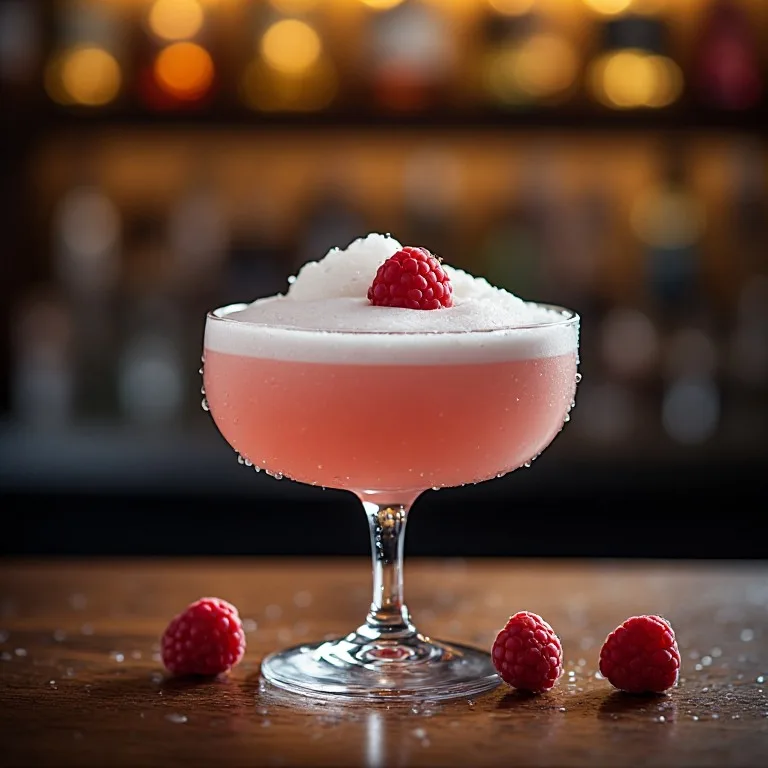
Fine-strain into the coupe and give the drink a moment. The pink liquid settles below a pale foam cap, and one raspberry provides all the garnish it needs. The finished drink lands near 21% ABV with about 1.2 US standard drinks, so the silky texture should not be mistaken for low strength.
Batch Eight Clover Clubs
Combine 12 oz (360 ml) gin, 4 oz (120 ml) dry vermouth, 4 oz (120 ml) lemon juice and 4 oz (120 ml) raspberry syrup. Keep the covered batch refrigerated and use it within four hours because fresh lemon fades.
For each serving, measure 3 oz (90 ml) of batch into a shaker with 1/4 oz (7 ml) pasteurized egg white. Dry-shake, add ice, shake again and fine-strain. Working one or two drinks at a time gives far better foam than trying to aerate an entire pitcher.
The Four-Leaf Clover Mocktail
Clover Club is known for keeping a few thoughtful low- and no-proof drinks on its long menu, though it does not publish their recipes. This home version rebuilds the namesake sour without alcohol so the raspberry, citrus and foam still read as a Clover Club.
Damrak 0.0 brings juniper and citrus, while a nonalcoholic bitter aperitif such as Fluère supplies the dryness and complexity normally shared by gin and vermouth. Use products labeled nonalcoholic or 0.0% according to your needs, and apply the same two-shake technique. The result keeps the vivid berry color and satin foam that make the original recognizable.