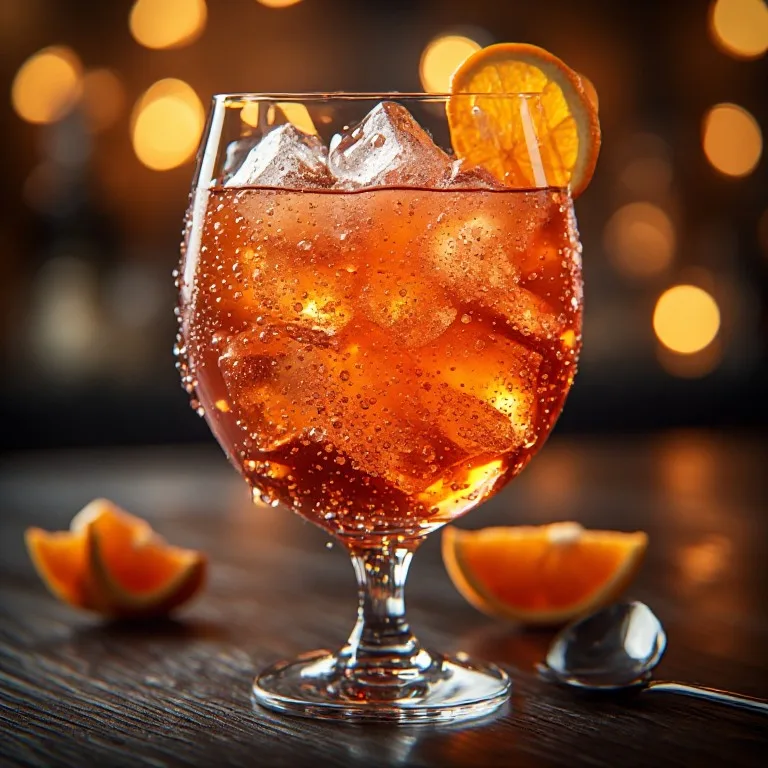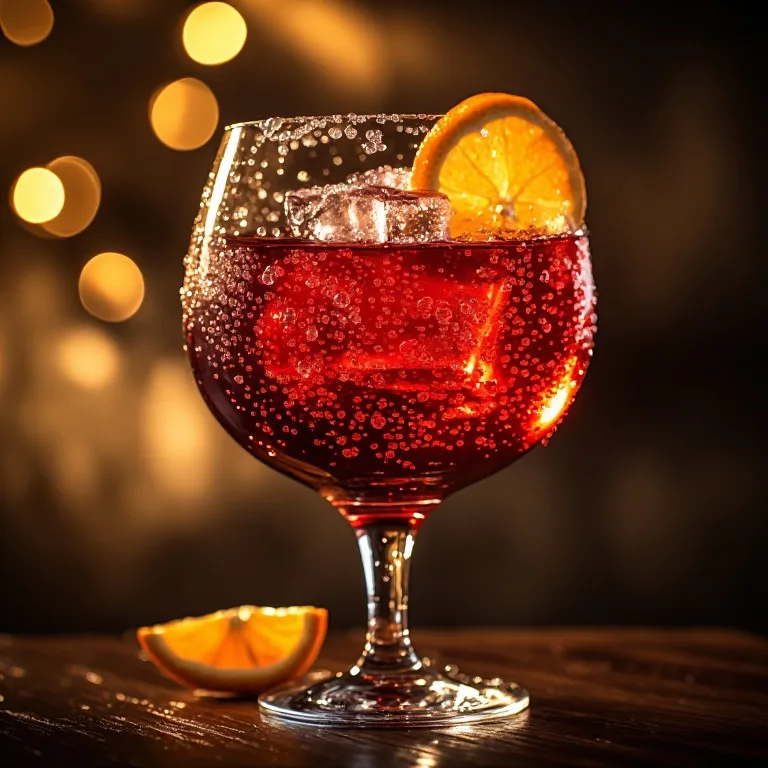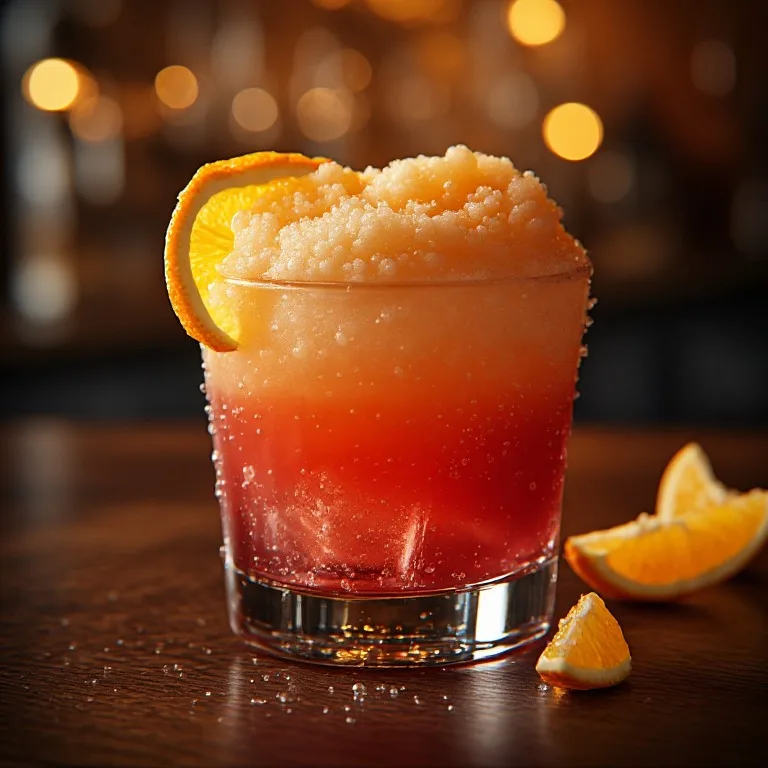
The fluffy Garibaldi is a two-ingredient drink that lives or dies on texture. Campari brings bitter orange, herbs, and a deep red color. Fresh orange juice, whipped full of air, softens that bitterness and gives the glass a cap that looks like a citrus cappuccino. Serve it before Thanksgiving dinner or with a Christmas antipasto plate. It is an aperitivo, which means it is supposed to wake up an appetite, not finish the meal.
Dante in New York turned a plain Italian highball into the version people photograph. The home recipe here follows the ratio drink writers have repeated since that bar’s version spread: 1 1/2 oz Campari and about 4 oz of juice squeezed to order. It is a reconstruction from those published adaptations, not a card from the bar.
Where the Fluffy Garibaldi Comes From
In Italy, Campari and orange juice is an old aperitivo order, simple enough that many bars treat it as a pour rather than a recipe. The name points to Giuseppe Garibaldi, a central figure in Italian unification. How the drink was first mixed, and whether the red-and-orange color was a deliberate flag, is less settled than the name. Equal-parts versions show up in older tellings. The juice-forward build is the one that tastes balanced to most people now.
Dante, on MacDougal Street in Greenwich Village, is the room that made the foamy version travel. The cafe’s history reaches back to 1915. Its current life as a serious cocktail bar dates to a mid-2010s revival. Naren Young is the bartender credited in published adaptations of the house Garibaldi. The bar juices oranges for each drink on a fast centrifugal juicer. That machine beats air into the juice as it spins, so the foam is not a separate garnish. It is the juice.
The World’s 50 Best Bars named Dante the world’s best bar in 2019, and the Garibaldi was already the drink visitors asked for. Bars copied the foam. Home cooks copied it with blenders. There is still no laminated spec from Dante that every writer quotes word for word. Imbibe, Punch, Liquor.com, and The Washington Post agree on the useful part: 1 1/2 oz Campari, about 4 oz fresh juice, a short glass, a little ice, an orange wedge. No confirmed 2026 menu price was found. The bar was still open on MacDougal Street as of this writing.
Why Typical Copycats Fail
Carton juice is the usual miss. Pasteurized orange juice tastes cooked next to fruit you just cut, and it will not hold a stable foam. The bitterness of Campari then sits on top of a flat, sweet liquid. People blame the Campari and add syrup. The juice was the problem.
Ice in the blender is the second miss. A handful of cubes turns the orange into a slush, waters the drink, and knocks the foam back into liquid before it reaches the glass. Aerate juice alone. Put the ice in the serving glass.
The third miss is the ratio and the glass. A 1:1 mix is harsher. Four ounces of juice against an ounce and a half of Campari gives the foam enough volume to crown a small glass. In a pint glass the foam looks timid, and extra juice washes out the bitter line. Warm fruit fails the same way: the ice melts while you stir, and the foam goes slack. Refrigerate the oranges if the kitchen is hot.
The Key Technique: Foam the Juice, Then Build
Squeeze the oranges after you have the glass and the Campari ready. Valencia oranges are a classic choice when you can find them. Navel oranges are the realistic grocery-store fruit in November, and they work. Two medium oranges are the right starting point for 4 oz. Strain out the largest seeds. Leave a little pulp if you like texture. Do not add water.
If you own a centrifugal juicer, run the oranges through it and catch the foam. That is the closest home version of the Dante method. If you squeezed by hand, pour the juice into a blender and blitz it on high for 10 to 15 seconds with the lid on and no ice. A handheld milk frother in a measuring cup takes a little longer and makes a smaller head, which is still worth doing.
Build in a small glass. Two ice cubes, then the Campari, then half the juice. One stir marries the red and the orange without beating the air out. A third cube and the rest of the juice give you the cap. Drink it before the foam remembers it is juice.
A November navel can taste dull. If the drink is flat, change the fruit before you add sugar. Campari is already sweet.
A Small Batch for Six
This is a staging plan, not a pitcher you leave on the sideboard. Measure 9 oz (270 ml) Campari into a bottle and keep it cold. Juice about 24 oz (720 ml), which is roughly a dozen medium oranges, right before you pour. Blend the juice in two batches so the jar is not overfilled, and only blend what you can pour in the next few minutes.
Set out six small glasses with ice. Pour 1 1/2 oz Campari into each, then share the foamy juice. Garnish each with an orange wedge. If the second half of the juice has gone flat, a ten-second re-blend brings the foam back. Do not add soda to stretch it. You will have made a different drink.
Pour them as people sit down for holiday appetizers. The color does the decorating, and the bitter orange cuts through richer food.
The Fluffy Garibaldi Mocktail
Orange juice with no bitter partner is breakfast. The zero-proof version needs a bottled bitter orange aperitif made to stand in for Campari. Use 1 1/2 oz, aerate the same 4 oz of fresh juice, and add a teaspoon of lemon. Alcohol-free aperitifs are often a little rounder than Campari, and the lemon puts the edge back.
Brands differ in sugar and in whether they contain a trace of alcohol. Read the label if someone at the table is avoiding alcohol completely. Build it the same way, in a small glass, and serve it while the foam is tall.
See more viral cocktail recipes →