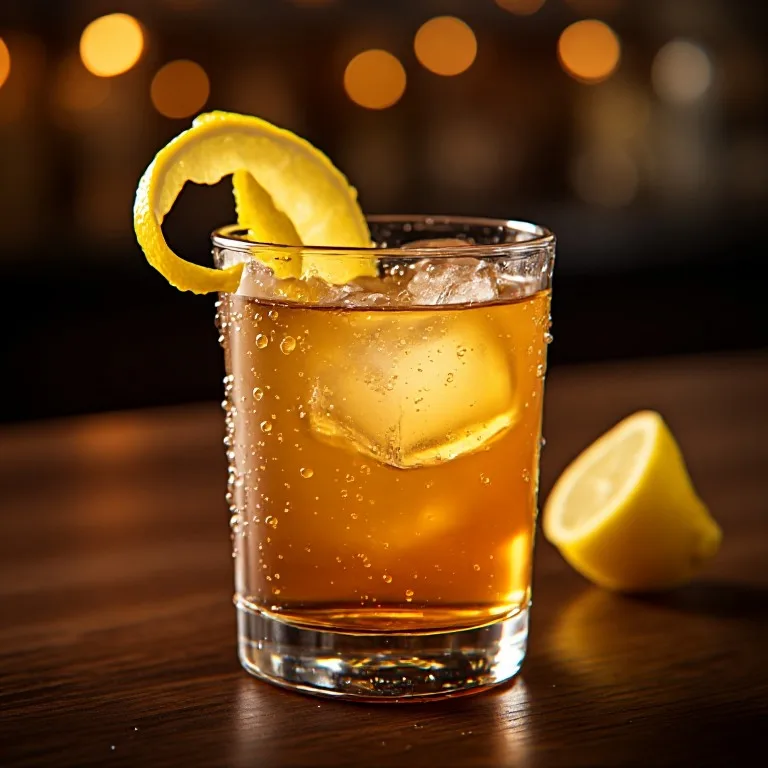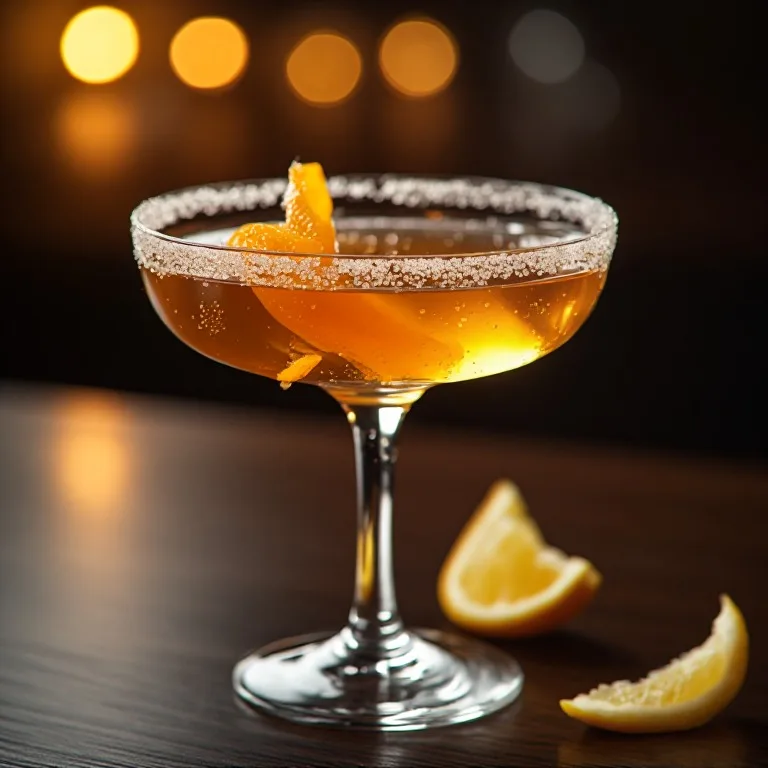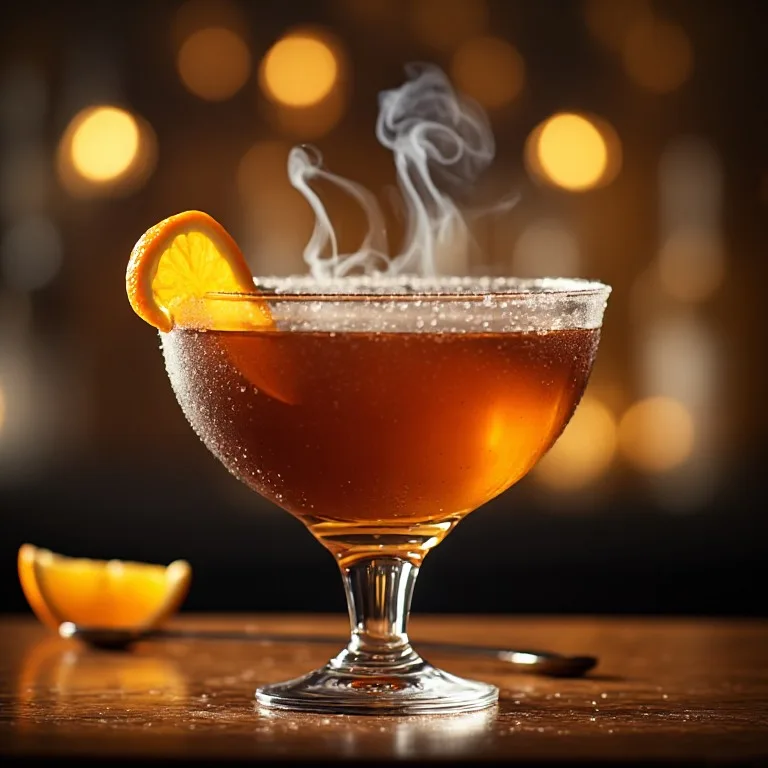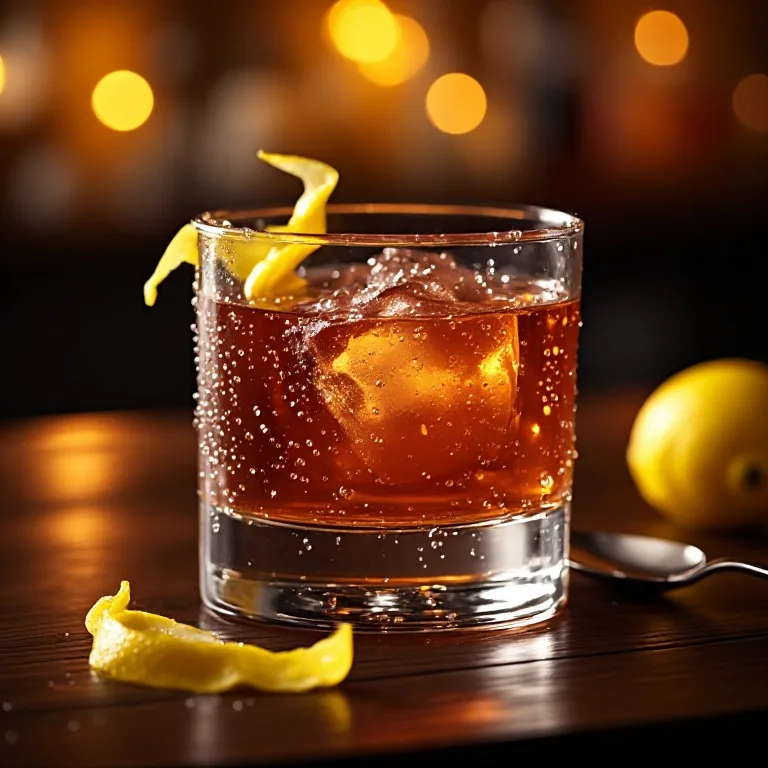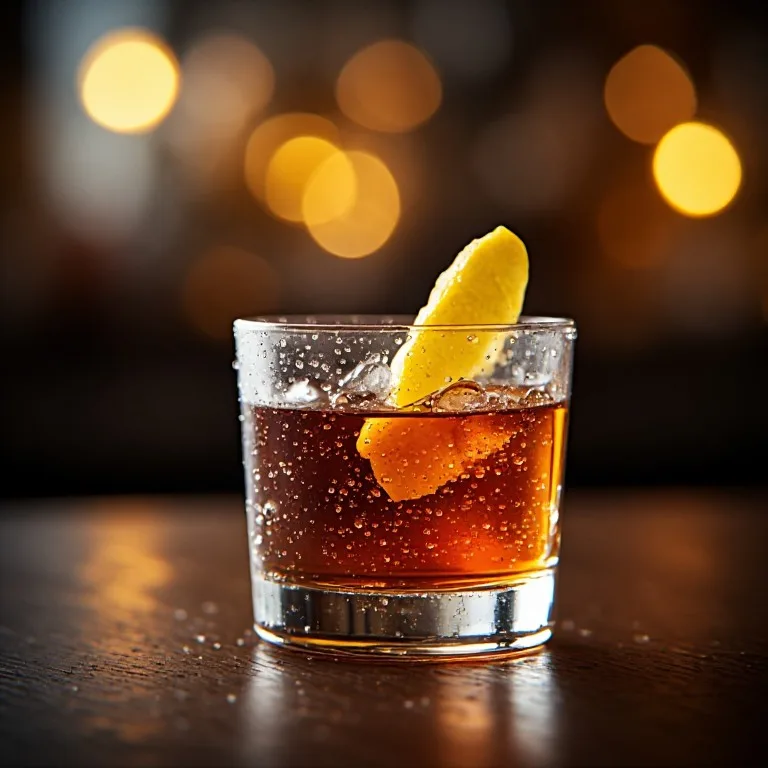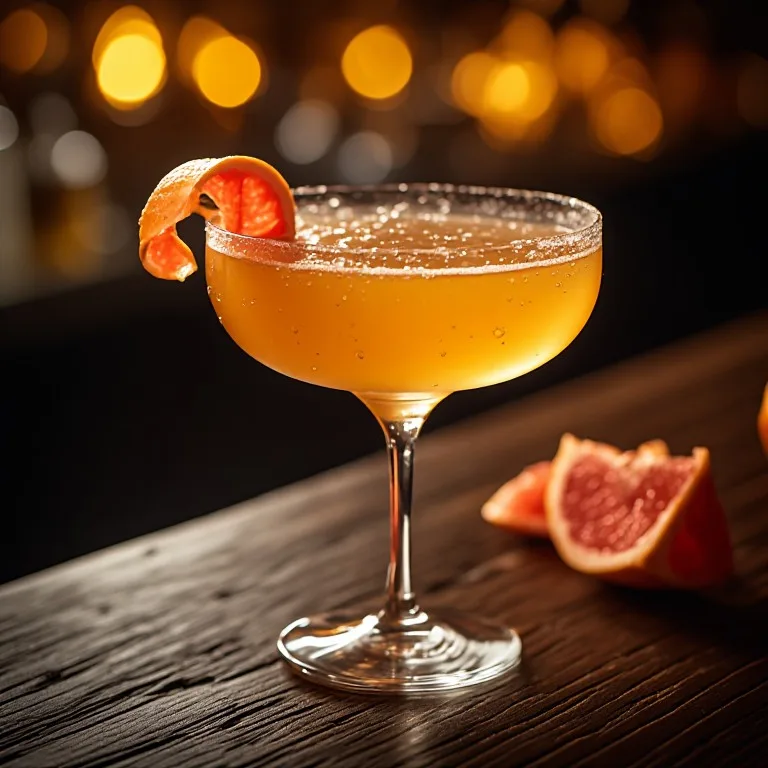
The Brown Derby feels inevitable once you taste it. Bourbon brings vanilla, caramel and oak; grapefruit supplies tartness, perfume and a gentle bitter edge; honey joins those flavors with a round floral sweetness. Three ingredients produce a drink that is richer than a sour but brighter than an Old Fashioned.
Its Hollywood story is less tidy. The Brown Derby is a genuine 1930s cocktail name, yet the often-repeated tale that it was invented at the Vendome Club in 1930 does not fit the surviving dates or earlier recipes. A good copycat should preserve the drink without polishing uncertain lore into fact.
What the Historical Recipe Actually Says
The 1933 novelty booklet Hollywood Cocktails includes a Brown Derby under an illustration of the famous hat-shaped restaurant. Its formula is one-half whisky, one-quarter grapefruit juice and one-quarter honey, shaken with ice and strained into a cocktail glass. It does not identify bourbon, name a bartender or say the Vendome created it.
More importantly, that combination was already in print. The undated Buckstone Book of Cocktails — long cited as around 1925, though some researchers now place it in the 1930s — listed a De Rigueur with Scotch, grapefruit and honey. Harry Craddock’s 1930 Savoy Cocktail Book also printed the De Rigueur at a 2:1:1 ratio. Cocktail historian Robert F. Moss argues that Hollywood Cocktails copied many recipes from the Savoy and renamed the De Rigueur as the Brown Derby.
The modern version shifts toward bourbon and less honey, commonly 2 oz whiskey, 1 oz grapefruit and 1/2 oz honey syrup. That is the balanced revival used here, not a claim to reproduce a documented Vendome house pour.
The Vendome Origin Story, With Caution
Dale DeGroff wrote in The Craft of the Cocktail in 2002 that the drink came from the Vendome Club in Hollywood in 1930 and was named for the nearby Brown Derby restaurant. That line became the basis for many later histories.
The timeline is a problem. Historical research indicates the place was called the Vendome Cafe, not the Vendome Club, and opened in May 1933. Hollywood Cocktails assigned it a different namesake drink, the Vendome Cocktail, made with Dubonnet, gin and French vermouth. No known contemporary menu confirms that the cafe served the Brown Derby.
The safest conclusion is narrow: the whiskey Brown Derby name appeared in a Hollywood-themed 1933 booklet, probably as a renamed older formula. Its actual service at the Vendome and its supposed 1930 creation there remain unverified. The venue is long closed, so there is no current availability or price.
Why Brown Derbies Often Miss
Straight honey does not dissolve reliably in a cold shaker. Some of it sticks to the tin, and the finished drink swings between harsh grapefruit and a sweet final sip. A 1:1 syrup made from equal volumes honey and warm water integrates quickly and measures consistently.
Grapefruit is the second variable. White grapefruit tends to be sharper and more bitter, while pink grapefruit is often softer and sweeter. Start with the written ratio, then adjust the honey syrup by a bar spoon if your fruit is unusually sour or mild. Bottled juice lacks the aromatic lift that makes this three-ingredient drink interesting.
Finally, choose a bourbon with enough proof and spice to remain clear after shaking. An 80-proof bottle works, but a balanced 90-proof bourbon gives the grapefruit something to push against without turning the drink hot.
The Key Technique: Dilute the Honey First
Combine equal volumes honey and warm water, stir until completely uniform and cool the syrup before mixing. It keeps refrigerated in a clean sealed container for about one week. Do not pour warm syrup into the shaker because it creates unnecessary melt.
Shake the three ingredients hard with plenty of ice for 12 to 15 seconds. Fine-straining removes grapefruit pulp and small ice chips, producing the silkier texture expected in a coupe. Expressing a broad grapefruit peel over the surface restores aromatic oils that juicing alone cannot provide.
Batch Brown Derbies for Eight
Combine 16 oz (480 ml) bourbon, 8 oz (240 ml) fresh grapefruit juice, 4 oz (120 ml) 1:1 honey syrup and 6 oz (180 ml) cold water. Stir thoroughly, cover and refrigerate until very cold, no longer than four hours for the best grapefruit flavor.
Stir the batch again before service and pour 4 1/4 oz (125 ml) through a fine-mesh strainer into each chilled coupe. Express a fresh grapefruit twist over every glass. The added water replaces normal shaking dilution, so do not shake each portion again unless you omit that water.
The Golden Derby Mocktail
Black tea is useful here because it replaces whiskey’s tannin without competing with grapefruit. Brew it at double strength and chill it fully. A trace of alcohol-free vanilla suggests bourbon’s barrel aroma, while two drops of saline make honey and citrus taste more connected.
Check the vanilla label if strict zero alcohol matters, since ordinary vanilla extract is alcohol-based. The mocktail should remain brisk and bittersweet, not become honeyed iced tea. Adjust for the grapefruit just as you would in the cocktail.
See more historic bar cocktails →